
3 Easy Tips for Bonding With Your Bird


Building a strong relationship with a pet bird takes patience, consistency, and a calm presence.
In this friendly guide, we’ll show you how to make bonding with your bird feel natural—so your feathered friend learns that you’re a source of safety, comfort, and good things.
Before You Begin: Set the Stage for Success
Start by creating a low-stress environment. Place the cage in a bright but not drafty spot where your bird can observe daily life without feeling cornered.
Keep noise moderate, maintain a predictable light–dark cycle, and ensure the cage offers perches at different heights plus a quiet “retreat” area. A peaceful setup tells your bird, “You’re safe here.”
Learn Their Language (Body Cues Matter)
Birds “talk” with their bodies. Relaxed feathers, soft chirps, gentle preening, and curious head tilts usually signal comfort.
Rigid posture, flared tail, open beak, or rapid pacing mean “I need space.” When you honor those signals, you teach your bird that you listen—and trust begins to grow.

Your Calm Presence: Voice, Movement, and Routine
Speak Softly and Consistently
Use a low, friendly voice and repeat your bird’s name. Short, warm phrases (“Good morning,” “You’re safe”) become familiar cues.
Over time, your bird learns that your voice predicts calm moments and positive interactions.
Move Slowly and Predictably
Quick hand motions can look like a predator’s lunge. Approach the cage from the front, move your hands below shoulder height, and pause between steps.
Slow, steady movement reduces startle responses and helps your bird stay curious rather than fearful.

Build a 10-Minute Daily Ritual
Bonding is about small moments repeated daily. Sit near the cage, read softly, or hum. Keep sessions short at first—quality beats quantity.
End on a positive note while your bird is still comfortable.
Positive Associations: Treats, Targeting, and “Step-Up”
Offer Tiny, High-Value Treats
Find a safe, favorite snack (e.g., a small piece of fruit or veggie suitable for your species) and offer it through the bars at first, palm-up and still.
Treats should be small and occasional—the goal is to pair “you” with “good things,” not replace the main diet.

Try Target Training (Fun and Fast)
Target training—teaching your bird to touch a stick or finger target—turns interaction into a simple game.
Present the target a short distance away; when your bird leans in to touch, mark the success with a cheerful “Yes!” and give a tiny treat.
This boosts confidence and opens the door to future cues.
Introduce the “Step-Up” Cue Kindly
Once your bird is comfortable near your hand, rest your finger or a perch just above foot level and say “Step-up” in a calm tone.
If your bird shifts weight forward or lifts a foot, mark and reward. If they hesitate, pull back a little, take a breath, and try again later.
Never force the cue—consent is everything in bird bonding.

Beyond the Cage: Safe Exploration and Comfort
Short Out-of-Cage Sessions
When your bird is ready, allow brief, supervised time outside the cage in a bird-proofed room.
Close windows and doors, switch off ceiling fans, and cover mirrors. Keep sessions short and end them before your bird gets tired; stopping early keeps the memory positive.
Become a “Safe Base”
During exploration, sit on the floor or a stable chair and let your bird choose the distance.
Offer your hand as a perch without pushing. When your bird learns that you are a safe place to rest, the bond deepens naturally.
Gentle Socialization: Gradual, Positive, Respectful
If your bird is shy or newly rehomed, start with passive company—sit nearby, speak softly, and respect their space.
Increase exposure slowly: a few minutes today, a few more tomorrow.
Celebrate small wins like a curious glance, a relaxed feather shake, or taking a treat closer to your hand.

Common Mistakes to Avoid (So Trust Doesn’t Backslide)
Forcing contact (grabbing, chasing, or cornering) erodes trust fast.
Punishment or loud scolding can make your bird associate you with fear.
Overdoing treats can unbalance the diet—keep rewards small and occasional.
Rushed timelines lead to setbacks; every bird learns at their own pace.
A Simple 7-Day Bonding Plan (Repeat as Needed)
Day 1–2: Sit near the cage 5–10 minutes, speak softly, offer one tiny treat.
Day 3–4: Add brief target touches at the bars; mark and reward.
Day 5–6: Present your hand/perch for step-up without pressure; reward micro-steps (leaning forward, lifting a foot).
Day 7: Try a short, safe out-of-cage session; end while things are still going well.

Bonding With Your Bird: Make It a Daily Ritual
Trust grows in consistent, gentle, and choice-based moments. Keep sessions short and positive, listen to body language, and celebrate tiny steps. With patience, your bird will associate you with safety and joy—and that’s the heart of a lasting friendship.
Enjoy This Video Tutorial About Birds
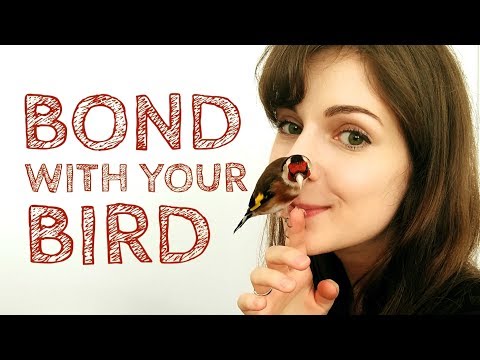
Source: Leporello the Goldfinch – Birdtaming Tips & Tricks
Did you find this post useful or inspiring? Save THIS PIN to your Pets Board on Pinterest! 😊

You may also like