
Bunny Cages: How to Choose the Right Rabbit Cage and Set It Up


This post contains affiliate links. As an Amazon Associate, Urbaki Pets earns from qualifying purchases, at no extra cost to you.
The best bunny cage is not really a cage at all: it is a roomy, solid-floored home base that your rabbit can hop, stretch out and stand up in, paired with a safe exercise area for daily free time. If you remember only one thing from this guide, make it this: most cages sold as "rabbit cages" are too small to be a rabbit's whole world. Use them as a bedroom, not a prison.
How Big Should a Rabbit Cage Be?
Size is where most new owners go wrong. Pet store cages are often designed to look tidy on a shelf, not to fit an active animal that runs, jumps and does zoomies.
The "hops and stretch" rule of thumb
A practical way to judge size is to watch your rabbit, not the box label. A good enclosure lets your bunny:
- Take at least three or four full hops from one end to the other.
- Lie fully stretched out on its side, with room to spare.
- Stand up tall to look around, which rabbits do constantly.
Size for the adult rabbit, not the baby. Larger breeds, like Flemish Giants or French Lops, need far more room than dwarf breeds.
Why a pen often beats a traditional cage
Many rabbit owners now skip the classic wire cage and use a metal exercise pen instead. A pen gives you a much bigger footprint for the money, you can reshape it to fit your room, and it is easy to step into for cleaning. Put the litter box, hay and hideout inside, and you have a home base your bunny can actually move around in.
If you already own a smaller cage, it can still be useful: leave the door open inside a pen so it becomes a cozy den your rabbit chooses to use.
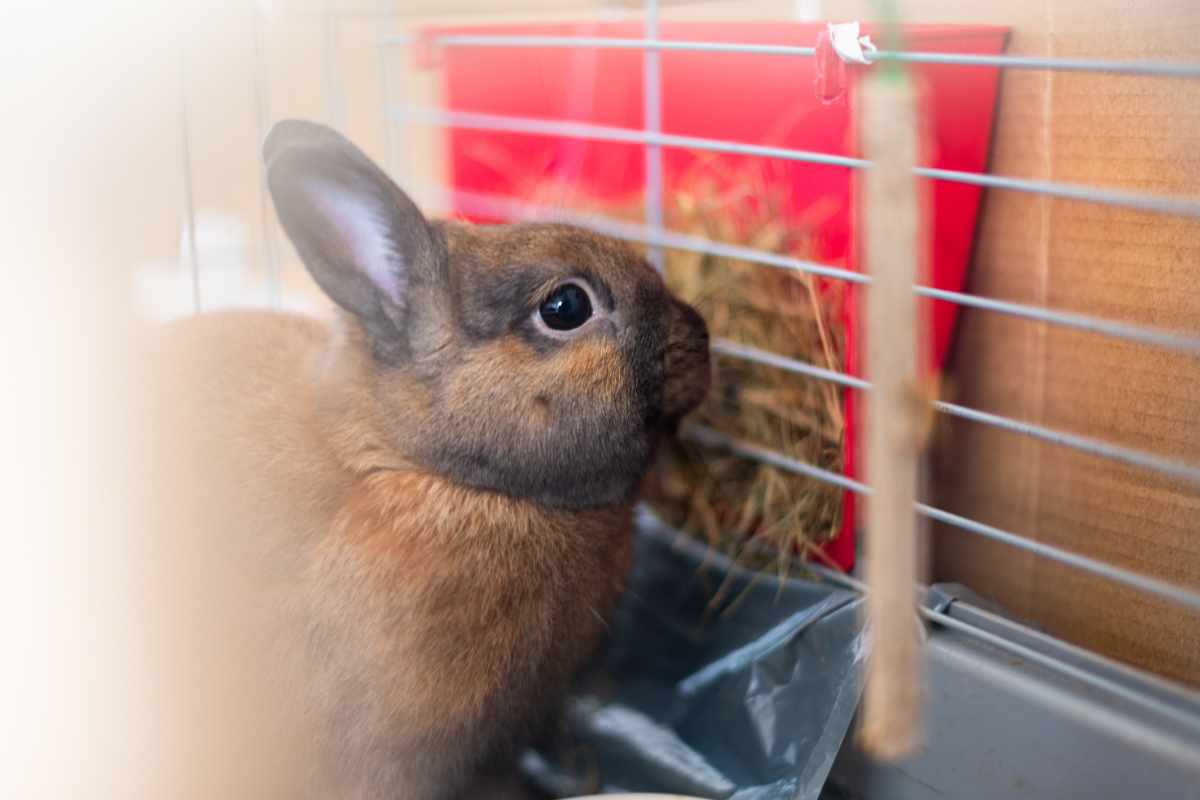
Material and Durability
Rabbits chew everything. The cage you pick has to survive teeth, scratching and daily cleaning.
- Powder-coated or galvanized metal: durable and easy to wipe down. Check that the coating is not chipping, since your bunny will nibble the bars.
- Plastic bases: great for keeping bedding and droppings contained. Deep bases with smooth edges are best, because rabbits will chew any exposed rim.
- Untreated wood: looks lovely and is nice to chew, but it soaks up urine and is harder to sanitize. If you use wooden hutches indoors, cover the floor with washable liners.
Avoid painted or varnished surfaces, glued particle board and anything with loose staples.
Flooring: Protect Those Delicate Feet
Rabbits do not have paw pads like cats and dogs. Their feet are covered in fur, and constant pressure on hard or uneven surfaces can lead to sore, inflamed hocks.
- Skip wire floors. Wire-bottom cages may seem convenient for waste, but they are uncomfortable and can injure feet and toes.
- Use a soft, washable layer. Fleece liners, washable pee pads or cotton rugs give good grip and cushioning.
- Add a resting mat. A thick mat or a folded fleece blanket in one corner gives your bunny a comfortable lounging spot.
- Watch for chewing. If your rabbit starts eating fabric, switch that area to a natural grass mat or a different material.
Ventilation and Accessibility
Good airflow keeps ammonia from urine from building up, which matters for your rabbit's sensitive respiratory system. Open-sided pens and wire-topped cages breathe well; closed plastic tubs and aquarium-style tanks do not, and they should never be used as rabbit housing.
For easy care, choose a large front door or an opening top, plus a removable base or a pen you can step into.
How to Set Up the Inside of a Rabbit Cage
A good layout makes your bunny feel safe and makes cleaning faster. Think in zones:
- Bathroom corner: place a litter box in the corner your rabbit naturally picks. Line it with paper-based litter and put a big handful of hay on top, since rabbits like to eat and go at the same time. Our step-by-step litter training guide walks you through it.
- Hay station: hang a hay feeder or rack right next to or above the litter box. Hay should make up most of your rabbit's diet, so it needs to be available all day.
- Water: a heavy ceramic bowl is easy to drink from and hard to tip over. Some rabbits prefer a bottle, but many drink more from a bowl.
- Hideout: rabbits are prey animals and need a dark, covered place to retreat to. A wooden house or cardboard box with two exits works well.
- Lounging and play area: leave open floor space for stretching out, plus a few chew toys and something to dig in.
Rotate toys every few days. If you are not sure whether your bunny has enough going on, check these signs your rabbit is bored.
Safety Features and Escape Prevention
Rabbits are clever and surprisingly strong. Look for secure latches a nose can't nudge open, bar spacing narrow enough that a small head can't squeeze through, no sharp edges or gaps that can catch toes, and pen walls tall enough that your bunny can't jump out (add a mesh cover for athletes). Bunny-proof the area around the cage too, because cords and plants within reach will get chewed.
Where to Put Your Bunny's Cage
Placement matters as much as the cage itself. Rabbits are social and want to be part of the household, but they also startle easily.
- Choose a lived-in room, like a living room or family room, where your rabbit can see and hear you.
- Avoid direct sunlight, radiators and drafts. Rabbits handle heat poorly and can overheat quickly.
- Keep it away from loud electronics and high-traffic doorways.
- Keep other pets at a distance until you know they can be trusted around the enclosure.
Planning to keep your bunny outside part of the time? Read our guide to building a safe outdoor bunny habitat first, because outdoor setups need extra protection from predators and weather.
Common Bunny Cage Mistakes to Avoid
- Buying the "starter kit" cage and stopping there. These are usually too small as a full-time home.
- Using a wire floor without any solid resting area.
- Using cedar or pine shavings as bedding. Paper-based bedding or fleece are safer choices.
- Skipping daily exercise time. Even the nicest cage is not enough without several hours of running around.
- Cleaning too rarely. Spot-clean the litter box daily and do a full clean weekly to keep odors and ammonia down.
For a side-by-side look at setups that work and those that don't, see good vs. bad rabbit cages, and for cleaning shortcuts, our tips for a spotless rabbit habitat.

Our Favorite Picks for a Happy Rabbit Setup
These are the supplies we would use to build a comfortable home base for an indoor bunny:
- Amazon Basics foldable metal exercise pen: An easy way to give your rabbit far more space than a standard cage. It folds flat and can be reshaped to fit your room.
- MidWest Guinea Habitat Plus: A solid-bottom enclosure with a removable, washable base. Works well as a den for small rabbit breeds, ideally with the door open into a pen.
- Kaytee Hi-Corner litter pan: A corner-shaped pan with a high back that fits neatly into the spot most rabbits already use as a bathroom.
- Washable pee pads (2-pack): Soft, absorbent liners that protect your floor and your bunny's feet. Toss them in the washing machine and reuse.
- Large wooden bunny house: A sturdy hideout with a rooftop lookout, so your rabbit has both a safe retreat and a place to perch.
- Rabbit hay feeder (2-pack): Keeps hay clean and off the floor, so less gets wasted and your bunny always has a fresh supply.
On a budget? Several cage basics, like storage bins and baskets, can be found cheaply at the Dollar Tree for rabbits.
When to See a Vet
A cage that is too small, dirty or hard-floored can affect your rabbit's health. Book a visit with a rabbit-savvy vet if you notice:
- Red, bald or scabby patches on the bottom of the feet
- Reluctance to move, hopping strangely or sitting hunched
- Sneezing, wet nose or discharge from the eyes
- Urine scald (stained, irritated skin around the rear)
- A sudden drop in appetite or fewer, smaller droppings
A drop in eating or pooping can become serious quickly in rabbits, so don't wait to see if it improves on its own.
FAQ About Bunny Cages
Can a rabbit live in a cage all day?
No. Even a large cage should be a home base, not a full-time space. Rabbits need several hours a day of exercise in a pen, a bunny-proofed room or supervised free roam to stay healthy and happy.
Is a dog crate or exercise pen OK for a rabbit?
Yes, often. Metal exercise pens are one of the most popular rabbit setups because they are roomy and easy to clean. A large wire dog crate can also work as a den if you cover the floor with a soft, washable layer.
What should I put on the bottom of a rabbit cage?
Use a solid floor covered with fleece, washable pee pads or a rug your rabbit won't chew. Keep paper-based litter in the litter box only, and add a soft mat for resting.
How often should I clean my rabbit's cage?
Spot-clean the litter box and remove soiled bedding every day, refresh hay daily, and do a full clean of the enclosure, bowls and liners about once a week.
Final Thoughts
Choosing the right bunny cage comes down to space, a soft solid floor, safe materials and a layout that keeps your rabbit's essentials within easy reach. Add daily exercise time and a spot in the heart of your home, and your bunny will have a place it truly feels safe in.
Did you find this post useful or inspiring? Save THIS PIN to your Pets Board on Pinterest!

You may also like