
DIY Pumpkin Dog Treats - A Nutritious Snack


Pumpkin is a gentle, fiber-rich ingredient that many dogs love—and when we turn it into simple homemade treats we control every ingredient, texture, and portion.
Below you’ll find a clear, safety-first recipe with metric conversions, portion guidance by size, and smart texture tweaks so you can bake crunchy biscuits or soft, senior-friendly bites.
We’ll also highlight what to avoid (looking at you, xylitol and nutmeg) and how to store your batch so it stays fresh.
Why Pumpkin Treats Are a Good Idea

Pumpkin purée (plain, unsweetened) offers soluble and insoluble fiber that can help support regular digestion. It’s also naturally low in sodium and contains beta-carotene.
As with any treat, the key is moderation and balanced ingredients—we’ll keep the recipe straightforward and avoid unnecessary add-ins that could upset sensitive tummies.
A Quick but Important Safety Note
Never use peanut butter sweetened with xylitol. Even tiny amounts of xylitol are dangerous for dogs. Choose a peanut butter whose label lists peanuts (and maybe salt)—nothing else.
Skip nutmeg completely. It contains myristicin, which is unsafe for dogs.
Cinnamon only in a pinch. A tiny amount can add aroma, but large amounts can irritate. If you use it, keep it to a small pinch for the entire batch.
Avoid pumpkin pie filling. It’s sweetened and spiced; you want 100% pumpkin purée only.
Ingredients (Simple, Safe, and Swappable)

This base recipe is designed for one medium batch (about 40 small biscuits, cutter ~3–4 cm).
100% pumpkin purée – 1 cup (240 g)
Natural peanut butter (no xylitol, no sweeteners) – ¼ cup (64 g)
Egg – 1 large (≈ 50 g, room temp)
Whole-wheat flour – 2 cups (240 g), plus a little for dusting
Gluten-free swap: Oat flour 2 cups (200 g). If using coconut flour, start with 1 cup (120 g) and add water 1 tbsp at a time; coconut flour is very absorbent.
Optional aroma: a tiny pinch of ground cinnamon (omit if your dog is sensitive)
What not to add: nutmeg, chocolate, pumpkin pie spice, artificial sweeteners, raisins, or salt/sugar.
Step-by-Step: Crunchy Biscuits

Mix the Dough
In a bowl, whisk the pumpkin, peanut butter, and egg until smooth. Sprinkle in the flour gradually, stirring until a soft dough forms. If it’s sticky, add 1–2 tbsp more flour. If it’s dry, add 1–2 tsp water. The dough should be pliable, not crumbly.
Roll and Cut
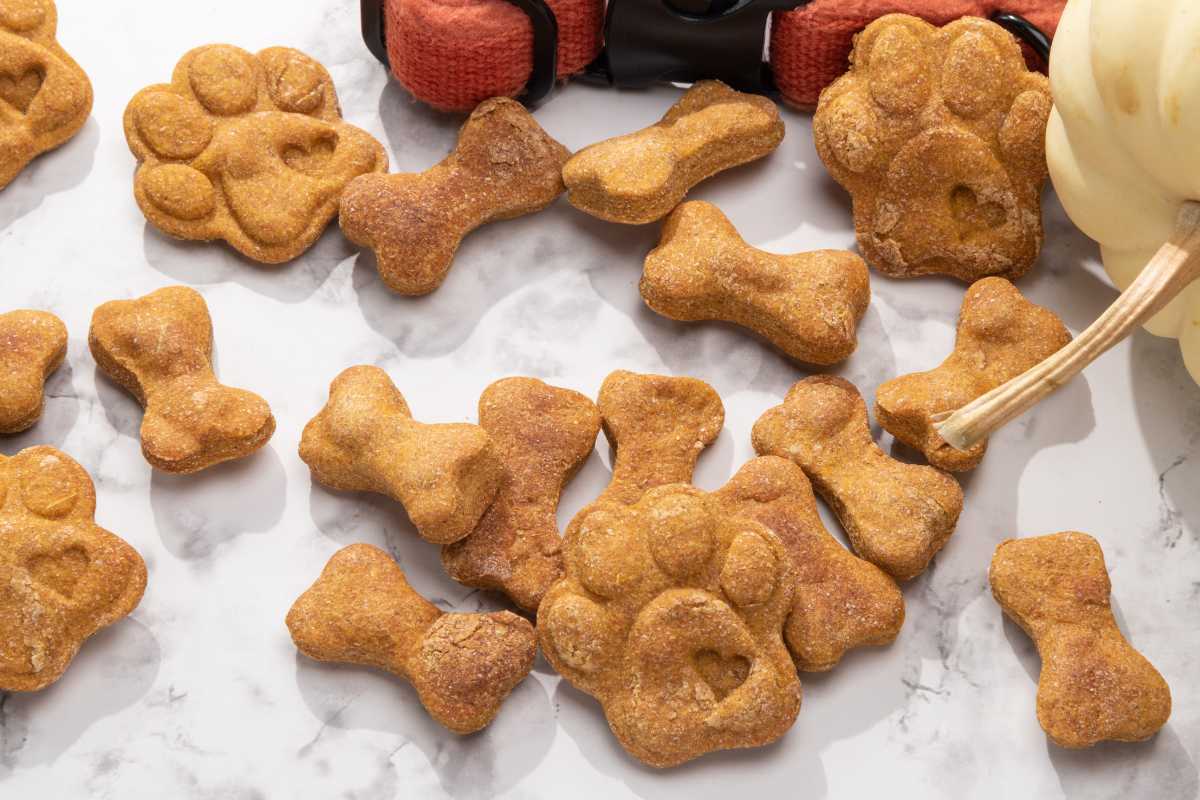
Lightly flour your counter. Roll the dough to 6–7 mm (¼ inch) thick. Use a small bone-shaped cutter (or any 3–4 cm cutter). Re-roll scraps as needed.
Bake
Oven: 175 °C / 350 °F
Time for crunchy: 22–26 minutes, flipping at the 15-minute mark for even drying.
For extra-crunchy training bites, reduce thickness to 3–4 mm and bake 18–22 minutes, checking early.
Cool and Dry
Transfer to a rack and cool completely. For maximum crunch and shelf life, leave the biscuits on the rack 1–2 hours to finish drying.
Texture Control (For Puppies, Seniors, and Sensitive Mouths)
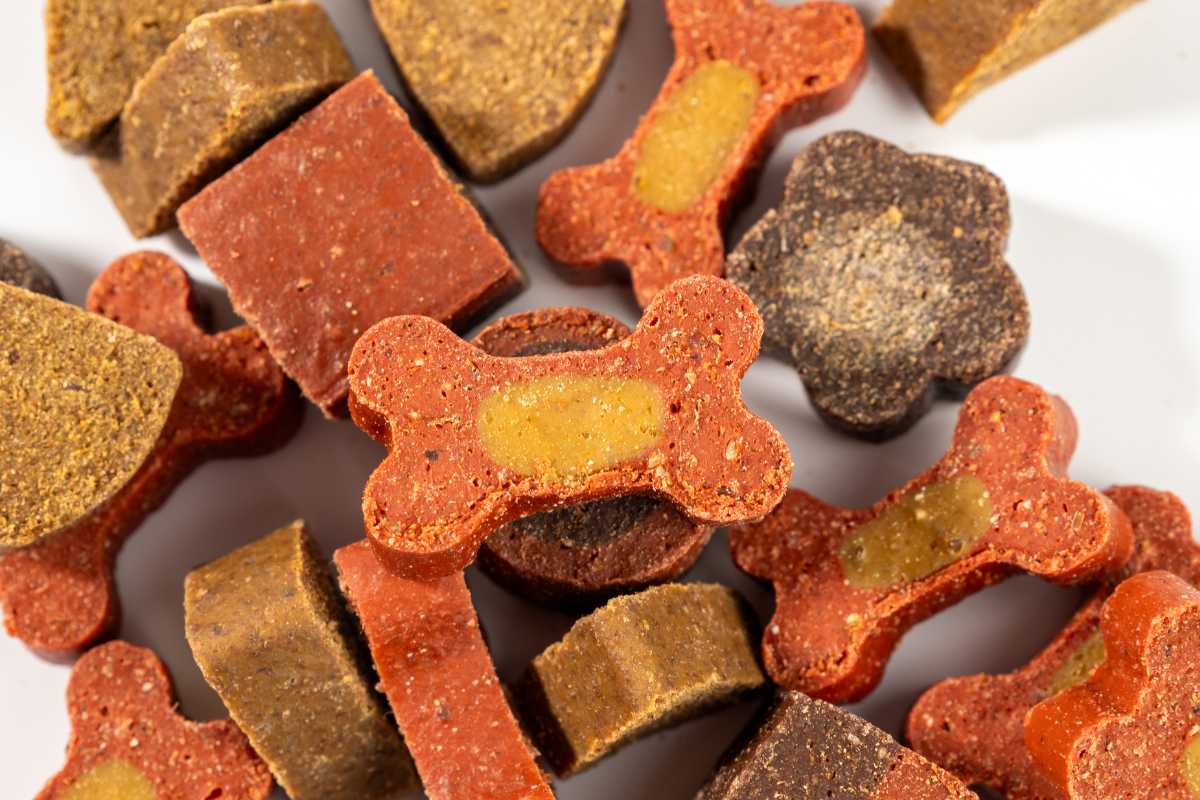
Softer, tender treats: Roll a bit thicker (8–9 mm) and bake 14–18 minutes until set but still yielding in the center.
Softer still: After mixing, stir in 1–2 tbsp unsweetened applesauce or 1–2 tbsp warm water to relax the dough. Bake toward the lower end of the time range.
Oat-only version: Using oat flour gives a naturally tender crumb and mild flavor many dogs enjoy.
Quick Variation: Soft Drop Cookies (No Rolling)
If you’re short on time (or baking for dogs that prefer softer treats):
Make the same dough but add 1–3 tbsp warm water until it resembles a thick cookie batter.
Scoop 1-teaspoon mounds onto a parchment-lined sheet and flatten lightly with a wet fingertip.
Bake at 175 °C / 350 °F for 10–14 minutes, just until set. Cool fully. These will be soft, so refrigerate after cooling.
Portion Guidance (By Dog Size)
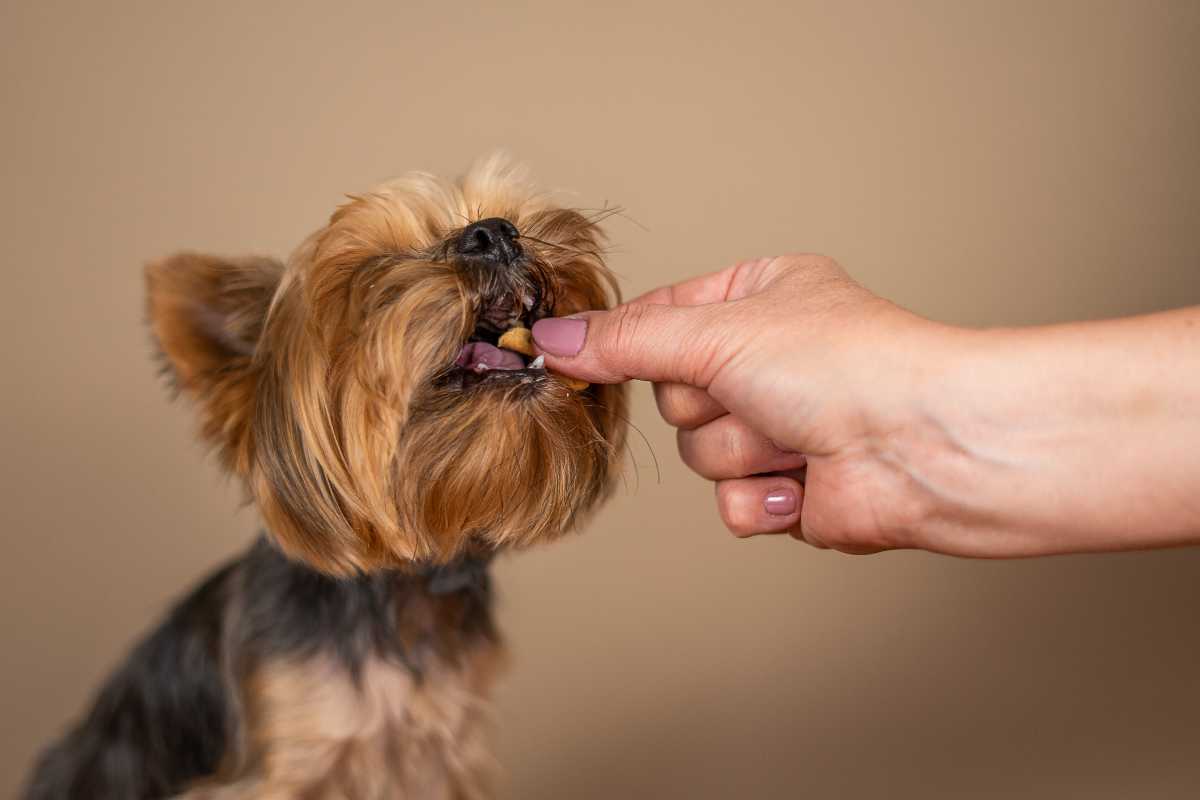
Treats should make up no more than ~10% of daily calories. The exact number your dog can have depends on the size of each biscuit and your dog’s daily energy needs, but this rule keeps you in a safe range.
Small dogs (<10 kg / <22 lb): 1–2 small biscuits per day
Medium dogs (10–25 kg / 22–55 lb): 2–3 small biscuits per day
Large dogs (>25 kg / >55 lb): 3–4 small biscuits per day
If you’re using peanut butter, remember it’s calorie-dense. For dogs prone to weight gain or with sensitive digestion, start with fewer treats, observe tolerance, and adjust.
How Much Pumpkin Is “Plenty”?
As a general, occasional guide inside treats or as an add-in to meals, 1–4 tablespoons of plain pumpkin purée per day (from small to large dogs) is often cited.
Because our biscuits already contain pumpkin, count these toward that daily total. If your dog has a history of GI upset, pancreatitis, or is on a therapeutic diet, talk to your veterinarian first.
Storage & Shelf Life
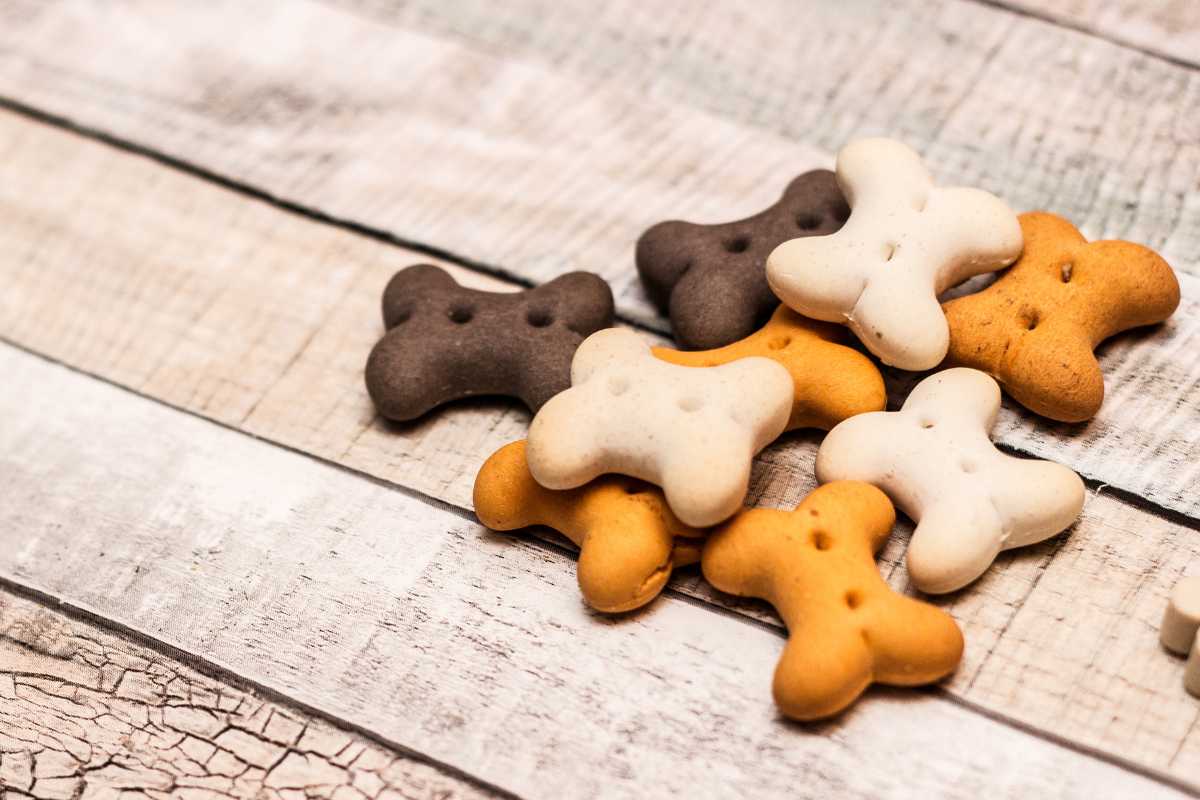
Room temperature: In an airtight jar, up to 5 days if your biscuits are well dried and crunchy.
Refrigerator: 7–10 days, great for soft or drop-cookie versions.
Freezer: 2–3 months. Freeze flat in a zip bag; thaw at room temp before serving.
Tip: If your kitchen is humid, do a low-heat “dry-out” after baking—return completely cooled biscuits to the oven at 90–95 °C / 195–205 °F for 20–30 minutes, then cool again on the rack. This helps extend shelf life and keep crunch.
Troubleshooting Common Issues
The Dough Is Crumbly
Add 1–2 tsp water at a time until it holds together. With coconut flour, you’ll likely need more liquid—go slowly.
Biscuits Are Pale and Soft
Bake a little longer, flip once, and let them air-dry on the rack. Pale is fine; you’re aiming for dry-crisp, not deep browning.
My Dog Has Allergies or Intolerances
Swap to oat flour and skip peanut butter—use 2–3 tbsp pumpkin extra or 1–2 tbsp olive oil to help the dough come together.
Always introduce new recipes gradually and monitor for itching, ear gunk, licking, or tummy changes.
Safe-At-A-Glance
Yes: 100% pumpkin purée, plain natural peanut butter (no xylitol), egg, whole-wheat or oat flour, a tiny pinch of cinnamon (optional)
No: xylitol, nutmeg, pumpkin pie filling, chocolate, raisins, artificial sweeteners, strong spices or essential oils
What Makes This Recipe “Vet-Smart”
Ingredient control: You decide the flour type and keep the label short.
Measured textures: Clear bake times and thickness targets give you crunchy or soft results on purpose.
Portion discipline: The 10% rule and size-based guidance help prevent over-treating.
Clear safety flags: Xylitol warning, nutmeg ban, and a sensible approach to cinnamon protect your pup from hidden hazards.
Metric & imperial: Dual units make the recipe repeatable and shareable.
Frequently Asked “Is This Okay?” Questions (Quick Answers)
Can I use fresh pumpkin?
Yes. Roast, scoop, and mash until smooth. Drain excess liquid so your dough doesn’t turn gummy. Weigh to 240 g for this recipe.
Can I shape tiny training bites?
Absolutely. Roll thinner (3–4 mm) and cut very small. Reduce baking time and watch closely—small pieces dry fast.
Can I sweeten the treats?
Dogs don’t need added sugar, and sweeteners can be risky. Do not use honey, maple, or any artificial sweetener in dog treats.
My dog is on a special diet.
Bring this recipe to your veterinarian and ask how (or if) it fits into their plan, especially for dogs with pancreatitis, kidney issues, or food allergies.
Pumpkin Treats, Made the Safe Way
Homemade baking is a lovely way to bond with your dog while serving something simple, nutritious, and tailored.
With the right ingredients, clear portions, and smart storage, these pumpkin treats can be a handy reward for training or a crunchy afternoon nibble.
Keep the xylitol warning top of mind, skip nutmeg, go easy on cinnamon, and adjust texture to your dog’s needs.
If you found this helpful, save the portion guide and bake time notes so your next batch turns out just as perfect—and your best friend can enjoy them safely.
Enjoy The Video About Dogs
Source: K9 of Mine

You may also like