
How To Play With A Horse


Play can be a powerful way to deepen your bond with your horse—when it’s calm, safe, and purposeful.
Think of “play” as low-arousal enrichment and clear groundwork, not high-speed chasing or risky tricks.
The goal is connection, confidence, and communication.
Before You Start: Safety & Set-Up

Choose the right space
Begin in a fenced arena or flat paddock with good footing and no loose horses.
Remove clutter, close gates, and keep dogs and bystanders out of the area so your horse can focus.
Gear up smart
Wear a helmet, gloves, and sturdy boots. Check tack and halter fit, and use a long lead or lunge line that won’t tangle.
Keep treats in a pouch you can access quickly without fumbling.
Keep sessions short
Aim for short sessions—10 to 15 minutes is plenty. A brief warm-up walk at the start and a relaxed cool-down at the end help your horse finish feeling settled.
Read Your Horse’s Signals

Learn to read your horse’s body language and adjust before stress escalates. Soft eyes, a relaxed lower lip, and ears gently moving show curiosity.
Signs like pinned ears, tail swishing, rigid muscles, or a high head indicate tension.
If you see stress, pause, lower the difficulty, or give your horse a quiet break with distance and breathing time.
Play, Don’t Chase: Safe Game Ideas
Target Touch (Confidence & Focus)
Hold a small cone or target at nose level. When your horse sniffs or touches it, mark (say “yes” or use a clicker) and reward.
Gradually ask for one step toward the target or to follow it a few steps. This builds focus, body control, and a shared language.
Pole Puzzles & Mini-Obstacles (Body Awareness)
Lay a few ground poles in straight lines or gentle curves. Walk in hand, pause before each pole, then ask for a slow step-over. Later, weave around cones or halt with the forefeet on a mat.
These quiet puzzles improve balance and proprioception without amping your horse up.
Big Ball Confidence—Horse “Soccer” (Desensitization)
Introduce a large, soft ball from a distance. Reward for looking, then sniffing, then nudging. Keep it slow and steady.
Many horses enjoy pushing the ball with their nose or chest—great for curiosity and courage.
Sniff, Seek, and Forage (Natural Motivation)
Scatter a handful of low-sugar forage or use a simple hay-net puzzle so your horse “searches” calmly.
Keep portions modest and surfaces clean. The idea is to lower arousal, not create frantic food chasing.
Short Liberty Moments (Connection at Low Arousal)
Unclip only in a safe enclosure once your horse is relaxed. Encourage following at the walk, backing a step, or changing direction with your body.
Keep it quiet—no running games, no crowding, and no cues that risk rearing.
What to Avoid

Skip chasing or “tag,” tugging on halters, or anything that invites striking or rearing. Never teach rearing as a trick; it’s dangerous and hard to control.
Don’t rely on a whip “for safety”—good spacing, slow decisions, and calm handling protect you far better.
Simple Groundwork That Feels Like Play
Use positive reinforcement to turn basics into engaging micro-challenges: halt-walk transitions, one-step backing, forequarter and hindquarter yields, side-passing a single pole, or parking on a mat.
Mark and reward tiny tries, then give breaks. The “game” is clarity, not speed.
When to Pause and Ask for Help
Stop if your horse shows repeated tension, frustration, or escalating behaviors (striking, spinning, bolting).
Pain can look like “bad behavior,” so consider a dental check, saddle fit, and a vet exam.
If you feel out of your depth, bring in a qualified trainer who uses evidence-based, low-stress methods.
FAQs

How long should a play session last?
Ten to fifteen minutes is ideal. You can do two very short blocks separated by a grazing break. End on a small success rather than pushing for “one more try.”
Should I use treats?
Small, low-sugar rewards can be helpful. Deliver them with a flat hand at chest level, then reset your horse’s head to neutral to discourage mugging.
If treats aren’t a fit, use scratches at a favorite spot or a calm voice as a reward.
Is this safe for kids?
Only with close adult supervision and only low-arousal activities (targeting, poles, grooming).
Keep children outside the kick zone, and teach them to move slowly and speak softly.
What if my horse won’t engage?
Lower the difficulty, reduce distractions, and make the first win easy—touching the target, taking one slow step, or standing on a mat.
If reluctance persists, check for discomfort and try again after addressing any physical issues.
Bringing It All Together
Play should feel calm, clear, and kind. Choose quiet puzzles over hype, reward small efforts, and stop while things are going well.
Done this way, “play” becomes daily enrichment that builds trust, balance, and a horse who’s genuinely eager to learn with you
Enjoy This Video Tutorial About Horses
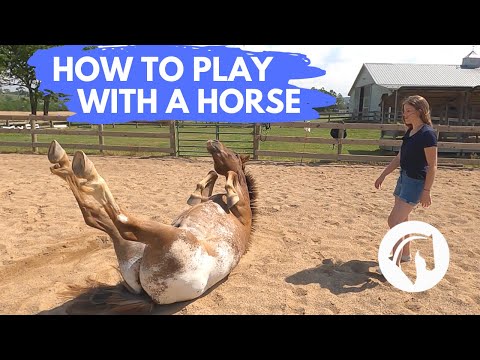
Source: Carmella Abel - Equine Helper
Did you find this post useful or inspiring? Save THIS PIN to your Pets Board on Pinterest! 😊

You may also like