
How to TRAIN Your LoveBird Parrot


Building a trusting bond with a lovebird is one of the most rewarding parts of parrot care.
With positive reinforcement, short daily sessions, and a few core behaviors, you can train a lovebird to cooperate happily, respond to cues, and enjoy time with you.
This guide walks you through a practical plan—clear, kind, and structured—designed specifically for small parrots like lovebirds.
Before You Start: Trust, Setup, and Safety

A successful session starts before any cue is given. Set your lovebird up to win.
Choose the right spot. Work in a quiet, well-lit area away from sudden noises, other pets, or busy walkways. A training perch or the top of the cage works well.
Pick tiny, high-value treats. Lovebirds are small, so think minuscule: a single millet bead, a seed half, or a crumb of nut. Tiny treats keep motivation high without overfeeding.
Use a marker. A soft click from a clicker (or a crisp “yes!”) tells your bird exactly which behavior earned the reward. That timing is everything in positive reinforcement.
Keep sessions short. Aim for 5–8 minutes, one to two times per day. Stop while your bird is still engaged.
Watch body language. Learn lovebird body language: relaxed posture, normal breathing, soft chirps, and smooth feathering signal comfort.
Signs of stress include rigid posture, rapid breathing, intense staring, leaning away, flaring feathers, or repeated attempts to retreat.
Safe Pause Rule: If you see stress signals or nips increase, pause, step back to an easier criterion (e.g., rewarding simple proximity), and end on a small success.
Foundation Behaviors for Lovebirds

These three basics unlock everything else: step-up, target training, and recall. Start in this order and move forward only when each behavior looks fluent and relaxed.
Teach the Step-Up (Gentle and Reliable)
Goal: Your lovebird willingly steps onto your finger or a handheld perch.
Start with proximity. Present your hand near the bird—far enough that they remain relaxed. Mark and treat for calm looking, slight lean toward you, or a single step in your direction.
Introduce the perch/finger. Offer your finger just below chest level. If there’s hesitation, use a training perch first; some birds feel safer stepping onto wood than skin.
Micro-steps. Reward micro-approximations: one foot lifting, touching your finger, placing one foot, then two feet. Do not rush the second foot—let your bird choose it.
Add the verbal cue. Say “Step up” just before you present your finger. Mark the moment both feet land, then treat.
Troubleshooting: If your bird puts only one foot on and hovers, you’re close—hold steady, reduce the distance, and reinforce the try. If they back away, move your hand lower and to the side, not above the chest, and go back a step.
Target Training (Move Without Force)

Goal: Your lovebird touches a small target (a chopstick tip, pen cap, or dedicated target stick) with the beak on cue.
Introduce the target. Hold it a short distance away. If your bird simply looks at it, mark and treat.
Shape the touch. Gradually reinforce only closer looks, then beak touches.
Follow the target. Once touches are reliable, slowly move the target left/right or slightly forward so your bird takes a step to follow. Mark and treat every small move.
Applications: Use the target to guide onto a perch, into a carrier, or to rotate in place for play. Targeting gives you gentle, force-free movement control.
Short Recall Sessions (Come When Called)
Goal: Your lovebird moves from a nearby spot to your hand or a perch when you call.
Start very close. Station your bird on a perch 10–20 cm from your hand. Say your recall cue (“Come” or name), then present your finger/perch. Mark and treat for any movement toward you.
Build distance gradually. Increase by a few centimeters at a time. Keep the environment calm; avoid long jumps early on.
Add a landing spot. Teach a consistent station perch near you so the bird learns a predictable target for landing.
Proof slowly. Practice in different rooms and perches only after short-distance recall is fluent. Always prioritize safety and keep windows/doors secured.
Positive Reinforcement That Works
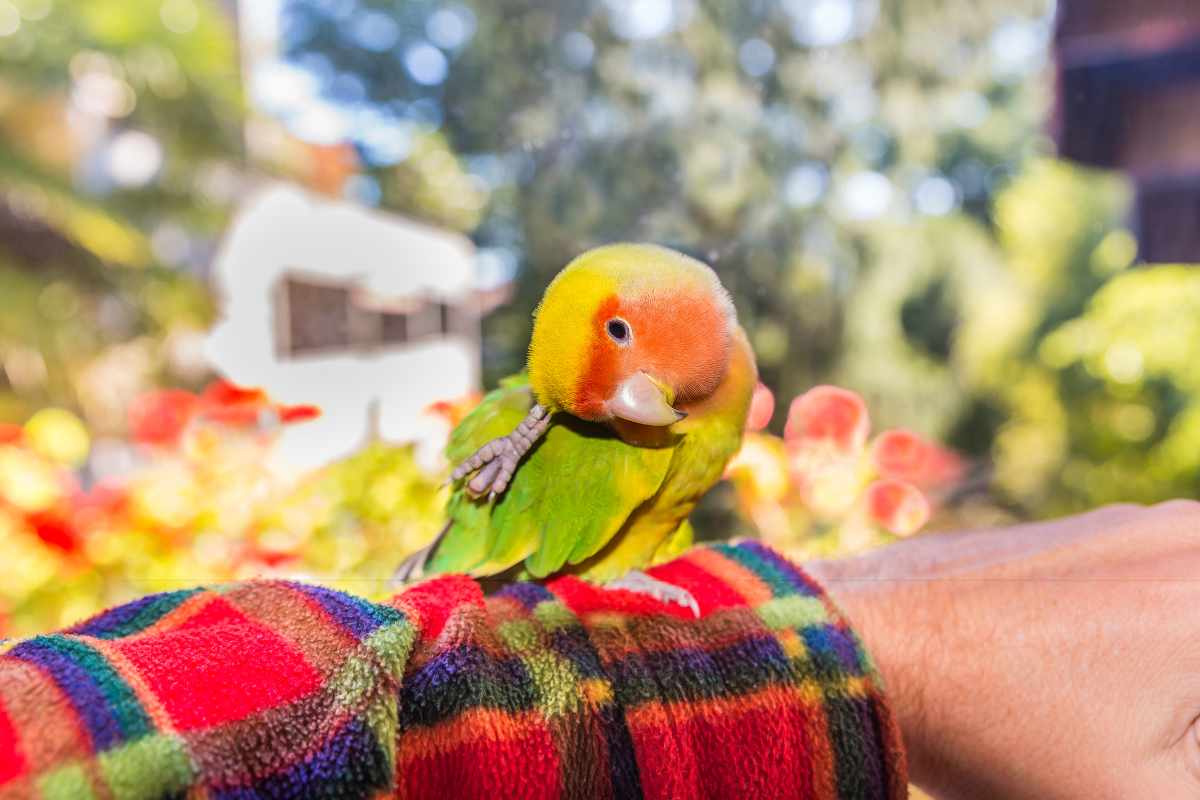
Timing: Mark at the exact moment your bird does the desired action, then deliver the treat immediately.
Rate of reinforcement: Early on, reward every small success. Once a behavior is strong, switch to a variable schedule (not every time) to maintain motivation.
Jackpots: When your lovebird nails a breakthrough (first two-foot step-up, first 30-cm recall), give a jackpot—a slightly bigger or longer treat session.
Fade the food. Over time, replace some food rewards with praise, head scritches (if your bird enjoys them), or access to a favorite toy.
Troubleshooting & Common Mistakes

Fear of hands: Train with a handheld perch first; let the perch be the bridge from “scary hand” to safe landing. Reinforce calm near the hand before asking for a step-up.
One-foot hover: This is progress. Hold steady, lower your finger, and make the step smaller (closer distance, slower presentation).
Biting: A bite usually means the criterion is too high or your bird is uncomfortable. Do not punish. Instead, reduce difficulty, reinforce calm, and avoid cornering.
Too long sessions: Stop before your bird loses interest. Ending on a success builds eagerness for the next session.
Changing too many variables at once: When you increase distance, keep the environment the same. When you add distractions, reduce distance again. One change at a time.
Enrichment & Simple Tricks (for Welfare and Fun)
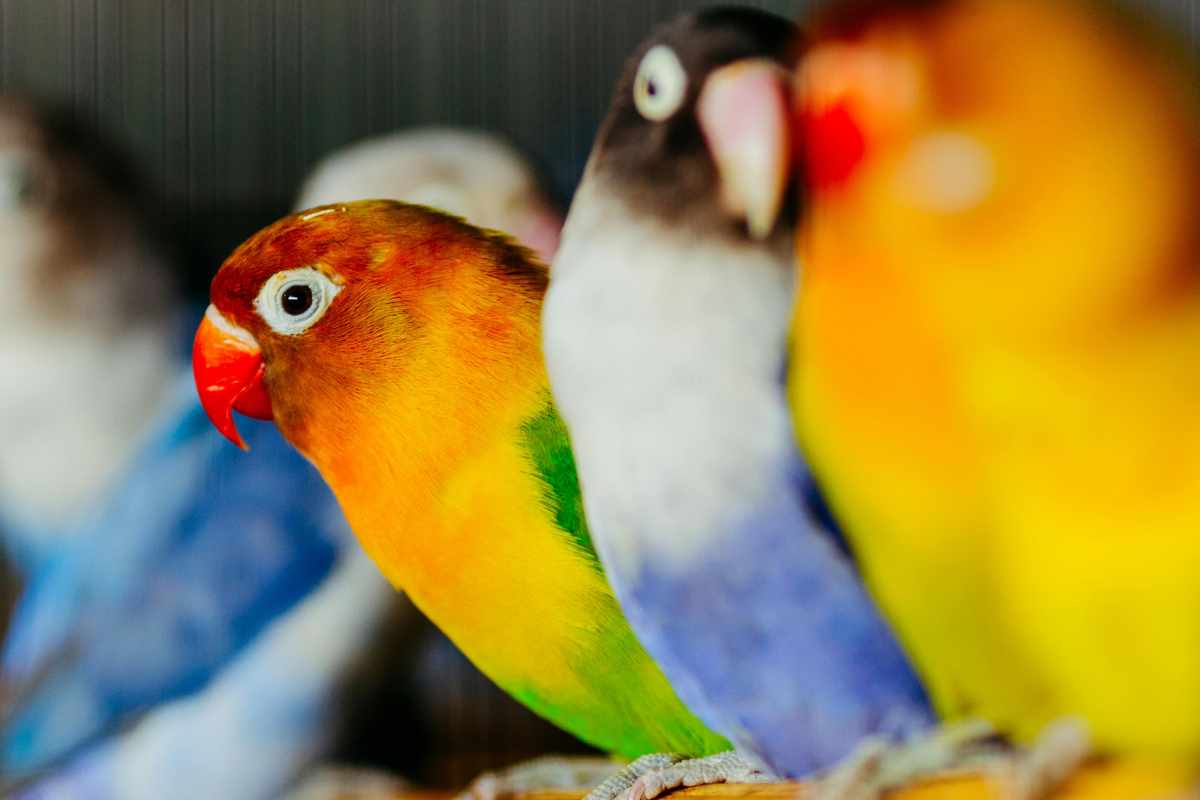
Training is enrichment—done kindly, it reduces boredom and builds confidence. Add easy tricks that reinforce the foundation skills:
Spin: Use the target to guide a small circle; mark and treat when your lovebird completes a turn.
Stationing: Teach the bird to perch on a specific mat or stick when cued. This helps during feeding, cleaning, or multi-bird households.
Foraging games: Hide tiny treats in a paper cup, foraging wheel, or wrapped paper twist. Pair foraging after a good session so your bird associates training with choice and play.
Your Two-Week Starter Plan
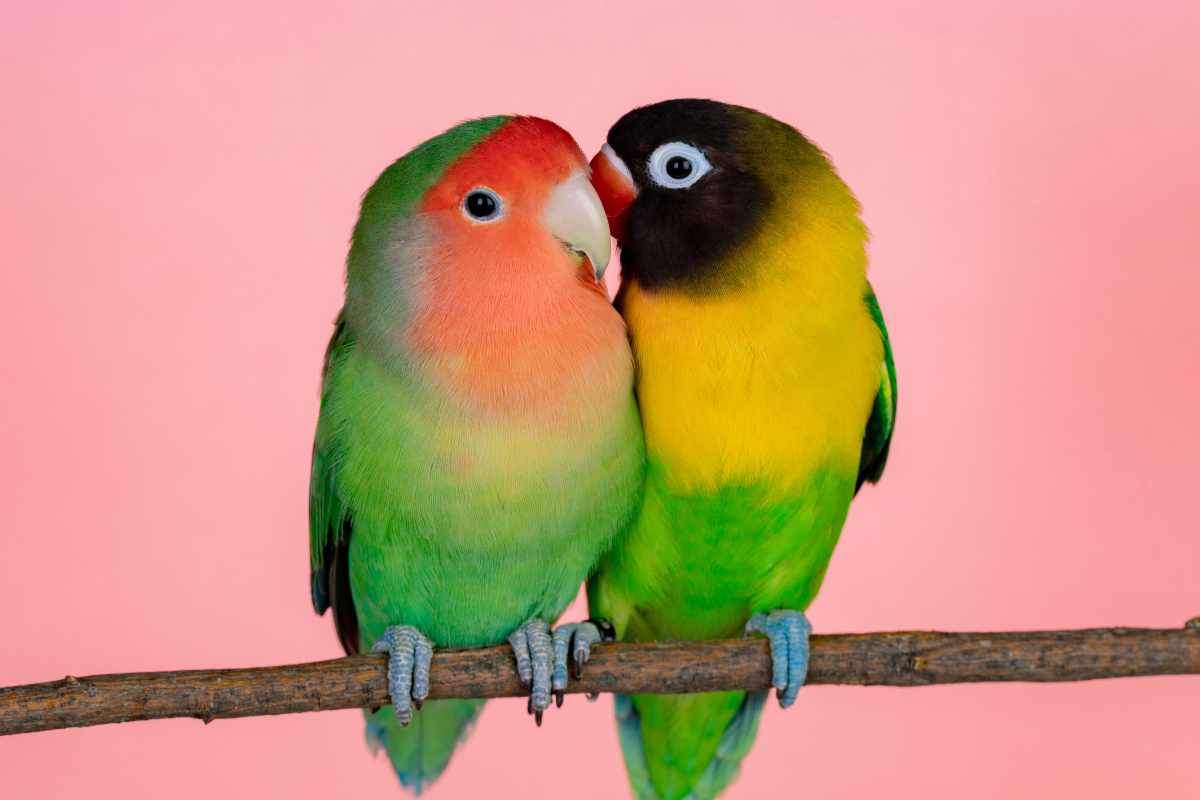
Days 1–3: Trust & Proximity
Work near the cage or a familiar perch.
Reinforce calm looks at your hand and micro-leans toward it.
Introduce the marker and a tiny treat routine.
Days 4–7: Step-Up Foundations
Present finger or perch at chest level, add the “Step up” cue.
Reinforce one foot → two feet → brief seconds on your hand.
Keep sessions under 8 minutes, twice daily if your bird is eager.
Days 8–10: Target Training
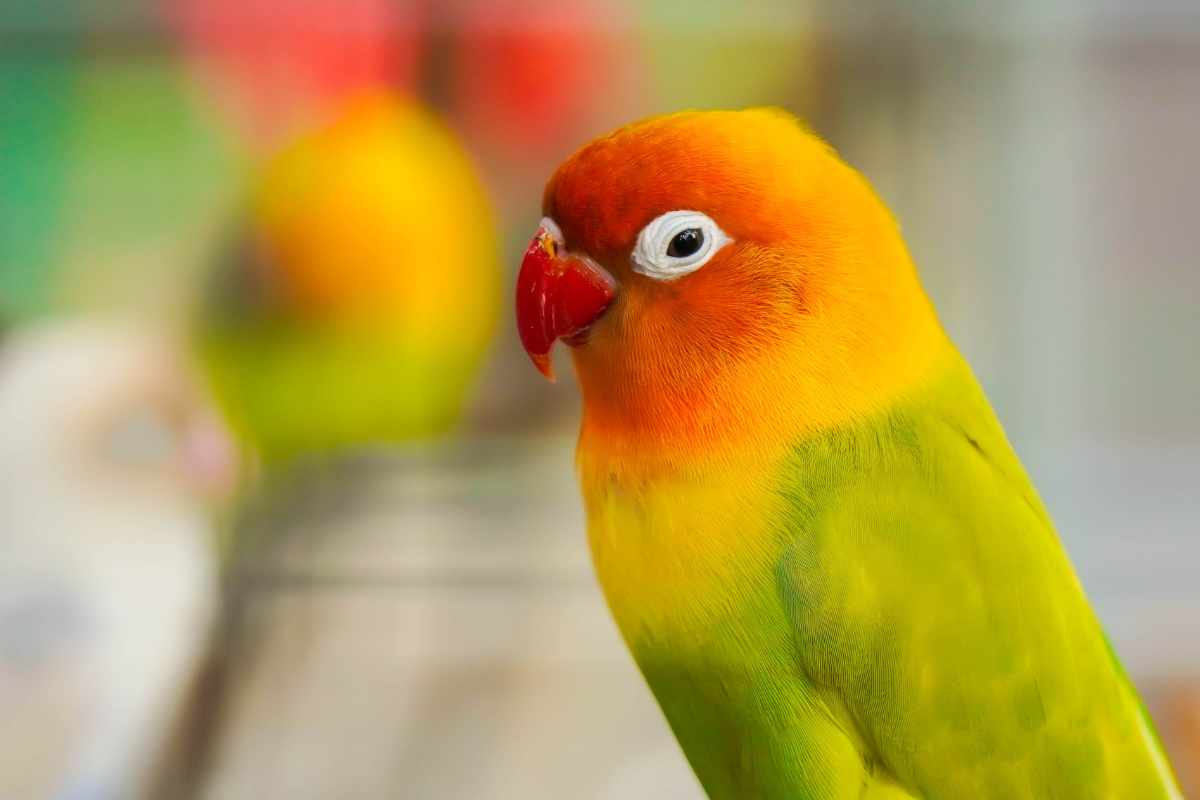
Teach beak touch on a target, then one or two steps following it.
Combine with step-up: target → step onto finger → treat.
Start stationing on a clearly marked perch near you.
Days 11–12: Recall at Short Distance
From the station perch, call your bird to your hand at 10–20 cm.
Build to 30–40 cm only if each step is calm and consistent.
Reward generously; include jackpots for firsts.
Days 13–14: Generalize & Fade
Practice in a second safe room; reduce distance again when you change locations.
Start fading food every other success; add praise, scritches, or play.
Finish with a short foraging game to keep training fun.
Quick FAQ
How long should a training session be?
Short and sweet: 5–8 minutes is perfect. You can do two brief sessions spaced several hours apart. Always end on a win.
When can I start training?
As soon as your lovebird is settled and eating comfortably in your home. Young or new birds benefit from trust-building first—several days of calm proximity before asking for step-up.
What if my lovebird is molting or seems tired?
Training during molt is fine if your bird is comfortable. Use gentler criteria, more breaks, and keep sessions extra short. On low-energy days, switch to passive enrichment like foraging.
Do I need to clip wings to train recall?
No. Recall is about motivation and clarity, not clipping. Many guardians train excellent recall with flighted birds by starting very close, rewarding generously, and increasing distance gradually in a safe, enclosed space.
Should I use a clicker?
A clicker is helpful but not required. A consistent verbal marker like “yes!” works well. Pick one, be consistent, and keep your timing sharp.
Keep the Momentum

Consistency beats intensity. Celebrate small improvements, keep treats tiny, and always prioritize comfort and choice. If progress stalls, rewind one step, reward generously, and move forward in micro-increments.
Over time, your lovebird will view training as a game you play together—one that makes daily life easier, safer, and a lot more fun.
Key takeaways:
Use positive reinforcement with a clear marker and tiny, high-value treats.
Master step-up, target training, and recall in that order.
Keep sessions short, criteria small, and end on success.
Read body language and use the Safe Pause Rule to protect trust.
Add enrichment and simple tricks to keep learning joyful.
With patience and a plan, you’ll build a confident, cooperative companion who chooses to work with you—because training feels safe, predictable, and rewarding.

Source: Parrots Awesomeness
Did you find this post useful or inspiring? Save THIS PIN to your Pets Board on Pinterest!

You may also like