
- Urbaki Pets
- Dogs
- Interactive Play for Dogs: Using Technology to Stimulate Their Minds
Interactive Play for Dogs: Using Technology to Stimulate Their Minds

10/09/2024 · Updated on: 16/10/2025

Dogs don’t just need walks—they need mental stimulation. Tech-assisted play can enrich your dog’s day, reduce boredom and anxiety, and make indoor time feel meaningful.
This guide shows you how to use technology responsibly—from smart toys to wearables—so your dog stays engaged without replacing real-world exercise, sniffing, and human interaction.
Quick note: Technology complements, not replaces, your routine. Always introduce new tools gradually and supervise until you understand your dog’s reactions.
Why Tech-Assisted Play Works

Mental workouts tire dogs in a different (often faster) way than physical exercise. Interactive devices offer novelty, problem-solving, and choice, which can help with separation anxiety, rainy-day restlessness, and under-stimulated working breeds.
Think of technology as a framework for variety, helping you rotate activities and keep the “what’s next?” spark alive.
How to Choose the Right Interactive Tool
Match the device to your dog’s age, temperament, and space:
Energy level: High-drive dogs may enjoy ball launchers in short, structured bursts; calmer dogs may prefer food puzzles or snuffle-style games.
Sensitivity: Sound-sensitive or easily overstimulated dogs often do better with quiet, slow puzzles and scent-based games.
Home setup: Apartments benefit from low-noise toys and short sessions; yards allow brief launcher play under supervision.
Budget and maintenance: Consider refill cost, cleaning, and durability.
Safety First: Setting Healthy Boundaries

Session length: Start with 5–7 minutes, rest, then repeat if your dog remains relaxed.
Watch for over-arousal: Heavy panting, frantic vocalizing, or ignoring cues are signs to pause.
Joints and repetitive strain: Keep launcher sessions short; avoid hard surfaces and steep fetch angles, especially for puppies and seniors.
Food safety: Use appropriately sized treats to prevent choking and adjust daily calories.
Privacy: If you use cameras, place them thoughtfully and secure your Wi-Fi.
The Main Tech Categories (and When to Use Them)
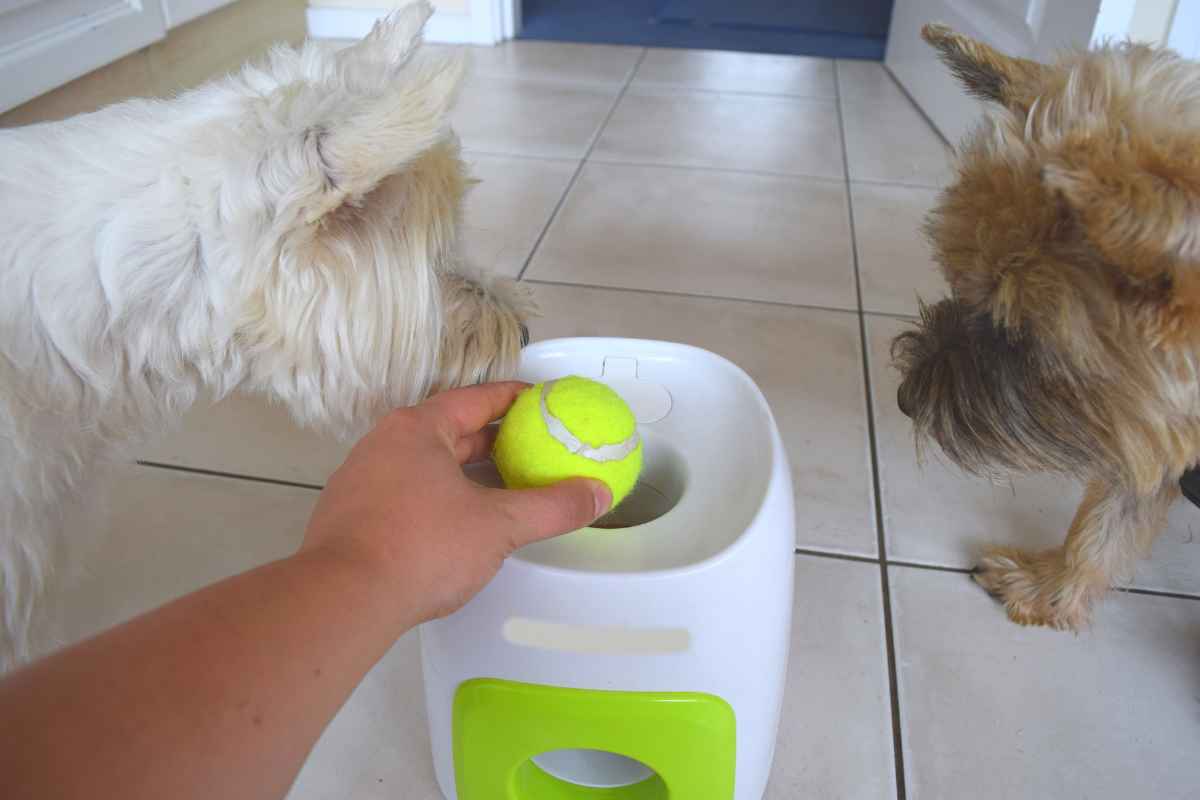
Ball Launchers & Movement Toys
Best for: High-energy dogs that love fetch.
How to run a session: 5 minutes of fetch → 2 minutes of sniffing on a snuffle mat → water → repeat once.
Pro tip: Vary distance and include “settle” between throws to reduce over-arousal.

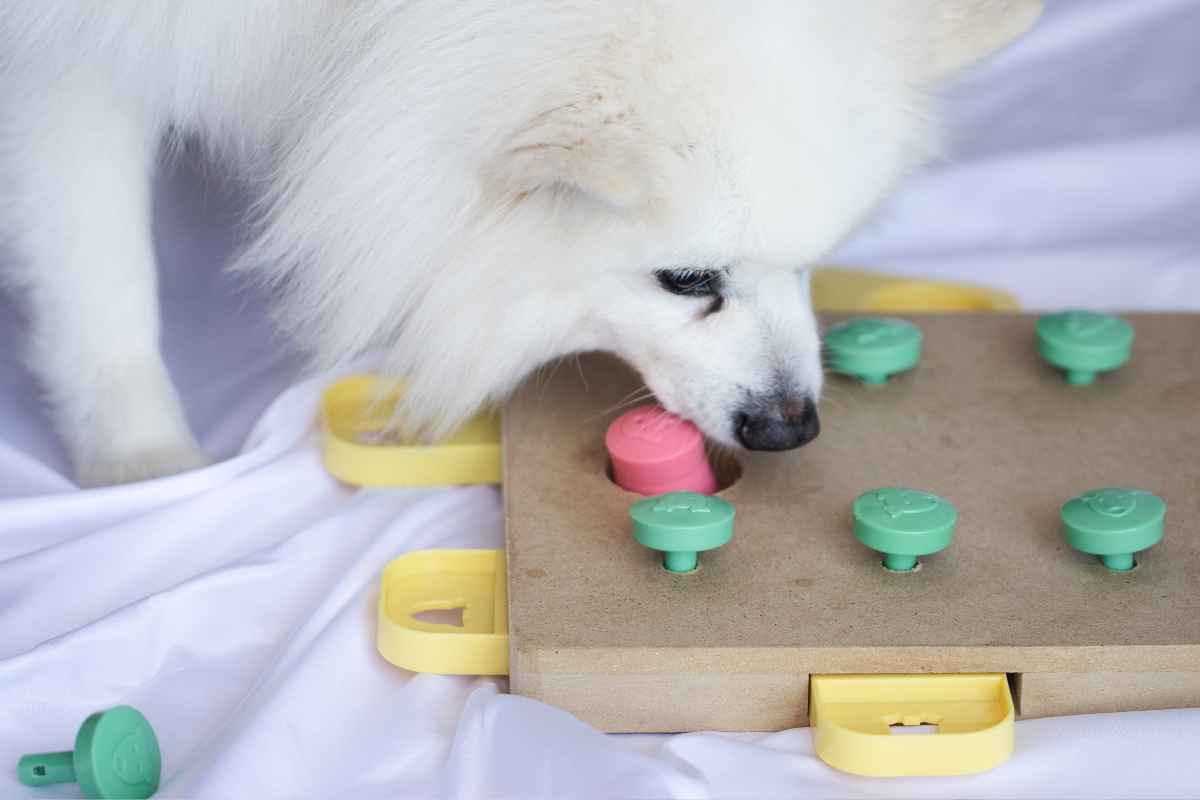
Treat-Dispensing Puzzles & Smart Feeders
Best for: Food-motivated dogs, rainy days, crate downtime.
How to run a session: Use soft, low-crumb treats; start on the easiest setting and increase difficulty weekly.
Goal: Build problem-solving and frustration tolerance gently.
Pet Cameras with Remote Toss/Two-Way Audio
Best for: Short check-ins and calm reinforcement when away.
How to run a session: Keep interactions short, predictable, and avoid creating an expectation of constant contact.
Training Apps & Brain-Games
Best for: Handlers who enjoy micro-lessons.
Use cases: 3–5 minute impulse control games, scent-targeting prompts, or guided enrichment timers.
Wearables & Activity Trackers
Best for: Monitoring rest vs. activity, spotting patterns in anxiety, and setting daily goals based on breed and age.

Comparison at a Glance
| Tool Type | Core Benefit | Suggested Session | Supervision | Noise Level | Cleanup/Maintenance | Best For |
|---|---|---|---|---|---|---|
| Ball launcher | Physical + mental outlet | 5–7 min blocks | High | Medium | Low | High-drive fetch lovers |
| Treat puzzle | Problem-solving & calm focus | 8–10 min | Medium | Low | Medium | Food-motivated dogs |
| Remote camera/toss | Check-ins & reward timing | 1–2 min | Medium | Low–Med | Medium | Alone-time routines |
| Training apps | Structured brain games | 3–5 min | Low | Low | Low | Handlers who like micro-sessions |
| Wearables | Progress & recovery insight | Ongoing | Low | None | Low | Data-driven goals |
Use the table to build a balanced plan that fits your dog and your space.
A 7-Day Enrichment Plan (Blend Tech + Traditional)
Day 1: Treat-dispensing puzzle (easy mode) in the morning; sniff walk in the evening.
Day 2: Ball launcher 2×5 minutes with settle breaks; lick mat cooldown.
Day 3: Training app: 3 micro-games (impulse control, target touch, name game).
Day 4: Remote camera check-in (1–2 minutes) + hide-and-seek treats at home.
Day 5: Puzzle feeder (medium difficulty); add a DIY towel burrito search.
Day 6: Wearable review: adjust activity target; snuffle mat for calm focus.
Day 7: Free-choice day: repeat your dog’s calmest favorite; end with a decompression sniff walk.
Golden rule: End every session with a calming activity (sniffing, licking, easy massage) to help the nervous system return to baseline.
Tailoring for Special Needs

Puppies
Short windows, soft surfaces, and very easy puzzles. Focus on positive exploration and predictable routines.
Seniors
Prioritize low-impact puzzles, gentle scentwork, and short, frequent sessions. Watch for fatigue and joint comfort.
Noise-Sensitive or Easily Overwhelmed Dogs
Choose quiet devices, scent-based games, and gradual exposure. Keep sessions ultra short with clear start/end cues.
Multi-Dog Homes
Run turn-taking with gates or tethers to prevent competition. Let dogs rest out of sight after their turn.
How to Measure Progress (So You Can Adjust)
Activity balance: Track active minutes vs. rest (wearables help).
Behavior change: Fewer destruction episodes? Faster settling after play?
Puzzle proficiency: If your dog solves an easy puzzle in under 2 minutes, increase the difficulty.
Recovery: After a session, your dog should relax within 10–15 minutes. If not, consider shortening or choosing calmer games.
Keeping a simple weekly log makes your plan data-informed and easy to tweak.
DIY, Low-Cost Enrichment (Tech Optional)
Towel roll puzzle: Wrap treats in a towel, roll it, and knot loosely for a scent-driven search.
Muffin-tin puzzle: Kibble in cups covered with tennis balls.
Cardboard “forage box”: Shredded paper + treats; supervise chewers.
Sniff stations: Small containers filled with safe herbs (such as chamomile and mint) to encourage nose work.
These pair beautifully with short tech sessions to create a full experience without overspending.
Structuring a Great Session
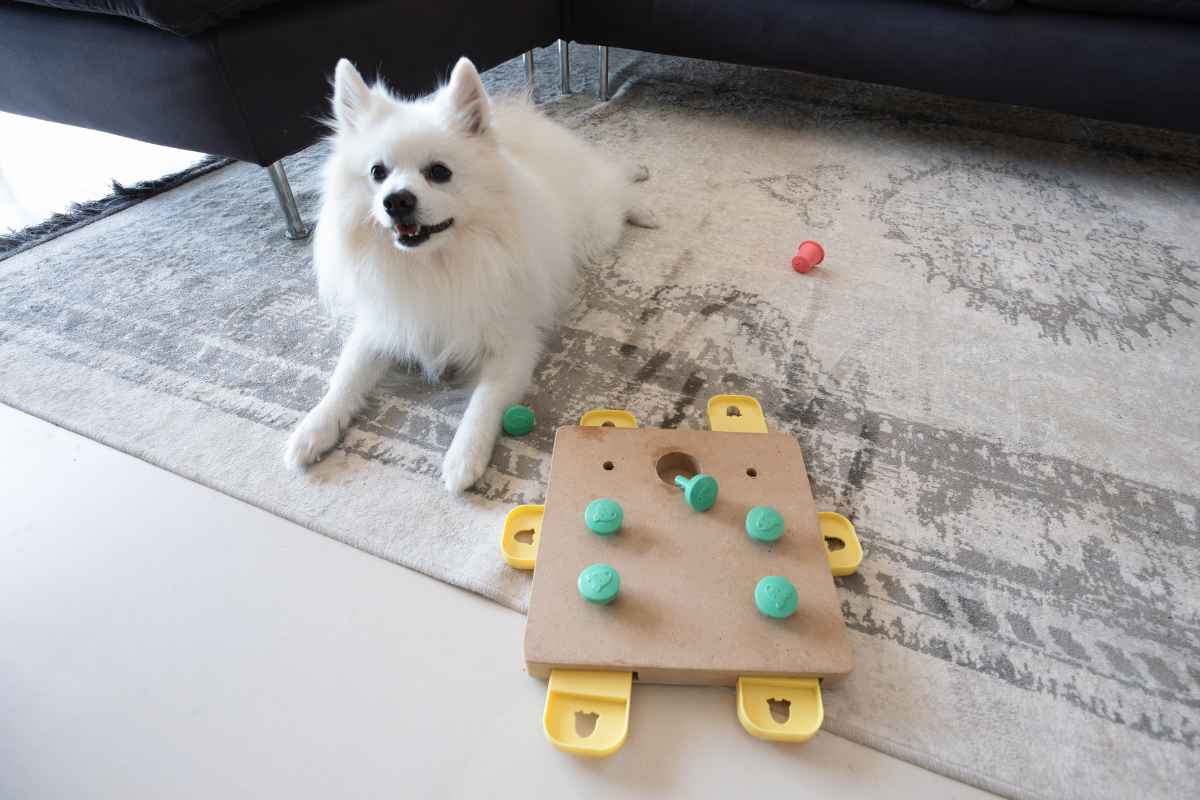
Warm-Up (30–60 seconds)
Cue a sit or find-it to bring focus. Present the device calmly.
Work Phase (3–7 minutes)
Guide gently. For puzzles, start with one easy success. For launchers, rotate cues (sit, wait, fetch, drop).
Cooldown (2–3 minutes)
Switch to licking or sniffing to lower arousal. Offer water and a comfy spot.
Consistency beats intensity. It’s better to do two short, well-structured sessions than one chaotic sprint.
Common Mistakes to Avoid
Letting the device run endlessly leads to compulsive behavior.
Skipping supervision on first uses.
Using only high-calorie treats without adjusting meals.
Relying solely on screens or auto-play instead of human interaction and outdoor sniff time.
Accessibility & UX Tips (For You and Your Dog)
Choose devices with clear difficulty settings, washable parts, and low mechanical noise.
Add non-slip mats under toys.
For cameras, disable unnecessary notifications and set defined check-in windows.
FAQs: Practical Answers You’ll Actually Use
How many minutes of interactive play are healthy?
For most adult dogs, aim for 10–20 minutes total, split into 2–3 short blocks with cooldowns. Adjust by age, breed, and arousal level.
Are ball launchers safe for dogs with joint issues?
Use with caution or avoid. Prefer low-impact puzzles, sniffing games, and controlled training instead. Always consult your vet for personalized advice.
Can I use tech to help with separation anxiety?
Tech can support a plan—structured treat-toss check-ins, calm audio, and predictable routines—but it won’t cure anxiety alone. Pair with gradual desensitization and professional guidance.
What treats work best in dispensers?
Small, dry or semi-moist pieces that don’t crumble excessively. Keep portions modest and subtract those calories from meals.
Build Your Dog’s Personalized Enrichment Mix
Start small, observe closely, and combine tech tools with classic enrichment—sniff walks, simple training, and rest.
The best program is balanced, flexible, and tailored to your dog’s signals. When you end on calm, track progress, and rotate activities weekly, interactive play for dogs becomes a reliable pathway to happier behavior and a stronger bond at home.
We hope you enjoy this video about Dogs

Source: AnimalWised
Did you find this post useful or inspiring? Save THIS PIN to your Pets Board on Pinterest!

Urbaki Editorial Team is the collaborative byline behind our pet-care guides. Our writers and editors turn evidence and real-life experience into clear, humane advice on training, wellbeing, nutrition basics, and everyday life with animals. Every article is planned, written, and edited by humans, fact-checked against reputable veterinary sources, and updated over time. This is an editorial pen name—see our Editorial Policy. Educational only; not a substitute for veterinary advice.
You may also like