
Rabbit Jumping: How to Get Started


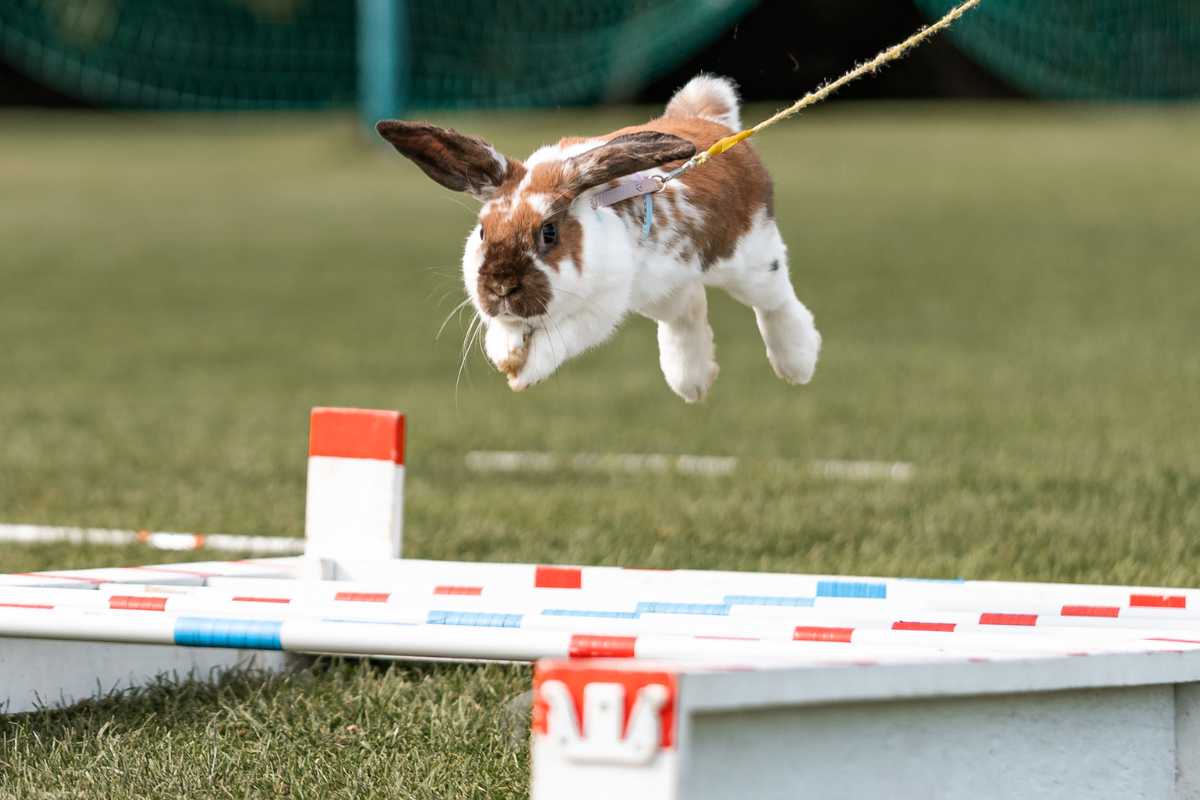
Rabbit jumping (also known as kaninhop or rabbit agility) is a playful sport where bunnies learn to hop over small, lightweight bars arranged in simple courses.
Beyond the cute factor, it offers low-impact exercise, mental stimulation, and a fun way to strengthen your bond.
For many indoor rabbits who spend much of their time in pens, a short, structured session of jumps turns routine energy into a safe outlet that supports healthy weight, confidence, and curiosity.
Before you begin, remember that training should feel like a game, not a test. Keep sessions short, reward generously, and stop while your rabbit is still interested. If your bunny looks unsure, we lower the challenge—not the mood.
Safe Setup: Surfaces, Harness, and Jump Heights That Protect Joints
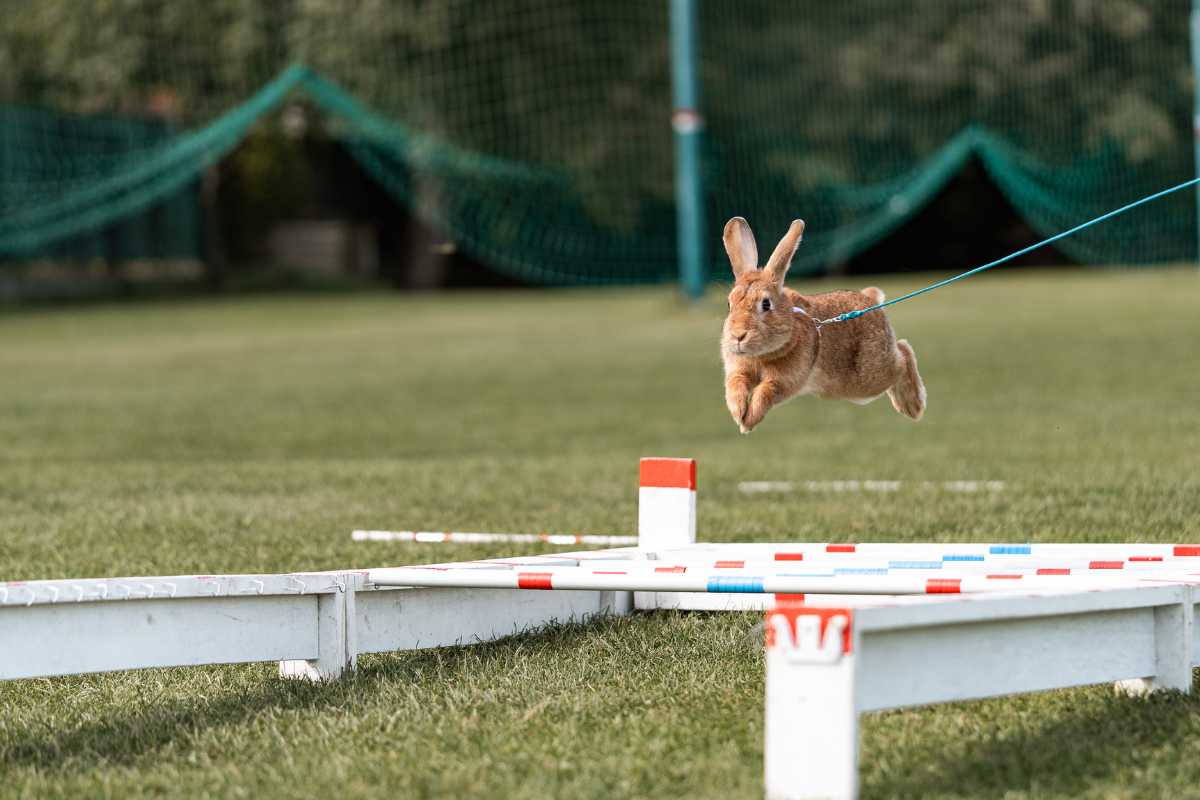
A safe environment is your foundation. Rabbits have powerful back legs and delicate spines, so we manage traction, equipment, and height to protect joints and prevent slips.
Surfaces That Support Hops
Train on grippy, even footing—rubber mats, carpet tiles, or a grass lawn. Avoid slick hardwood or tile, which can cause scrambling.
If you only have smooth floors, roll out a long mat “lane” so your bunny can push off and land comfortably.
The Right Harness (and Why Collars Are Out)
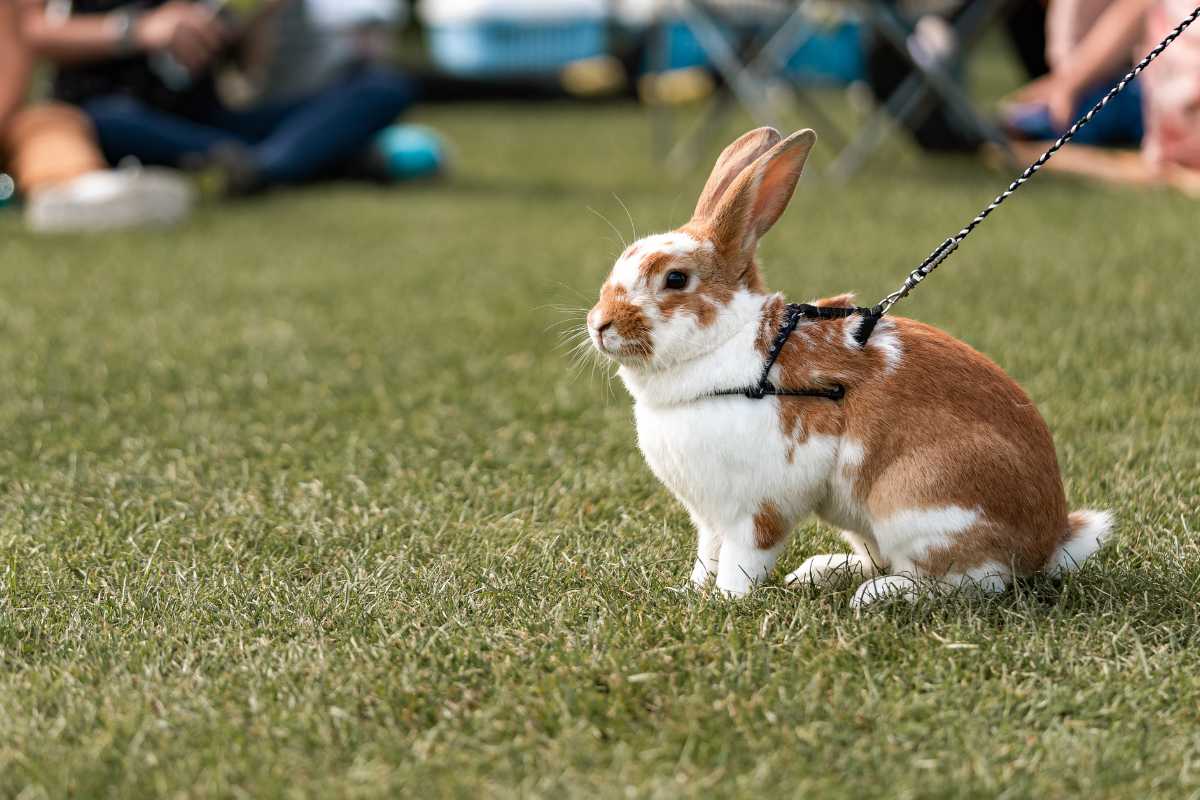
Use a lightweight H-style harness that distributes pressure across the chest and shoulders. It gives you gentle guidance if needed without restricting breathing.
Skip collars entirely; they can strain the neck if your rabbit stops suddenly. Keep the leash slack—your bunny leads, you follow.
Jumps That Fall Away Easily
Beginner jumps should be light and forgiving. Think PVC uprights with a loose bar that drops at the softest touch.
That way mistakes never become scary. Start with the bar on the ground or just a few centimeters high; the priority is confidence, not height.
Week-by-Week Beginner Plan (4 Weeks to a Mini Course)

This beginner plan builds skill and enthusiasm step by step. Each session is 5–7 minutes, once or twice a day, with 1–2 rest days per week. Always end on a win—one easy hop and a treat.
Week 1: Curiosity and Targeting
Goal: Create positive associations with the lane and jump setup.
Place the bar on the floor so it’s essentially a ground pole. Let your rabbit explore freely. Reward any approach to the bar with high-value treats (tiny bits of herbs or leafy greens).
Introduce a target: a small mat, a coaster, or your hand with a fist cue. Mark success with a bridge cue—a clicker or a cheerful “Yes!”—and reward at the target.
Keep things playful. If your bunny steps over the bar on the floor, celebrate like you won a medal.
Week 2: First True Hops (5–10 cm)
Goal: A comfortable single hop on cue.
Raise the bar to 5–10 cm. Place the target or a treat dish just beyond the bar to invite a hop.
Use your bridge cue the moment the front feet clear the bar. Offer frequent breaks—a minute of sniffing, slow petting if your rabbit enjoys it, or a quick “foraging” scatter.
Stop after 2–3 successful hops. Short and sweet beats long and tiring.
Week 3: Small Combinations and Flow
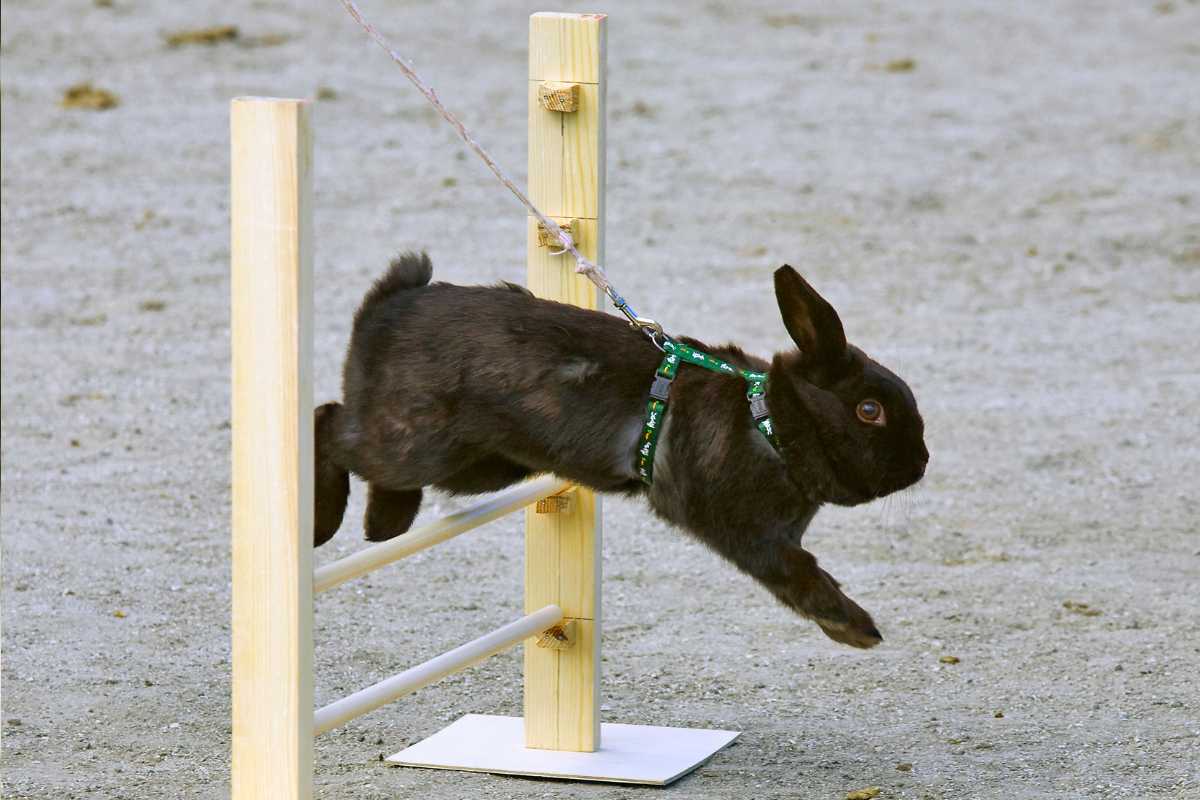
Goal: Hop two short bars in a row, keeping confidence high.
Arrange two low jumps with generous spacing. Guide with your target and light body language; think of yourself as a friendly “lane marker.”
You can add a gentle cavalletti (two ground poles) to improve rhythm. If your rabbit hesitates, reset to a single bar and try again later.
Week 4: Tiny Course and Novelty
Goal: A very simple, low-pressure mini course (3–4 low elements).
Keep lines straight and predictable. Maintain short sessions, clear bridge cues, and jackpots (an extra-tasty reward) for a full run.
Introduce novelty—move one jump slightly, add a soft tunnel (optional), or practice outdoors on grass if your rabbit is comfortable. New settings should still feel easy and fun.
Reading Your Rabbit: Stress Signals and When to Pause
Training only works if your rabbit feels safe. Watch for ears pinned back, flattening to the floor, rapid breathing, tail tucking, repeated turn-aways, or refusal to eat a normally exciting treat.
These signs mean “this is too much.” Lower the height, simplify the task, or end the session on a calm note.
Also consider health and temperament. Avoid jump training if your rabbit is recovering from injury, has chronic mobility issues, or shows discomfort when handled.
Heat stress is real; on warm days, keep sessions brief, provide shade, and offer water and a cool surface. When in doubt, consult a rabbit-savvy vet before starting a new exercise routine.
Fixing Common Roadblocks Without Pressure
Refusing the bar: Lower it to the ground again, sweeten the target reward, and reduce distractions. One easy success can reset the vibe.
Rushing or scattering: Give more space between jumps, add brief sniff breaks, and reward calm focus.
Overexcitement with treats: Use tiny rewards and deliver them after the hop, not before.
Freezing mid-lane: Step back, invite a side reset, and try a simpler version. Keep your bridge cue consistent so your rabbit knows exactly what earned the treat.
The golden rule: never pull, never scold, and never force a hop. Positive reinforcement builds trust, and trust builds performance.
Build or Buy? Easy DIY Jumps That Fall Safely
You can absolutely buy ready-made rabbit jumps, but a simple DIY setup is inexpensive and perfectly safe if you follow a few principles.
DIY Basics (PVC and Drop Bars)
Uprights: PVC pipe (½″) with wide feet for stability.
Holes or pegs: Create even height options; start at ground level and increase in small increments.
Bars: Lightweight dowels or PVC that rest loosely so they fall at a slight nudge.
Spacing: Leave generous approach and landing room—your lane should feel open, not cramped.
Harness Fit and Comfort
Whether you buy or DIY, check harness fit each session. You want snug but not tight—you should slide two fingers under the straps.
If your rabbit scratches at the harness, practice neutral handling sessions (put it on for a minute, treat, remove) on non-training days until it’s a non-event.
Warm-Up, Cool-Down, and Recovery Snacks
Think in micro-routines that last just a few minutes.
- Warm-up: strolling on the mat lane, target touches, and two ground poles to wake up rhythm.
- Cool-down: slow sniff-walks and gentle nose-targeting to “downshift” arousal.
Offer fresh water and a small leafy-green treat after training. Keep sugary snacks rare; the goal is motivation, not a sugar rush.
Join a Community (Clubs, Online Groups, Low-Pressure Events)
A friendly group keeps you inspired, gives feedback on course safety, and celebrates every tiny milestone. Look for beginner-friendly meetups or online communities that value welfare and positive methods over height or speed.
Low-key fun matches are great practice: short lines, familiar surfaces, lots of cheering, and no pressure to compete.
FAQs

How old should my rabbit be to start?
Most healthy juveniles and adults can begin ground-bar exploration as soon as they’re comfortable being handled and targeting—often around 4–6 months.
True jumping waits until your vet is confident growth plates are mature. Always start low and build slowly.
How long is a good session?
Five to seven minutes is plenty for beginners. Two or three clean hops, a break, and a happy ending beat a long, tiring workout. Quality > quantity.
Do I need a harness?
Many teams train on a loose H-style harness for safety and guidance in new environments. Advanced pairs often run off-lead in enclosed spaces. If you use a lead, keep it slack—you’re not steering, you’re supervising.
Is it stressful or cruel?
Done with choice and positive reinforcement, rabbit jumping is enriching, not stressful. Your rabbit can always opt out. If you see stress signals, you slow down, simplify, or stop for the day.
Can I train indoors?
Absolutely. Lay down grippy mats, use low bars, and keep the lane clear. Outdoors on grass is lovely if your rabbit is confident and the area is secure.
Sample 4-Week Checklist (Print-Friendly)
Week 1: Explore lane, bar on floor, introduce target + bridge cue.
Week 2: One low hop (5–10 cm), 2–3 reps, short sessions.
Week 3: Two low hops in a row, add ground poles for rhythm.
Week 4: A tiny course (3–4 easy elements), practice in a new but calm setting.
Tape this beside your training area and tick small wins. Consistency beats intensity.
A Note on Health, Breed, and Temperament
Any rabbit can enjoy low jumps with the right setup, but some will prefer sniff-work, foraging games, or tunnels more than bars—and that’s okay.
Your job is to discover what lights up your bunny. If you notice lingering soreness, reduced appetite, or unusual lethargy after sessions, pause training and consult a rabbit-savvy vet. Comfort comes first.
Ready to Hop?
You don’t need fancy gear or big heights to start. Lay a bar on the floor, grab a few high-value treats, and try a three-minute session today. Celebrate every curious step.
Over the next month, those tiny wins add up to a confident, bouncing partner—and a delightful new routine you’ll both look forward to.
For an easy start, create a Beginner Rabbit Jumping Checklist with your harness fit notes, warm-up ideas, and weekly goals. Keep it simple, keep it kind, and let your rabbit’s enthusiasm lead the way.
Enjoy The Video About Rabbits

Source: Paws of Prey
Did you find this post useful or inspiring? Save THIS PIN to your Pets Board on Pinterest!

You may also like