
The Best Natural Foods to Improve Dental Health in Hamsters


Hamsters’ incisors never stop growing, so keeping them the right length isn’t just cosmetic—it’s essential for eating, grooming, and overall comfort.
While fresh foods can support hamster dental health, the most important foundation is a balanced pellet or lab-block diet.
Think of pellets as the “multivitamin” that prevents nutritional gaps, and think of natural foods and chews as helpful, enriching extras.
Below you’ll find a clear guide to the safest choices, realistic portions, and smart enrichment that truly helps file down those teeth.
What Actually Files Down Hamster Teeth

Gnawing vs. “Hard Foods”
It’s a common myth that simply feeding “hard foods” will keep teeth short. In reality, regular gnawing on safe materials is what mechanically files incisors.
Crunchy vegetables offer texture, but they don’t replace the steady abrasion of wood chews, cardboard, and other safe items. Build your plan around chew opportunities every day, then layer in fresh produce for variety and hydration.
Enrichment That Encourages Chewing
Set your hamster up to work for texture. Offer a rotation of safe wooden chews, cardboard tubes, and paper-based hideouts.
Scatter treats or veggies inside a crumpled paper “parcel,” hang a chew from the lid to create a new angle, and provide multiple gnaw points around the enclosure. Variety keeps interest high—and teeth naturally busy.
Safe Crunchy Veg—With Portions

Fresh vegetables add water, fiber, and enrichment. They should be small complements to pellets, not the main course.
As a simple benchmark, offer a piece about the size of your hamster’s ear per serving, 2–3 times per week, unless otherwise noted below.
Always wash produce, introduce new items slowly, and monitor stools for any softening.
Cucumber: Extra hydrating and very light; ideal for hot days.
Bell pepper (any color): Great crunch, vitamin C, and low sugar.
Broccoli stem: A dense, satisfying chew; give tiny pieces to avoid gas.
Carrot: Tasty but naturally sugary; treat-size pieces 1–2×/week.
Celery: Offers stringy texture—remove the tough strings and chop finely to avoid choking.
These vegetables encourage chewing without loading your hamster with sugar or excess calories. Rotate them so the textures stay interesting.
Fruits: Tiny, Occasional Treats

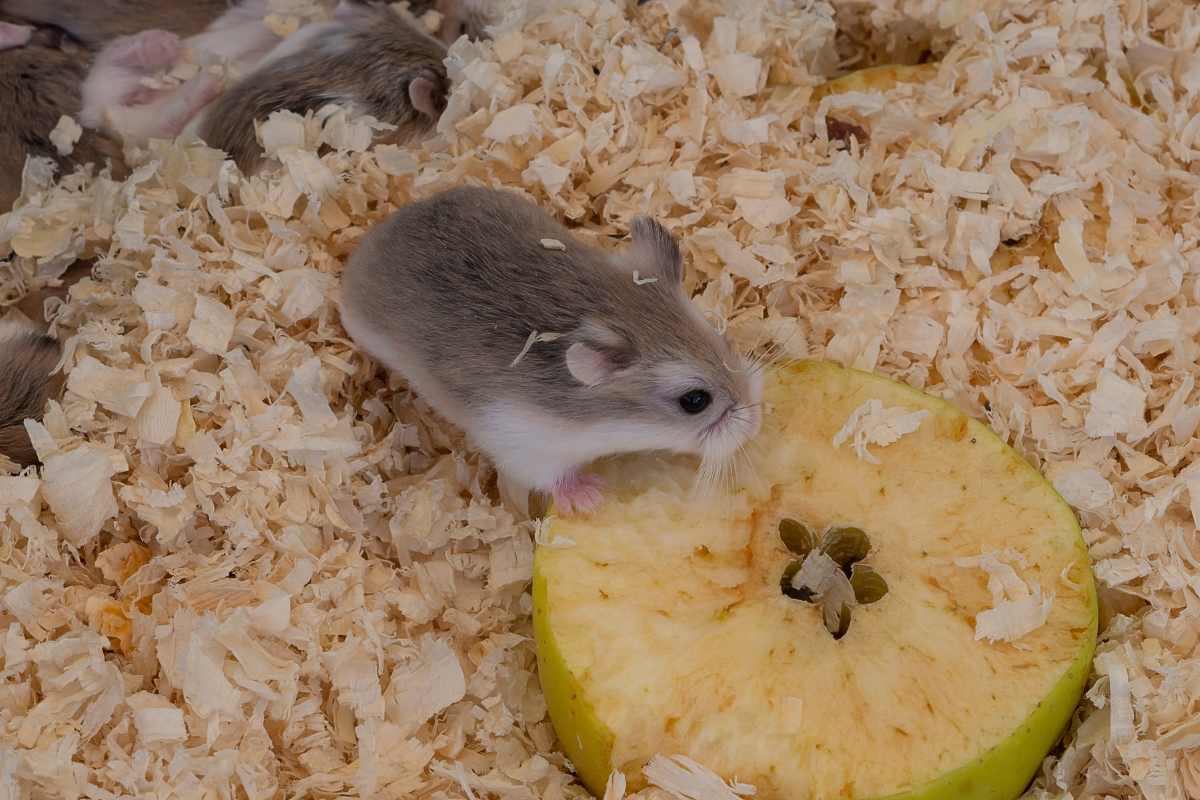
Fruit is fun—but keep it rare and tiny due to natural sugars. Offer a blueberry-sized piece once or twice per week at most. Great choices include:
Apple flesh (seed-free)
Blueberry (single piece)
Pear (small cube)
If you keep dwarf species, be extra conservative with fruit because of diabetes risk. In all cases, pair fruit treats with plenty of opportunities to chew, dig, and explore so sugar doesn’t become the main attraction.
Seeds & Nuts: Treats, Not Staples

Seeds and nuts are energy-dense and delicious. Use them as training rewards or enrichment, not as daily fillers.
Sunflower & pumpkin seeds: Offer unsalted seeds sparingly—think one or two as a special reward.
Almonds: Only sweet almonds, plain and unsalted, in very small amounts (for example, half of a thin flake no more than once a week). Never give bitter almonds and avoid roasted-salted mixes.
Mixed seed blends: If you use a commercial mix, your hamster may cherry-pick favorites; pellets or lab blocks prevent that selection and keep nutrition on track.
Using seeds and nuts wisely adds motivation during handling and taming while keeping weight gain in check.
Herbs & Hay for Enrichment

Timothy hay isn’t nutritionally essential for hamsters the way it is for rabbits or guinea pigs, but it’s excellent enrichment. A small handful gives extra fiber, nesting material, and another texture to mouth and manipulate.
You can also offer mild herbs like parsley, cilantro, or dill in tiny sprigs for scent and variety. These are garnishes, not daily staples—think of them as a sensory boost for the enclosure.
Natural Chews & Safe Woods
The best tooth-filing happens on safe, clean wood. Great options include apple, pear, willow, and hazel.
Aim for untreated branches free of pesticides, sap, paint, or varnish. Rinse and dry thoroughly before use. Replace any chew that becomes soiled or soggy.
Equally important is knowing what to avoid. Skip soft-wood beddings and aromatic woods like cedar or pine, and avoid stone-fruit woods (peach, apricot) that can contain problematic resins.
If you’re unsure where a branch came from, leave it out and choose a store-bought chew marked as safe for small animals.
Quick tip: Rotate 2–3 chew types each week. Novelty resets curiosity and keeps gnawing consistent.
Portions & Frequency at a Glance

Pellets/Lab blocks: Daily base diet. Check your brand’s serving guidelines and maintain a steady routine.
Vegetables: Ear-sized piece 2–3×/week; avoid gassy or very watery veg in large amounts.
Fruit: Blueberry-sized piece 1–2×/week max; for dwarfs, even less.
Seeds/Nuts: Reward-level amounts (1–2 seeds, or a thin almond flake weekly).
Hay: Small handful for nesting/foraging enrichment; refresh as needed.
Chews: Always available—mix woods, cardboard, and paper-based items.
Keeping servings small is kinder to a tiny digestive system and lets you observe what your hamster enjoys without overwhelming their diet.
Setup & Hygiene Tips That Support Teeth
Scatter feeding: Hide a portion of pellets around the enclosure to encourage natural foraging and gentle tooth wear.
Layered textures: Mix paper bedding with hay “veins,” cork, and cardboard so there’s always something new to mouth and shred.
Fresh water, always: Good hydration keeps the mouth comfortable and supports healthy chewing.
Skip sticky foods: Anything that gums up the incisors or cheek pouches (syrupy fruits, sweet sauces) is a no.
Slow introductions: Add one fresh item at a time. If stools soften, pause and reduce the portion.
Red Flags & Vet Care
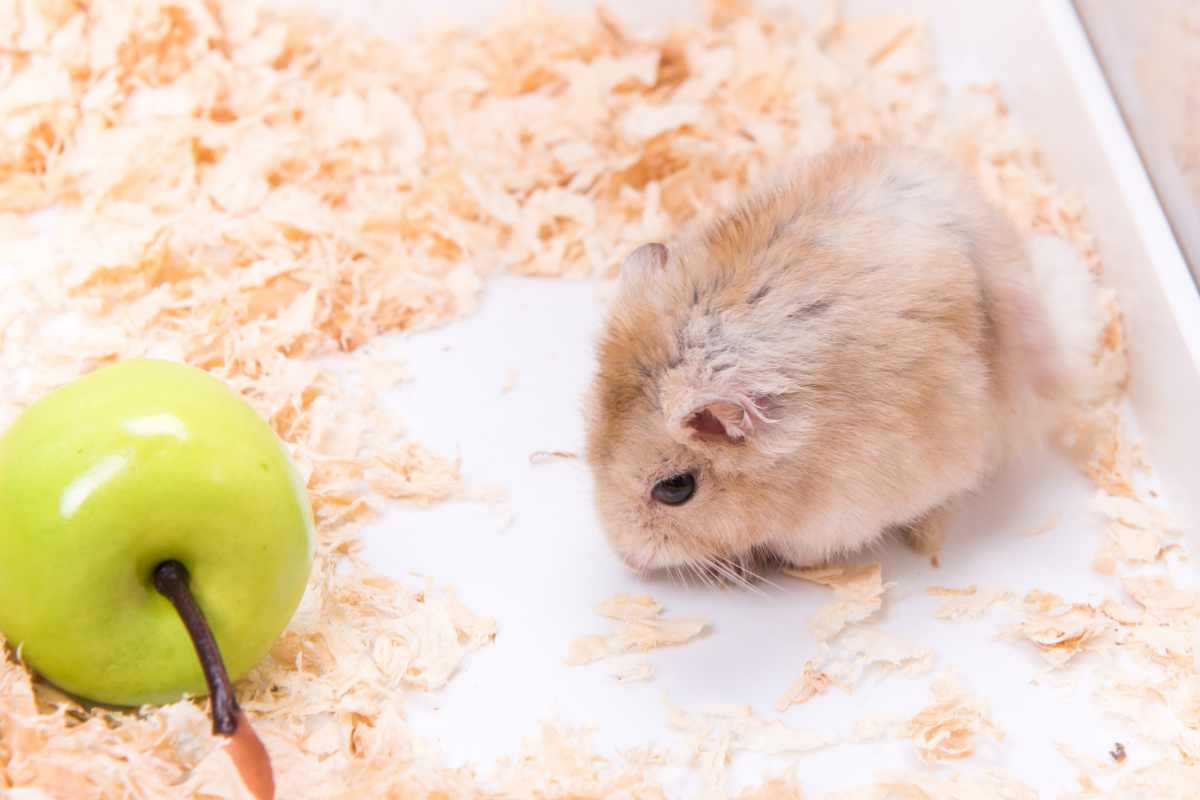
Watch for warning signs that teeth are getting too long or misaligned: difficulty picking up food, dropping pellets, drooling, pawing at the mouth, weight loss, blood-tinged saliva, facial swelling, or visible incisors that cross or curve.
These are not DIY problems. Overgrown or misaligned teeth require a veterinarian experienced with small mammals to perform a safe trim and check for underlying issues.
Early intervention prevents mouth injuries and restores normal eating quickly.
Sample Week You Can Tweak

Daily: Pellets or lab blocks; safe chews available 24/7; fresh water.
Mon/Thu: Bell pepper or cucumber (ear-sized piece).
Tue: One or two unsalted pumpkin/sunflower seeds during handling.
Sat: Tiny carrot cube or a single blueberry (not both).
Any day: Small handful of timothy hay for nesting or foraging.
This light schedule keeps sugar modest, variety high, and chewing opportunities constant.
Hamster Dental Health, Happy Hamster
When you zoom out, the formula is simple: pellets for nutrition, chews for filing, and small, smart add-ons (veg, tiny fruit, seeds) for enrichment.
Keep portions tiny, rotate textures, and let your hamster work for food whenever possible—that mix mirrors what they’re built to do.
By curating safe woods, crunchy low-sugar veggies, and occasional treats, you’ll protect those ever-growing incisors and make every day more interesting.
And if you ever notice changes in eating or a sudden reluctance to chew, act early and call your vet. Healthy teeth make for a confident, curious, and comfortable little companion—and that’s the goal of every great hamster setup.
Enjoy The Video About Small Pets

Source: The Zoological World
Did you find this post useful or inspiring? Save THIS PIN to your Pets Board on Pinterest!

You may also like