
The Sky's the Limit: How to Train Your Bird to Fly to Your Arm


Training your bird to fly to your arm is not only a fun and rewarding experience, but it also strengthens the bond between you and your feathered companion.
Whether you're working with a parrot, pigeon, or any other bird species, the steps involved are relatively similar.
By incorporating patience, consistency, and positive reinforcement, you can teach your bird to confidently fly to your arm on command.
Understanding Your Bird's Behavior

Before jumping into the training process, it’s crucial to understand your bird’s instincts and behavior.
Birds are intelligent creatures, but they can also be wary of new experiences, especially when they involve flying.
Each bird is unique, so patience is key. Some birds may take to the idea of flying to your arm quickly, while others may need more time to build the confidence required to leap.
By observing your bird's body language and adjusting your approach accordingly, you can ensure the training process is both effective and enjoyable.
Step 1: Build Trust with Your Bird

Before you start training, it’s essential to establish trust with your bird. This step is foundational for a successful training experience.
Spend quality time with your bird, talking to them gently, offering treats, and allowing them to become comfortable with your presence.
The more trust you build, the more likely your bird will feel safe and confident flying to you.
Tips for Building Trust:
Offer treats from your hand.
Speak softly to your bird to avoid startling them.
Avoid any sudden movements or loud noises during your bonding time.
Step 2: Introduce the Concept of Flight

Once your bird trusts you, it’s time to introduce the idea of flying to your arm.
Start by having your bird perch on a stable surface such as a table or a stand, then hold your arm out at a slight distance. Gently call your bird’s name and encourage them to fly to your arm.
This can be aided by using a treat as motivation.
How to Encourage Flight:
Place a treat on your hand or arm to encourage the bird to fly towards it.
Gradually increase the distance between you and your bird to build their confidence.
Step 3: Use Positive Reinforcement

Birds thrive on positive reinforcement. Every time your bird successfully flies to your arm, offer immediate praise and a treat.
This will help them associate the act of flying to your arm with a positive reward.
Consistency is key — the more your bird is rewarded for doing the correct behavior, the more likely they are to repeat it.
Positive Reinforcement Tips:
Use a clicker to mark the moment your bird flies to your arm (if you’re using clicker training).
Always reward with a treat or verbal praise right after the flight.
Keep training sessions short to avoid overwhelming your bird.
Step 4: Gradually Increase the Challenge

Once your bird consistently flies to your arm from a short distance, you can start to increase the challenge.
Try increasing the distance or introducing obstacles like flying through hoops or navigating between different perches.
This will help build your bird's skills and keep the training process fun.
Tips for Increasing the Challenge:
Gradually move your arm farther from the bird’s perch.
Introduce new perches or obstacles to encourage more complex flight patterns.
Step 5: Safety Considerations During Training

Training your bird to fly to your arm is an exciting and rewarding experience, but safety must always be a priority.
Avoid training in areas with open windows or places where your bird could fly into hazardous situations. Make sure the environment is safe, calm, and free of distractions.
If your bird shows signs of stress or fear, take a step back and give them time to adjust before resuming training.
Important Safety Tips:
Never train near open windows or fans.
Always be aware of your bird’s body language—signs of stress include feather puffing or rapid breathing.
If your bird is not ready to fly, don’t force the behavior.
Step 6: Reinforce the Behavior Consistently
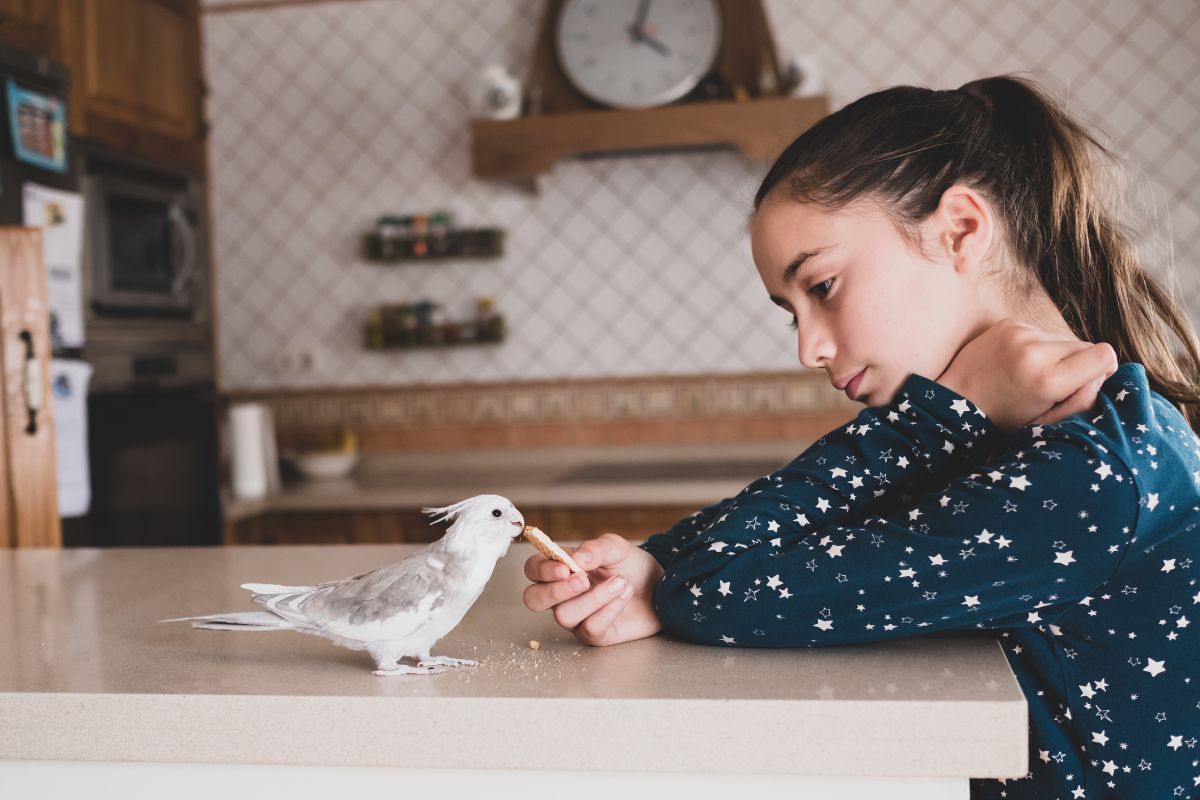
As with any behavior, consistency is essential. Continue to practice regularly, but avoid overtraining. Birds, like all animals, can become fatigued or bored if the training is too intense.
Short, frequent sessions are more effective than long, exhaustive ones. Reinforce the positive behavior consistently so it becomes ingrained.
Key Consistency Tips:
Keep training sessions to 5-10 minutes at a time.
Repeat the same steps and rewards to help solidify the behavior.
Be patient – your bird will learn at its own pace.
Keep the Training Fun and Rewarding
Training your bird to fly to your arm is a process that takes time, patience, and understanding.
By building trust, using positive reinforcement, and gradually increasing the challenge, you’ll not only teach your bird a fun new trick but also strengthen your bond.
Always ensure that training remains a positive experience, keeping it fun and rewarding for both you and your feathered companion.
We hope you enjoy this video about Birds

Source: ElleAndTheBirds
Did you find this post useful or inspiring? Save THIS PIN to your Pets Board on Pinterest!

You may also like