
Trick Training 101: 6 Simple Tricks to Teach Your Horse


Teaching your horse a few simple tricks can be fun, confidence-building, and surprisingly useful for day-to-day handling.
When you approach trick training with positive reinforcement, clear communication, and a focus on safety, you’ll strengthen your partnership while giving your horse new ways to think, stretch, and engage.
This guide updates common advice with modern, horse-friendly methods and replaces risky crowd-pleasers with safe, beginner-friendly alternatives that still look great and feel good for your horse.
Before You Start: Set Up for Success

A smooth session begins long before the first cue. Choose a quiet, familiar space with good footing and minimal distractions.
Keep sessions short and upbeat—five to ten minutes is plenty—so your horse finishes eager for next time.
If your horse hasn’t been checked recently, make sure teeth, back, and saddle fit are in order; discomfort can show up as “disobedience.”
Have a simple plan: one behavior goal, one clear cue, and a simple criterion for success (for example, “touch the target with your nose”). End on a win, even a small one, and offer your horse a break with water and a graze or hand-walk.
Throughout, watch for stress signals (tight mouth, swishing tail, pinned ears, rushing, freezing). Those are feedback that your criteria or timing need adjusting.
How Horses Learn (Fast Primer)

Positive reinforcement (R+)
With positive reinforcement, your horse earns something pleasant when they offer the behavior you like. Over time, the behavior becomes stronger because it predicts a reward.
The “something pleasant” can be tiny treats, scratching a favorite spot, or a brief rest. The magic is in making the timing crystal clear.
The marker: your training highlighter
A marker—a click or a short word like “Yes!”—tells your horse, in the exact instant, “That! That’s what I loved.” This makes training clearer, kinder, and faster because it connects the behavior to the reward with precision timing.
Targeting and shaping
A target (cone, ball on a stick, even your fist) is an easy way to show “please go here” without pushing or pulling.
Pair that with shaping—reinforcing small, correct pieces—and you’ll build complex tricks without confusion. Think of shaping as stacking Lego bricks: collect enough tiny wins, and you get a castle.
Reward Manners That Prevent Problems

Food can be incredibly motivating, but it must come with polite treat etiquette. Deliver food on a flat palm at arm’s length and only when your horse’s head is centered and calm—never for nudging pockets.
Use small pieces to avoid over-arousal and reduce choke risk. Mix in non-food rewards: a wither scratch, a short breather, or walking to a favorite spot.
If your horse gets too excited about treats, drop food altogether for a few minutes and reinforce with scratches or rest until calm returns.
Six Beginner-Friendly Tricks That Build Trust
Each of the following includes what it develops, what good performance looks like (criteria), and the most common “oops” moments to avoid. No step-by-step recipe—just the principles you need to tailor to your horse.
1) Nose Target to Hand, Cone, or Stick

What it builds: Focus, responsiveness, and soft, forward curiosity. Targets are a Swiss-army tool—use them to position the head, guide forehand/shoulder placement, or line up for mounting.
Criteria to reward: A clear, purposeful touch of the nose to the target, then a brief moment of stillness.
Common slip-ups: Mugging for treats or head butting the target. Solve by reinforcing calm orientation before and after the touch, and presenting the target slightly away from your body so your personal space stays respected.
2) Head-Down on Cue

What it builds: Relaxation and body control. A lowered head is a natural calming signal, useful at the vet, for bridling, and in spooky moments.
Criteria to reward: A smooth lowering of the poll to a comfortable depth, even if it’s just a few centimeters at first, paired with quiet breathing and soft eyes.
Common slip-ups: Bracing or rushing down for food. Slow the criteria, mark softness, and reward with a pause or a scratch rather than only food.
3) Polite Leg Lift (Front)

What it builds: Flexibility, farrier readiness, and mindful movement. This is not pawing; it’s a controlled, light lift on cue.
Criteria to reward: A minimal, balanced unweighting of the hoof or a short, quiet lift and replace. Think “feather-light,” not “stompy.”
Common slip-ups: Pawing or snatching the leg. Reinforce stillness first: stand square, then a tiny unweight earns the marker. If pawing appears, reset the picture, shorten sessions, and mark the moment before the paw would start.
4) Ground Tie or Mat Work

What it builds: Self-control and stationing. Teaching your horse to “park it” on a rubber mat or a specific spot keeps them safe and gives you hands-free moments to adjust tack.
Criteria to reward: Four feet quietly inside the boundary with relaxed posture for brief, gradually lengthening intervals.
Common slip-ups: Drifting off the spot or creeping forward. Don’t correct after the fact; instead, mark early for staying put, and reset before creeping becomes a habit. Reinforce heavily when distractions appear but your horse chooses to remain.
5) The Bow (Gentle Stretch Version)

What it builds: Flexibility through the neck and shoulders, body awareness, and a camera-worthy trick that looks impressive yet remains low-risk when taught thoughtfully.
Criteria to reward: A controlled fold with one knee softly flexed, the other leg long, and the head reaching down in a relaxed way. Depth is less important than balance and softness. Short holds are plenty.
Common slip-ups: Collapsing, over-stretching, or weight dumping on a single limb. Keep sessions tiny, reward shallow positions generously, and build duration last.
6) Spanish Walk Basics (Correct, Kind Foundations)

The Spanish walk is often misunderstood. It is not crossing the forelegs. It’s a forward, elevated extension of each foreleg in rhythm with the walk, with freedom through the shoulder.
What it builds: Shoulder mobility, cadence, and expression. Even the “baby version” adds flair to everyday leading.
Criteria to reward: A clear lift and forward reach of the foreleg with a relaxed neck and a marching walk. Height matters less than direction and rhythm—forward, not clawing downward or striking.
Common slip-ups: Kicking outward, striking, or planting the foot with a stomp. Use a target (for example, a handheld touch point in front of the knee) rather than tapping or prodding. Reinforce one or two quality lifts and then walk on to keep the rhythm cheerful.
Safer Alternatives to “Kiss” and “Smile”

“Cute” mouth-based tricks are popular but can create pushy treat habits or put fingers too close to teeth. Two friendly swaps:
“Touch the fist” (nose-to-knuckles target). It’s tidy, adorable, and teaches your horse to approach a safe spot on cue without crowding.
Capture a natural flehmen (“lip curl”) instead of prying the lip. Many horses offer it after smelling something interesting; if you mark and reward the moment, you can put it on cue without ever putting hands in the mouth.
Troubleshooting Without Stress

Split, don’t push. If progress stalls, slice your goal into lighter pieces. For a bow, that might mean reinforcing head toward the fetlock long before any knee bend.
Change one thing at a time. If you raise criteria (duration, distance, distraction), lower the other two. Clarity keeps your horse confident.
Mind the emotional bank account. Three or four easy wins for every tough ask. If your horse offers a different behavior, treat it as information, not defiance: “What picture did I present that made that the best answer?”
Reset the picture. If mugging, tension, or fussiness creep in, step back, breathe, and reinforce calm stillness. Then return to the trick with clearer criteria.
Safety and Ethics Come First

Some stunts—especially rearing—look dramatic but carry real risk. An unbalanced rear can flip a horse or strike a handler.
Keep flashy, high-risk behaviors out of the beginner list and, if you ever explore them, do so only with a qualified professional and appropriate safety measures.
Likewise, avoid aversive shortcuts (sharply tapping legs, grabbing lips) that may “work” fast but erode trust.
As the handler, protect your own body: closed-toe shoes, gloves if you prefer, and smart positioning. Keep your feet out of the arc of a lifted hoof. If using props, choose soft, visible targets and stable mats that won’t skid.
Make Your Training Media-Ready

If you’re photographing or filming, show the whole story: relaxed posture, a clear target or mat, and handler position that reads safe and professional.
Add concise alt text to images (for example, “Bay gelding lowering head on cue beside a blue target cone”) so your content is accessible and search-friendly.
A Quick Word on Progress and Personality

Every horse arrives with a unique blend of curiosity, caution, history, and humor. Lean into what your horse naturally enjoys.
If your mare loves nose targets but is lukewarm on leg lifts, ride that momentum and circle back later. You’re not on a deadline. Consistency beats intensity—five joyful minutes most days will outshine an hour once a week.
Wrap-Up: Make Trick Time Your Best Time Together

Great trick training doesn’t rely on force or theatrics; it thrives on clarity, kindness, and tiny wins.
Start with nose targets, head-down, polite leg lifts, ground tie or mat work, a gentle bow, and Spanish walk basics taught with correct forward reach.
Keep rewards thoughtful, criteria clear, and sessions short. When in doubt, split the task, mark earlier, and celebrate small steps. That’s how you turn a handful of simple behaviors into a confident, expressive horse who loves learning with you.
If you found this helpful, save it for later and share it with a barn friend who’s ready to add safe, joyful tricks to their routine. Your horse will thank you—with a bright eye, a loose neck, and that unmistakable “I get it!” sparkle.
Enjoy The Video About Horses
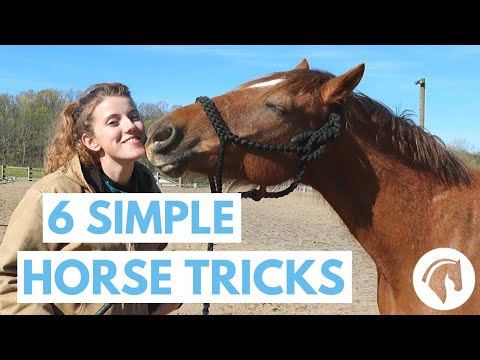
Source: Equine Helper
Did you find this post useful or inspiring? Save THIS PIN to your Pets Board on Pinterest!

You may also like