
Tweet Your Way to Success: Three Tricks Every Bird Should Master


Companion birds thrive when we give them structure, stimulation, and clear communication. Whether you share your home with a budgie, cockatiel, conure, or small parrot, teaching a few foundational skills can transform daily life.
This guide focuses on three high-impact behaviors—teach your pet bird to step up, parrot recall training, and bird enrichment and foraging—so handling becomes safer, bonding feels easier, and your bird stays mentally engaged.
No complicated routines, just humane principles that work across species and personalities.
Before You Start: Positive Reinforcement That Works

Training birds is about building trust, not forcing compliance. Positive reinforcement—rewarding the behaviors you want—keeps sessions light, clear, and enjoyable.
Choose a marker (a clicker or a brief word like “Yes!”) to tell your bird the exact moment they did something right, and follow it immediately with a tiny reward.
Small is key: a sunflower seed kernel, a millet nibble, or a micro-piece of a favorite nut prevents overfeeding and keeps motivation high.
Environment matters as much as technique. Short, 5–10 minute sessions in a calm, well-lit area help your bird focus.
Perches should be stable, and your hands should move predictably and slowly. Body language—soft eyes, relaxed shoulders, steady breathing—tells your bird you’re safe.
Lastly, end sessions on an easy success to build confidence. Progress sticks when training ends while your bird still wants more.
Skill #1 — Step-Up (Your Everyday Safety Tool)

What “Step-Up” Really Means
“Step-up” is more than a party trick; it’s the foundation for everyday care. A reliable step-up cue lets you move your bird between rooms, guide them away from hazards, and complete grooming or vet-prep calmly.
When your bird chooses to step onto your finger, hand, or a neutral perch, you get cooperation without wrestling or chasing—an essential ingredient for trust.
Shaping a Confident, Voluntary Step-Up

Think of step-up as a polite invitation rather than a command. Present a steady perch or your finger just below chest height, keep your cue word consistent, and mark and reward when your bird’s weight shifts toward you.
Early on, celebrate tiny approximations—turning toward the perch, leaning forward, lifting one foot—so your bird learns the path to success.
As confidence grows, you’ll reinforce full weight transfer and calm footing. If your bird hesitates, lower the demand and make the next success easier.
Common Sticking Points (and Gentle Fixes)
If your bird nibbles or beak-tests your finger, stay still and neutral; reward only when both feet settle and posture relaxes. If they “ladder” anxiously (stepping up and down in rapid succession), pause, reduce excitement, and reinforce stillness.
And if previous experiences made hands scary, use a neutral perch as a bridge: once that’s easy, gradually generalize to your hand.
Budgie training tips often start here, as small birds gain huge confidence once step-up feels safe and predictable.
Skill #2 — Recall (Come When Called)

Why Recall Is a Big Deal
A cheerful, reliable recall—your bird flying or walking to you when invited—turns everyday moments into connection and gives you a powerful safety net indoors.
It also adds a burst of movement to your bird’s day, satisfying natural curiosity while strengthening your bond. For most families, recall training for parrots is best practiced inside, where distractions and hazards are limited.
Building a Strong Indoor Recall
Choose a short cue word and keep your posture open and welcoming. Start close, make arriving feel like a win, and reinforce generously with favored treats or brief scritches if your bird enjoys touch.
Vary the landing spot—hand, forearm, or a familiar perch—so your bird learns to aim for you, not just one place. As confidence grows, change rooms, distances, and angles.
The goal is resilient behavior that still works when the environment shifts.
Safety First: Harness/Carrier vs. Free Flight

Outdoor recall comes with real dangers—startles, wind, predators, and open skies that make “one more loop” too tempting.
Unless you’re an advanced trainer with specialized protocols, keep recall indoors and use a harness or travel carrier for outdoor enrichment.
A comfortable harness session on a quiet patio or a carrier outing for fresh air and sunshine meets the “see the world” need without unnecessary risk.
Make Recall Fun, Not Frantic
Healthy recall looks bouncy and confident, not frantic. Avoid hunger-based pressure or calling repeatedly if your bird seems unsure.
Mix easy reps with slightly harder ones, sprinkle in mid-air marks for flair, and praise warmly. When recall feels like a game, your bird will volunteer it throughout the day—often landing on your forearm with a proud chirp.
Skill #3 — Enrichment & Foraging (Play With a Purpose)

What Counts as Real Enrichment
Bird enrichment and foraging satisfy core instincts: shredding, exploring, problem-solving, and searching for food. That’s different from passively sitting near a mirror or repeating one toy until it becomes background noise.
High-quality enrichment increases your bird’s “time budget” for healthy behaviors and reduces boredom, pacing, and attention-seeking vocalizations.
Easy Foraging Ideas You Can Rotate

Keep it simple and safe. Think paper cups with a few holes and a crumble of millet, cardboard sleeves stuffed with crinkle paper and a seed or two, or a shallow tray filled with clean, bird-safe material where you scatter tiny treats to sniff and sift.
For hookbills, soft shreddables like palm leaf or paper strips invite natural beak work; for timid birds, start with ultra-easy puzzles that practically solve themselves, then add just a bit more challenge over time.
The goal is small wins, often—not a single “genius box” that frustrates your bird.
Toy Rotation and Novelty Without Overwhelm
Rotate toys weekly so items regain their sparkle. Offer different textures—wood, paper, soft rope, stainless steel bells—while keeping the setup stable enough to feel safe.
If your bird fixates on a single item to the exclusion of food or you, reduce access and add more interactive games with you.
When in doubt, choose activities that end with social celebration: you admire the shredded masterpiece, your bird basks in attention, and the bond deepens.
Session Design That Birds Love

Short, Predictable, and Kind
Aim for brief, predictable sessions rather than marathons. Two mini sessions a day beat one long one, and a single success can be enough for beginner birds.
Keep criteria modest and celebrate softness—quiet feathers, steady feet, a relaxed eye. Training should look like play, because for companion birds, it is.
Rewards That Fit Your Bird
A reward only works if your bird values it. Millet sprays, safflower seeds, or tiny nut slivers are classics, but some birds prefer a playful toss to a favorite perch or a quick chat in your “training voice.”
Rotate reinforcers so novelty stays high, and keep treats pea-sized or smaller to protect nutrition while maintaining motivation.
Quick Troubleshooting & Welfare Notes

Reading the Room (and the Bird)
Stress signals—fluffed feathers that stay puffed, panting, repeated startle flights, or sudden hard nips—mean it’s time to pause. Step away from the “goal” and protect the relationship.
Genuine progress is measured over weeks: calmer handling, easier transitions, and more willing participation in everyday care.
Biting, Beaking, and Boundary Clarity
Many nips are information, not malice. If your bird beak-tests, avoid yanking your hand away, which can escalate arousal. Instead, reinforce calm foot placement and consider switching to a neutral perch until confidence returns.
Clear training boundaries—a familiar perch, a consistent cue, and your steady posture—help your bird predict outcomes and choose cooperation.
Mini FAQ

How long does it take to teach these skills?
It depends on history and personality. Some birds grasp step-up in a day or two; others need a week of confidence-building.
Indoor recall may become reliable in a couple of weeks of short, happy sessions. Foraging habits can change in days once puzzles are easy and rewarding.
What treats are safe for training?

Use species-appropriate treats in micro portions: millet for many small parrots, safflower or a sunflower kernel for medium species, a sliver of almond for larger parrots. Balance training rewards with regular diet to avoid excess fat or sugar.
Are mirrors a good toy?
Mirrors can lead to over-bonding or frustration in some birds. Prioritize interactive toys and foraging that encourage exploration and problem-solving.
If you do offer a mirror, keep it occasional and watch your bird’s mood and eating habits.
Keep the Bond Growing

Skill work is simply a language you share with your bird. A steady step-up makes daily life calm and safe. A cheerful recall turns movement into connection.
Thoughtful enrichment and foraging keep minds occupied and hearts content.
Combine these with kind, consistent training, and you’ll see more curiosity, more cooperation, and more moments that make you both genuinely happy.
If you’re building a library of resources, consider creating a simple routine: a morning minute for step-up, a quick afternoon recall game between rooms, and an evening foraging refresh.
Sprinkle in praise and variety, keep sessions short and bright, and trust the process. With time and patience, your bird won’t just perform cues—they’ll participate in the relationship, choosing you as a safe place to land.
Enjoy The Video About Birds
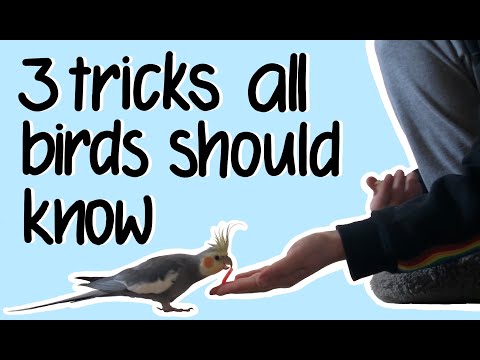
Source: Soaring Wings Training
Did you find this post useful or inspiring? Save THIS PIN to your Pets Board on Pinterest!

You may also like