
What your Dog's Facial Expressions Say About his Emotional State


While no single signal tells the whole story, putting facial cues together with body language and context helps you respond calmly, prevent misunderstandings, and build a stronger bond.
Below you’ll find a practical guide to the most common expressions, how to read them accurately, and what to do in the moment to support your dog.
How to Read Dog Facial Expressions (Quick Overview)

A useful mental checklist is Eyes – Ears – Mouth – Tension – Context:
Eyes: Are they soft and almond-shaped or wide with the white showing (often called whale eye)?
Ears: Are they neutral, forward and focused, or pinned back and guarded?
Mouth: Is it loose and slightly open or tight/closed with the corners pulled back?
Tension: Do the face and forehead look smooth or wrinkled/taut?
Context: What else is happening—posture, tail carriage, vocalizations, environment?
One cue on its own can mislead. Two or three cues together—plus the situation—paint a much clearer picture.
Common Facial Signals, Explained

Relaxed & Happy
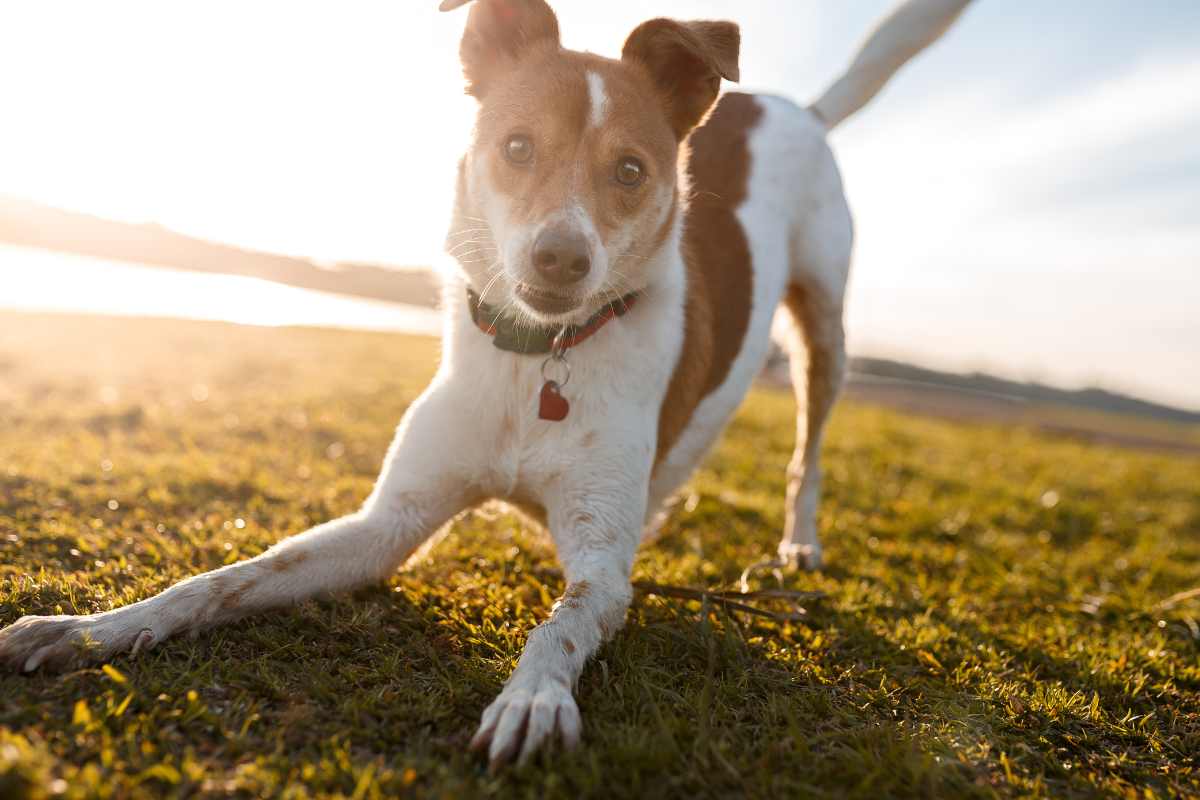
Look for soft eyes, neutral ears, and a loose, slightly open mouth. The face appears smooth, without rigid lines around the lips or brows.
Often you’ll see relaxed blinking and a gentle “smile” without teeth pressure. This is the expression of a dog who feels safe and content.
Alert & Focused
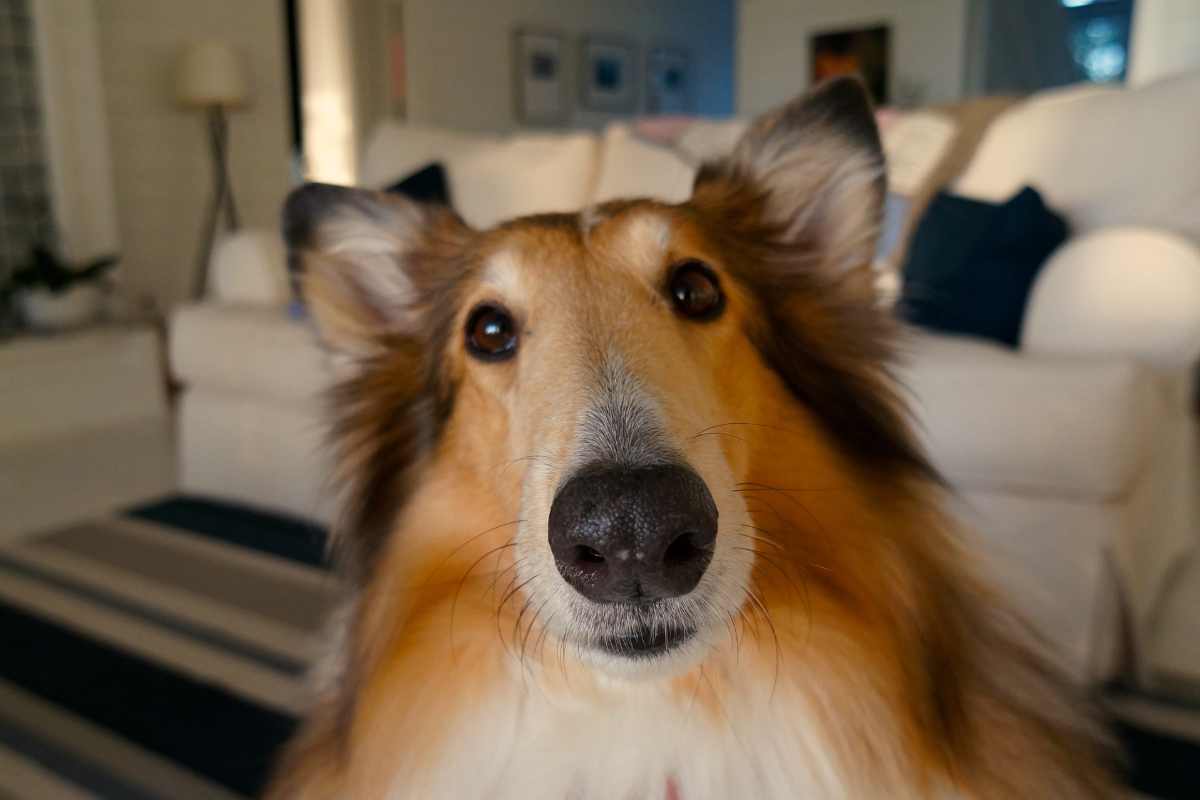
When something captures attention, the mouth often closes, the ears tip forward (or orient toward the sound), and the eyes become still and engaged.
You may notice a small increase in facial tension and a sleek, forward posture. This isn’t worry—it’s orientation. If your dog remains comfortable, the face should soften again once the novelty passes.
Stress & Anxiety
Stress usually shows up as a cluster of signals: whale eye (visible sclera), lip-licking without food present, frequent yawns, ears back, and a tight mouth. The brow may look furrowed, and the jaw seems set rather than loose.
These are early warning signs that your dog is emotionally uncomfortable and needs space or support before the feelings escalate.
Fear vs. Aggression

Fear and aggression are often connected. Many so-called “aggressive” faces are actually fear-based warnings.
Fearful: Averted gaze, ears tucked, tight corners of the mouth, and sometimes whale eye. The dog is saying, “Please give me room.”
Escalating to a Warning: Hard stare, wrinkled nose, lips pulled up to show teeth, and rigid facial lines. This is a do-not-ignore face. Punishing these warnings can suppress them and increase bite risk. Instead, create distance, stay calm, and help your dog feel safe.
Confusion/Attention (Head Tilt)
The famous head tilt is usually attentional—your dog is trying to localize a sound or make sense of your words, not necessarily feeling puzzled or upset.
Eyes are soft, ears may shift, and the mouth stays neutral. Use this moment to mark and reward engagement so learning feels fun.
Appeasement/Submission
To keep social peace, some dogs use appeasement (polite, diffusing) signals: averted eyes, lowered head, ears back, and a tight little smile or tongue flick.
These say, “I’m friendly; please relax.” Respect these messages by keeping interactions low-key and giving your dog choice in contact.
Context Matters: Face + Body + Situation

Facial expressions must be read alongside body posture and environment. A dog with soft eyes but a stiff, leaning-forward body may be conflicted—curious yet unsure.
A wagging tail doesn’t always mean happy; if the face is tight and the body rigid, the wag might be high-arousal tension, not joy.
Also remember that pain can mimic “grumpy” faces: squinted eyes, furrowed brows, tight lips, and a tense jaw can signal discomfort as much as emotion.
Sudden shifts in facial expression with changes in appetite, activity, or sleep are good reasons to call your veterinarian.
What to Do in the Moment (Owner Playbook)

If You See Stress & Anxiety
Create space: Increase distance from the trigger; step to the side, not over your dog.
Lower stimulation: Reduce noise or movement; allow sniffing breaks to decompress.
Go slow: Keep your voice warm and steady. Avoid crowding, hugging, or rapid petting.
Consent test: Stop interacting for a moment—if your dog re-approaches, continue gently; if not, give more room.
Reinforce calm: Reward relaxed eyes, loose mouth, and turning away from conflict.
If You See Fear or a Warning Face
Don’t punish warnings. They’re essential safety signals.
Give an exit: Move away from the pressure and let your dog choose distance.
De-escalate: Turn your body slightly sideways, keep movements smooth, and avoid direct staring.
Plan support: Later, consider desensitization and counterconditioning with a credentialed trainer or behavior professional.
If You See Confusion/Attention
Make it easy to win: Break tasks into tiny steps with a high success rate.
Mark & reward engagement: When your dog offers a soft eye contact or turns toward you, reinforce promptly.
Keep sessions short: End while your dog is still eager—that preserves confidence.
If You See Relaxed & Happy
Celebrate it! Reinforce calm states with gentle praise, scattered treats for sniffing, or a favorite low-key game. Teaching your dog that relaxation “earns” good things helps prevent problem behaviors later.
When to Call a Professional
Seek help if you notice:
Persistent stress faces across days or weeks.
Escalation from subtle stress to frequent warning stares, snarls, or snaps.
Sudden changes in facial expression paired with lethargy, appetite shifts, or sleep disruption (possible pain).
Specific triggers (children running, strangers reaching, nail trims) that reliably produce tight, fearful faces.
A veterinarian can rule out pain and medical conditions; a qualified trainer or behavior consultant can build a plan using humane, evidence-based methods.
Setting Up for Success (Everyday Habits)

Predictability: Routines reduce uncertainty that fuels anxious faces.
Choice & consent: Let your dog opt in to petting and grooming. Choice creates softer eyes and a looser mouth.
Environment: Provide quiet retreat spaces, appropriate chew outlets, and enrichment like scent games.
Social rules: Teach family and visitors how to greet—no looming hugs or fast hands.
Training style: Favor positive reinforcement. It builds confidence and keeps facial expressions relaxed during learning.
Quick Reference: Face Reading at a Glance
Soft, relaxed face = contentment; keep doing what you’re doing.
Closed mouth + forward ears + still eyes = alert; observe whether tension rises or fades.
Whale eye + lip-licking + tight mouth = stress; create distance and decompress.
Hard stare + wrinkled nose + teeth display = warning; back off calmly, don’t punish.
Head tilt + soft features = attention/curiosity; turn it into fun learning.
Averted gaze + ears back + tight “smile” = appeasement; keep things gentle and brief.
FAQ
What is “whale eye” in dogs and what should I do?
Whale eye is when you see the white of the eye because the dog turns the head but keeps the eye on a concern. It’s a stress signal, especially when paired with a tight mouth and ears back. Give space, reduce stimulation, and reward calm recovery.
Do lip-licks always mean stress?
Not always—dogs lick for many reasons. But rapid, repeated lip-licks without food—especially paired with yawns and tense features—often indicate anxiety. Look for clusters of cues and consider the context.
Can my dog’s facial expression show pain instead of emotion?
Yes. Squinting, furrowed brows, tight jaw, and a stiff “grimace” can point to discomfort or pain. If the expression is new, persistent, or paired with changes in appetite or activity, consult your veterinarian.
Should I correct a dog that shows teeth?
No. A tooth display is a warning that helps prevent a bite. Punishing it can suppress warnings and make behavior less predictable. Instead, increase distance, stay calm, and later seek humane behavior help.
Sources & Further Reading
Dog Facial Action Coding System (DogFACS): a scientific framework for describing facial muscle movements in dogs and comparing expressions objectively.
Stress and appeasement signals in dogs: overviews that discuss lip-licking, yawning, and whale eye as early indicators of emotional discomfort.
Pain and facial tension: veterinary resources on how pain alters facial features and why behavior changes warrant a medical check.
Humane training and behavior support: positive reinforcement, desensitization, and counterconditioning methods that protect welfare and improve outcomes.
By practicing this face-reading approach—Eyes, Ears, Mouth, Tension, Context—you’ll notice patterns faster, step in sooner, and respond in ways that make your dog feel heard and safe.
The goal isn’t to label every blink or whisker twitch; it’s to spot clusters of cues, adjust the environment, and choose kind, effective responses.
When your dog’s face softens and the mouth loosens, you’ll know your communication is working—and your relationship is getting stronger.
Enjoy The Video About Dogs

Source: Reader's Digest
Did you find this post useful or inspiring? Save THIS PIN to your Pets Board on Pinterest!

You may also like