
Why Does My Dog Lick His Paws? 7 Causes and What to Do

This post contains affiliate links. As an Amazon Associate, Urbaki Pets earns from qualifying purchases, at no extra cost to you.
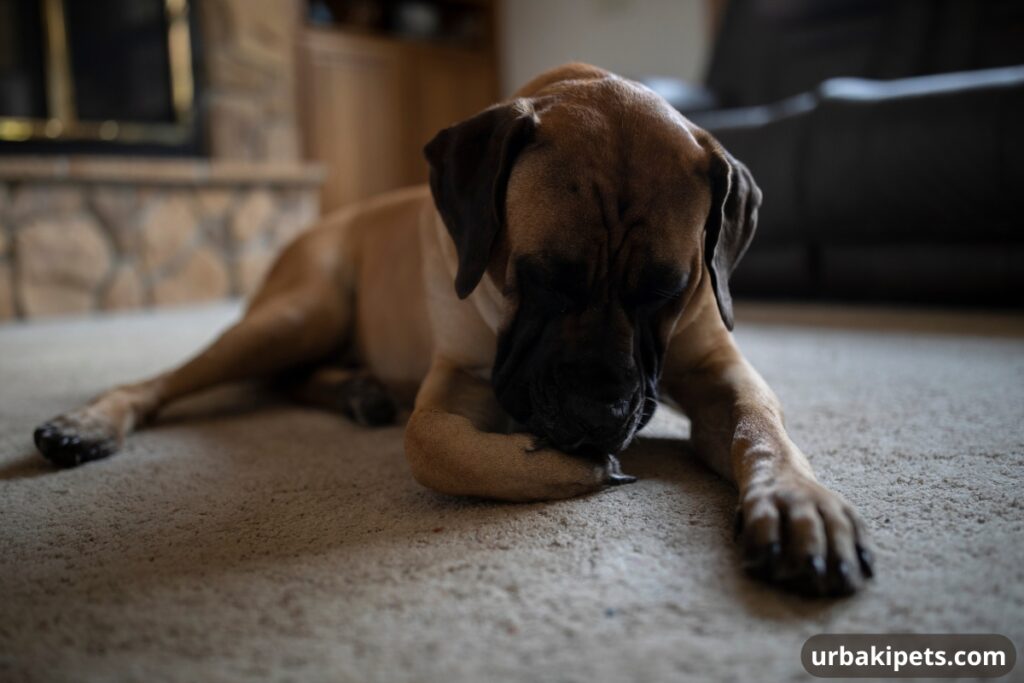
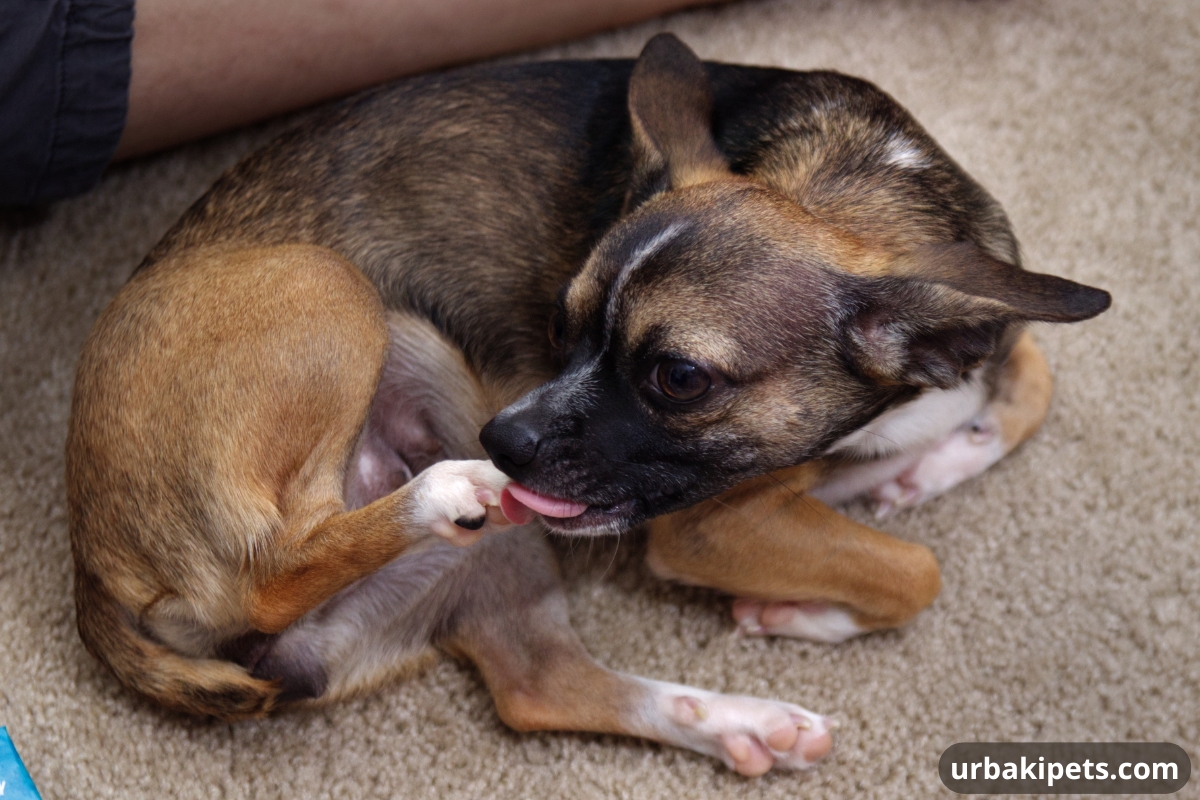
Dogs lick their paws to clean them, so a few licks after a walk or before a nap are completely normal. If your dog licks his paws every day, for long stretches, or so hard that the fur turns rusty and the skin gets red, something is usually behind it: allergies, a yeast or bacterial infection, fleas, a small injury, sore joints, or boredom and stress.
Below you will find how to tell normal licking from the kind that needs attention, the 7 most common causes, what you can do today, and when to call your vet.
Is It Normal for a Dog to Lick His Paws?
Yes, up to a point. Dogs groom themselves with their tongues, and paws pick up more dirt than any other part of the body. A short licking session after coming in from the yard or while settling down for the night is part of a normal routine.
What matters is not the licking itself but how often it happens, how intense it is, and what comes with it. Ask yourself these questions:
- Does he lick several times a day and struggle to stop, even when you distract him?
- Is it always the same paw, or all four?
- Is he also chewing his paws or nibbling between the toes?
- Has the fur on his feet turned reddish-brown? (This is easy to spot on light-colored dogs.)
- Do you notice a strong smell, dampness, swelling, or limping?
If you answered yes to any of these, it is worth finding the cause.
7 Common Reasons Dogs Lick Their Paws
1. Allergies
Allergies are one of the most frequent reasons behind paw licking. Dogs can react to things in the environment (pollen, dust mites, grass) or to an ingredient in their food. In dogs, allergies usually show up as itchy skin: paws, ears, armpits, belly, and muzzle.
Clues that point to allergies:
- He licks more than one paw, not just one.
- It gets worse in certain seasons (environmental allergies) or stays the same all year (food or dust mites are possible).
- He also scratches his ears, rubs his face on the carpet, or gets repeat ear infections.
Only a vet can confirm an allergy and decide whether a special diet makes sense. Our guide to common pet allergies and how to manage them explains the main types, and if food is part of the picture, these homemade treats for dogs with allergies are a simple place to start once your vet gives the green light.
2. Yeast or Bacterial Infections
The skin between the toes is warm and damp, which makes it a perfect spot for yeast and bacteria, especially if it was already irritated.
Typical signs include a musty or "corn chip" smell, red skin between the toes, discharge, greasy or sticky fur, and dark patches on the skin. Infections need a vet visit, because the right treatment depends on what is growing there.
3. Fleas, Ticks and Other Parasites
Flea bites are incredibly itchy, and some dogs are allergic to flea saliva, so even one flea can set off nonstop chewing and licking. Ticks also like to hide between the toes.
Go over your dog with a fine-tooth flea comb, paying extra attention to the base of the tail and the belly. If you find fleas or tiny black specks (flea dirt), talk to your vet about the right prevention for your dog. For everyday habits that help keep fleas out of the house, see our tips on repelling fleas without harsh chemicals.
4. Cuts, Splinters and Nail Problems
When a dog suddenly starts licking just one paw, think physical first: a small cut, a splinter or grass awn stuck between the toes, a cracked or overgrown nail, a burn from hot pavement, or an insect sting.
These cases often come with limping, a paw that feels warm or swollen, or a dog who pulls away when you touch it. Keeping nails at a healthy length also prevents a lot of discomfort, so if you hear clicking on the floor, a trim is probably overdue.
5. Joint Pain
Sometimes the problem is not on the skin at all. Some dogs, especially seniors, lick over a sore joint as if they are trying to soothe it. If you also notice stiffness when he gets up, trouble with stairs, or slower walks, mention it to your vet.
6. Boredom, Anxiety and Stress
Licking releases tension and feels calming. A dog who spends long hours alone, does not get enough exercise, or is going through a change (a move, a new baby, a new pet) can turn paw licking into a way to pass the time or settle his nerves.
Clues that the cause is emotional: he licks mostly when he is alone, when you are getting ready to leave, or during quiet moments with nothing to do, and his skin looks normal at first. If you suspect he struggles when you are out, read why some dogs hate being left alone and how to help them cope. Calm background sound can also help some nervous dogs; here is what to know about music therapy for anxious pets.
7. Dry Skin and Irritants From Walks
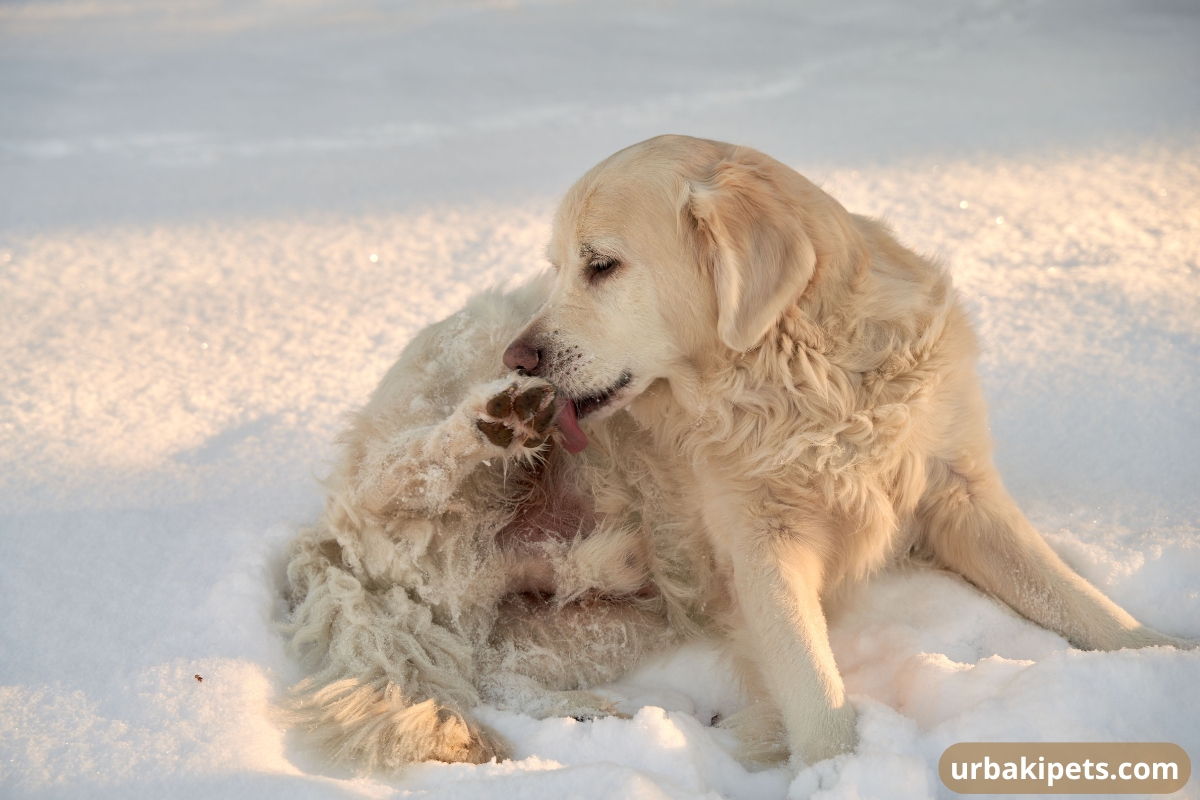
Ice-melt salt in winter, scorching asphalt in summer, freshly treated lawns, and floor-cleaning products can all irritate paw pads. If the licking starts right after a walk or right after you mop, this is a strong suspect.
What You Can Do at Home
A calm, careful look will tell you a lot before you do anything else:
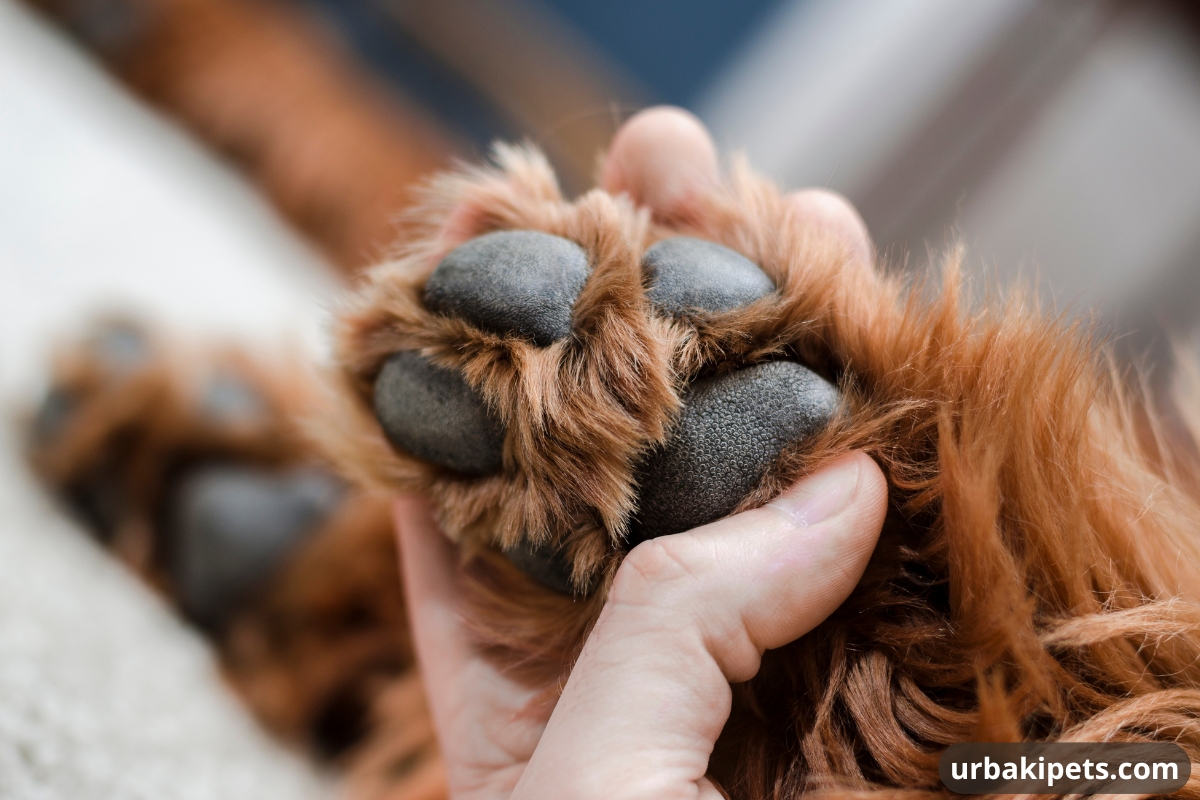
- Check the paws in good light. Gently spread the toes and look for cuts, splinters, redness, lumps, broken nails, or parasites.
- Smell and feel. A strong odor, heat, or skin that stays damp points to infection. If he flinches or whines when you touch it, there is pain.
- Keep a licking diary. For two or three days, jot down when it happens: after meals, when he is alone, after walks? This is incredibly useful for your vet.
- Wipe and dry after walks. Use a damp cloth with lukewarm water, then dry the paws well, including between the toes. Trapped moisture feeds yeast.
- Stay on top of flea and tick prevention with the product your vet recommends.
- Add exercise and play. Longer walks, sniffing games, stuffable toys, and short training sessions tire the brain and cut down on boredom licking.
- Interrupt without scolding. When he starts licking, call him over, ask for an easy cue like "sit," and reward him. Punishment raises anxiety and usually makes the habit worse.
Avoid putting creams, essential oils, vinegar, or other home remedies on his paws without asking your vet first. Many of them sting, some are toxic if licked, and they can delay a proper diagnosis.
When to See a Vet
Book an appointment if you notice any of these:
- The licking lasts more than a few days or keeps getting worse.
- He limps, will not put weight on the paw, or cries when you touch it.
- You see blood, an open wound, swelling, or something stuck that you cannot easily remove.
- There is a bad smell, pus, discharge, or patches of missing fur.
- He has licked the skin raw.
- He is also scratching his ears, has red skin elsewhere, or seems off in appetite or energy.
Your vet can examine the skin closely, run simple tests for yeast, bacteria, or mites, and choose the right treatment.
How to Prevent Paw Licking From Coming Back
- Check his paws once a week and trim long fur between the pads.
- In summer, walk during cooler hours. If the pavement is too hot for the back of your hand, it is too hot for him.
- Bathe him only as often as his coat needs. Over-bathing dries out the skin.
- Give him daily exercise and something to think about.
Our Favorite Picks for Healthy, Happy Paws
Simple tools that make paw care easier and give busy tongues something better to do. None of them replace a vet visit.
Dexas MudBuster Paw Cleaner
A cup with soft silicone bristles inside: add a little water, dip the paw, twist, and dry. It is a quick way to rinse off salt, mud, and lawn chemicals at the door. Check it on Amazon
Musher's Secret Paw Wax
A wax that you rub onto the pads before walks to add a thin barrier against snow, ice-melt salt, and rough ground. Handy for dogs whose licking starts every winter. Check it on Amazon
Yumflan Fine-Tooth Flea Comb
A stainless steel comb with tightly spaced teeth that helps you spot fleas and flea dirt early. Check it on Amazon
LUKITO Lick Mat (2 Pack)
Spread a little plain yogurt or wet food on the textured surface and let him lick away. It redirects the urge to lick toward something calming, especially when you leave the house. Check it on Amazon
KONG Classic
The classic stuffable rubber toy. Fill it with kibble and a bit of wet food, then freeze it for a longer challenge that keeps bored dogs busy. Check it on Amazon
Outward Hound Nina Ottosson Tower of Treats
A treat puzzle that makes your dog sniff, nudge, and think to get his reward. Check it on Amazon
Looking for more ideas for a dog who needs something to do? Our list of gifts for dog lovers and their dogs has plenty of enrichment toys too.
Frequently Asked Questions
Why does my dog lick his paws at night?
At night there are fewer distractions, so any itch feels stronger and your dog has time to focus on it. If he licks for a long time every night, check his paws and talk to your vet.
Why is the fur on my dog's paws turning brown or red?
Saliva contains natural pigments that stain light fur when a dog licks often. The stain itself is not harmful, but it tells you the licking is frequent, so it is worth finding out why.
Can I use a sock or a cone to stop the licking?
Both can protect a wound while it heals, but they do not fix the reason behind the licking. Use them only as a short-term helper and follow your vet's advice if there is an injury or infection.
My dog licks his paws after walks. Is that normal?
A quick clean-up lick is normal. If it is intense or happens after every walk, something on the route may be irritating his pads, such as salt, chemicals, or treated grass. Rinse and dry his paws when you get home and see if it improves.
You may also like