
You will love these tips! 30 Tricks To Teach Your Cat


Teaching cat tricks is not only possible—it’s deeply rewarding. With positive reinforcement, short sessions of clicker training for cats, and a calm setup, you can teach your cat reliable behaviors that build confidence and make everyday life easier.
Think of this guide as your roadmap: we’ll set you up for success, then walk through thirty engaging behaviors—starting simple, moving into practical skills, and finishing with party-ready showstoppers.
Before You Start: Setup for Success
Training works best when it feels like play. Keep sessions brief—just a few minutes—and stop while your cat still wants more, so cat training remains exciting.
Choose soft, high-value rewards and use a clear marker (a clicker or a crisp “Yes!”) to pinpoint the exact moment your cat does the right thing; that timing is the engine behind positive reinforcement.
Environment matters. Practice in a quiet space with good traction and a comfortable mat, and progress in tiny steps so your cat never feels overwhelmed.
Be consistent—one cue for one behavior—and remember that success compounds quickly when your cat understands how to earn rewards. Most importantly, end on an easy win and celebrate; enthusiasm is contagious and fuels faster learning in clicker training for cats.

Beginner Tricks (Foundation Behaviors)
Nose Target (“Touch”)
Targeting is the gateway to many cat tricks. Present your hand or a target stick and reinforce the moment your cat investigates with a nose touch.
As you repeat, name the behavior “Touch,” gradually increasing distance so your cat learns to follow the target with confidence and focus.
Sit
“Sit” teaches impulse control and sets up calm manners. Lure your cat’s nose slightly upward so the hips tip to the floor, then reward quickly to make the position feel worthwhile.
With repetition, the lure fades, the cue “Sit” takes over, and short pauses build into a poised, reliable posture.
Down
A relaxed “Down” encourages settling and longer durations. Bring your cat’s nose toward the mat so elbows drift to the ground, reinforcing the instant the chest touches. Over time, the cue becomes a soothing invitation to rest—a powerful tool for everyday cat training.
Spin
“Spin” is a cheerful confidence-builder. Guide your cat in a small circle, reinforce the completed turn, and soon a tiny hand gesture replaces the lure. This energetic move warms up training sessions and primes attention for more complex cat tricks.

High Five
Nothing delights like a high five. First, celebrate any paw lift, then shape that lift to meet your open palm. Your cat learns that offering a paw earns praise and treats, transforming polite attention into a charming, photo-ready behavior.
Ring a Bell
Bell-ringing teaches precise paw targeting. Reward gentle taps and gradually expect a firmer touch that produces a clear sound. Stabilize the bell, add the cue “Bell,” and you’ll have an adorable signal that showcases your cat’s coordination.
Come (Recall)
A dependable recall is a cornerstone of cat training. Call your cat once in an upbeat voice and reward at your feet so arriving pays more than lingering. Start close, add distance slowly, and your cat will begin to sprint to you with bright eyes and eager anticipation.
Go to Mat
A portable “home base” helps your cat relax anywhere. Reinforce stepping onto a blanket, then lying down for short stretches until “Mat” cues calm, content stillness. This skill shines during busy moments, guest visits, or while you work.

Name Recognition
Names become powerful when they predict connection. Say your cat’s name and reward quick orientation, weaving it before other cues so attention naturally precedes action. Over time, the name itself becomes a warm invitation to engage.
Follow a Target Stick
Following a target unlocks complex choreography in clicker training for cats. Reward nose touches, then steps toward the tip as you guide into gentle arcs and positions. Later, the stick fades, but the clarity and enthusiasm it built remain.
Useful Everyday Behaviors
Enter Carrier
Carriers can feel safe—if they predict comfort and rewards. Place a familiar mat inside, feed delicious treats at the doorway, and then deeper within so entry is self-chosen. As calm grows, brief door closes become easy, turning vet days into smoother trips.
Stay
“Stay” teaches steadiness in small, achievable moments. Reward a heartbeat of stillness, then stretch duration, distance, and distraction separately so success stacks cleanly. Soon, your cat waits with quiet confidence until you release them.

Leave It
“Leave it” is about thoughtful choices. Show your cat that turning away from temptation earns something better from you, and reinforce the instant that attention swings back. This polite restraint enhances safety and household harmony.
Drop
Trading up builds trust. When your cat holds a toy, offer a better reward and celebrate the moment they release—never chase or grab. With repetition, “Drop” becomes cooperative and calm, proving that giving things up can pay beautifully.
Jump to Perch
Perching turns vertical space into a training partner. Invite your cat onto a stool or shelf, rewarding landings so “Perch” becomes an energizing, clear target. As confidence grows, you can call from greater distances and create playful sequences.
Back Up
Stepping backward teaches body awareness and control. Take a gentle step toward your cat and reinforce the smallest retreat, polishing it into two or three smooth steps on cue. Backing up is a crowd-pleaser that also supports handling and positioning.

Chin Rest (Grooming/Vet)
A calm chin rest is the foundation of cooperative care. Reinforce softly resting the chin on your hand or towel, then pair with mild handling so stillness predicts kindness. Exams and grooming feel gentler when your cat chooses to participate.
Paw Target (Handling)
Paw targeting reframes touch as a game. Celebrate deliberate paw placement on your hand or a coaster, then introduce clippers or a brush as background props. Over time, consent cues and steady reinforcement make care more peaceful for everyone.
Settle on Blanket
“Settle” brings serenity to busy rooms. Reward quiet posture on a familiar blanket as sounds rise or people pass by, letting comfort do the teaching. Soon, that fabric signals rest—and your cat sinks into it with contented ease.
Wait at Door
Boundaries can be compassionate. Ask for a short pause before thresholds and reinforce calm distance from the opening so curiosity doesn’t spill outdoors. With practice, “Wait” becomes a respectful ritual that keeps explorations safe.

Party & Advanced Tricks
Weave Through Legs
Leg weaves feel like dance. Encourage smooth passes between your ankles while you stand still, then add a step and another until a rhythmic figure emerges. The result looks fancy, yet it grows naturally from curiosity and flow.
Figure-8 Around Cones
Figure-8 patterns sharpen focus and steering. Guide around two objects and reward each clean curve, gradually shrinking your help. Precision becomes playful, and your cat glides through the pattern with athletic grace.
Hoop Jump (Low)
The hoop invites brave, buoyant motion. Start with it flat on the floor and reinforce crossings, then lift slowly so a gentle hop appears. Confidence—not height—makes this trick shine, and your cat learns to love the arc.
Roll Over
“Roll over” strings together tiny wins. Reward a tilt to the side, then a hip shift, then the full turn, so the movement feels inevitable and fun. Patience yields a fluid roll that looks magical and feels effortless.

Wave
A wave is high-five’s theatrical cousin. Capture a paw lifted into open air and mark the best, most expressive moments. With an upbeat cue and steady practice, your cat learns to greet the room with charming pageantry.
Sit Pretty
Balance grows in careful inches. Reinforce small chest lifts while your cat rests near a wall for support, building core strength over days rather than minutes. “Sit pretty” becomes a proud pose—cute and controlled.
Creep/Crawl
Crawling channels stealth and focus. Keep the reinforcement low so your cat glides forward with belly close to the ground, rewarding patience over speed. The result feels like a secret mission and looks irresistibly cute.
Fetch a Soft Toy
Fetching is a relationship, not a race. Celebrate the pick-up, the turn, and the return, then pay generously for the drop so coming back beats running away. Soon, your cat trots to you with twinkling eyes and a prize in their mouth.

Push a Ball
Ball pushing converts curiosity into rhythm. Reinforce any forward nudge and your cat will begin to string taps together, almost like dribbling. The gentle beat of movement becomes the game’s own reward.
Touch a Light Button (Safe)
A touch light offers clean feedback. Reinforce careful taps on a battery puck or pad—never cords or switches—so a soft press triggers a warm glow. It’s a showpiece of clicker training for cats: precise, safe, and captivating.
Troubleshooting and Gentle Guidance
If progress stalls, your criteria may have leapt ahead of understanding; step back to the last easy version and rebuild in smaller increments.
Reward timing also matters: the marker should land exactly on the behavior you want, not a second later, so consider practicing the motion without your cat to refine your reflexes.
If motivation dips, adjust value—lickable treats, tiny warm bites of chicken, or a quick play burst can make cat training sparkle again without stretching sessions too long.
Quick FAQs in Paragraph Form
Do I need a clicker? A mechanical clicker is precise and consistent, but a crisp “Yes!” works too; what matters is timing and reliability so your marker truly means “you got it.” Over time, that clarity accelerates learning across all cat tricks.
How long should I train? Think short and sweet—several mini-sessions beat a marathon. Keep wins easy at first, close each session with success, and let anticipation build between practices so enthusiasm stays high.

What if my cat isn’t food-motivated? Many cats prefer soft textures or lickable treats; others love play or access to a favorite perch. Experiment kindly, and make the reward match the effort so your cat feels the exchange is always worth it.
How do I fade treats? Once a behavior is reliable, switch to a variable schedule—sometimes food, sometimes praise, sometimes a quick play burst—so your cat keeps trying eagerly even when the treat isn’t guaranteed.
Keep Progress Fun and Consistent
The secret to lasting results is joyful repetition. Rotate two or three behaviors each day, track small wins on a printable checklist, and toss in occasional jackpot rewards to celebrate breakthroughs.
With positive reinforcement, clear cues, and steady clicker training for cats, your cat will master a surprising range of cat tricks—and you’ll both look forward to every session like a favorite game.
Enjoy This Video About Cat Tricks
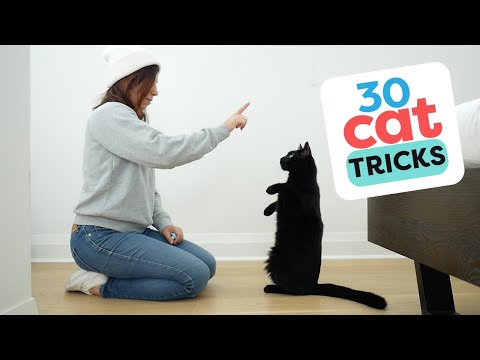
Source: Cat School Clicker Training
Did you find this post useful or inspiring? Save THIS PIN to your Pets Board on Pinterest! 😊

You may also like