
Bullmastiff Temperament, Size and Care: Is It Right for You?


This post contains affiliate links. As an Amazon Associate, Urbaki Pets earns from qualifying purchases, at no extra cost to you.
The Bullmastiff is a large, calm and loyal guardian dog that is gentle with its family and naturally wary of strangers. It suits owners who want a quiet, low-energy house dog with real protective instincts and who are ready for its size, drool and shorter lifespan. Below you'll find its temperament, size, exercise and grooming needs, health concerns, and tips to decide if this breed fits your home.
Bullmastiff at a Glance
- Breed group: Working dog
- Height: about 24 to 27 inches at the shoulder (males are taller)
- Weight: about 100 to 130 pounds
- Lifespan: roughly 7 to 10 years
- Coat: short and dense; fawn, red or brindle, usually with a dark mask
- Energy level: low to moderate
- Best for: experienced owners, calm households, families with older kids
Where the Bullmastiff Comes From
The breed was developed in 19th-century England by gamekeepers who needed a strong, quiet dog to stop poachers on large estates. By crossing Bulldogs with Mastiffs, they got a dog that could track an intruder silently, knock him down and hold him without mauling him. That history still shows today: the Bullmastiff is a guardian that prefers to block and watch rather than bark or attack.
Over time the "gamekeeper's night dog" moved from estates into family homes. Its calm nature and devotion made it a popular companion, and it is now known around the world as a gentle giant that takes its job of protecting the household seriously.
Bullmastiff Temperament: What Living With One Is Like
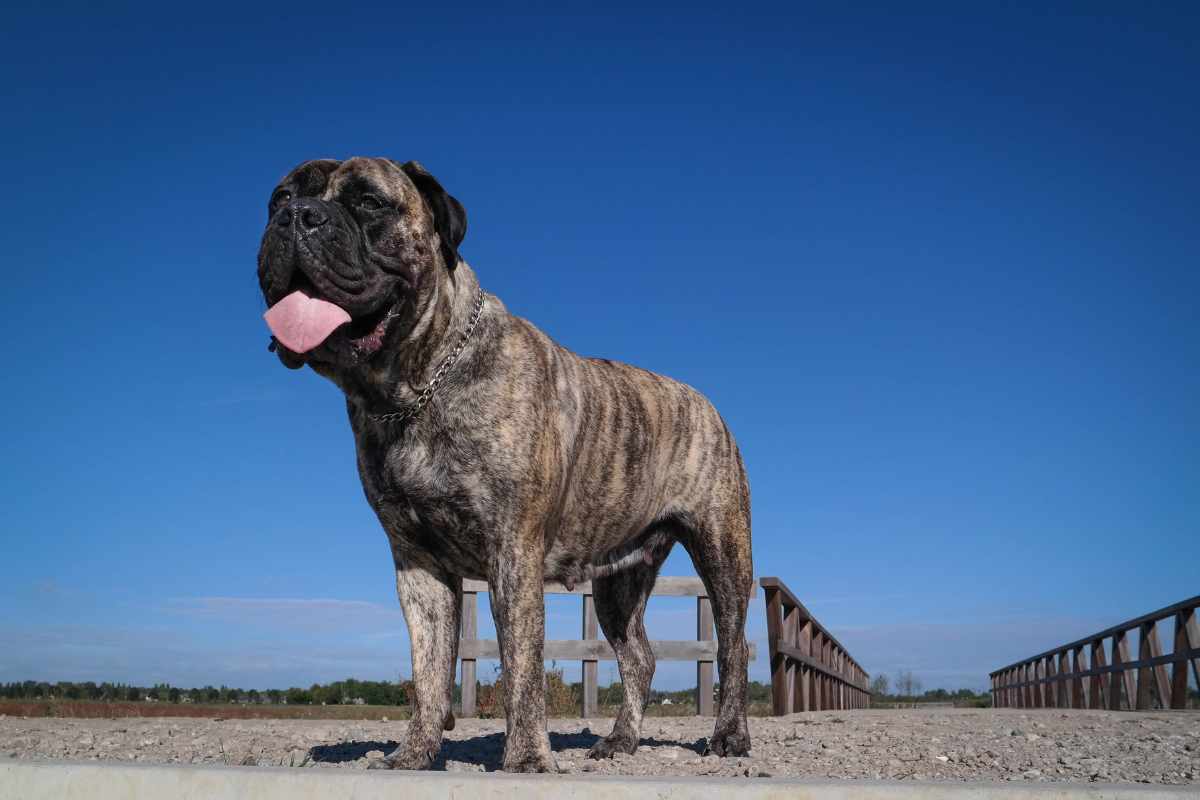
Most Bullmastiffs are calm, confident and affectionate with their own people. They like to stay close, follow you from room to room and lean their full weight against your legs. Many owners describe them as couch potatoes indoors.
Protective, not noisy
This breed doesn't bark much. It tends to watch, position itself between you and a stranger, and only react when something feels wrong. That makes it a good deterrent, but it also means you need to teach it early which visitors are welcome.
Good with kids?
A well-socialized Bullmastiff is usually patient and gentle with children in its family. The main risk is size: a happy 120-pound dog can knock over a toddler by accident. Always supervise play and teach kids not to climb on or hug the dog.
Other pets
Many get along with cats and dogs they grow up with. Some Bullmastiffs, especially males, can be intolerant of unfamiliar dogs of the same sex, so careful introductions matter.
Independent streak
The breed is smart but can be stubborn. If it doesn't see the point of a command, it may simply lie down. Short sessions and rewards work far better than force.
Training and Socialization
Start training on day one. A Bullmastiff puppy grows fast, and habits that are cute at 20 pounds become a real problem at 120.
- Socialize early: let your puppy meet calm adults, kids, other vaccinated dogs and new places in a positive way during the first months.
- Teach leash manners first: polite walking is essential with a dog that can outpull you. Practice in short daily sessions.
- Focus on "sit," "down," "stay" and "leave it": these give you control in real situations, like opening the front door.
- Use positive reinforcement: treats, praise and play. Harsh corrections tend to make this breed shut down or dig in.
- Set house rules and keep them: decide early whether the dog is allowed on furniture, because it will remember.
If you've adopted an adult dog, our training tips for rescue dogs can help it settle in. Expecting a baby? Read how to prepare your dog for a new baby before the big day.
Exercise Needs
Bullmastiffs need moderate exercise: one or two daily walks plus some play in a fenced yard is usually enough for an adult. They are not built for long runs or jogging.
- Protect growing joints: avoid forced running, repeated jumping and lots of stairs while your puppy is still growing.
- Watch the heat: with a short muzzle and a big body, this breed overheats easily. Walk early or late on hot days and always bring water.
- Give mental work too: scent games, puzzle feeders and short training sessions tire a Bullmastiff out without stressing its body.
For more ideas, see daily exercise for large breed dogs.
Grooming and Daily Care
The short coat is easy to care for. A weekly brush with a rubber curry or bristle brush removes loose hair, and shedding picks up a bit in spring and fall. Bathe only when needed.
- Drool: expect it, especially after drinking and eating. Keep a towel handy.
- Face folds: wipe any wrinkles gently and dry them to prevent irritation.
- Nails: trim every few weeks; long nails affect how a heavy dog walks.
- Ears and teeth: check ears weekly and brush teeth several times a week.
- Bedding: a big dog needs a thick, supportive bed to cushion elbows and hips.
Diet and Feeding
Feed a complete, high-quality food made for large or giant breeds, and use a large-breed puppy formula while your dog is growing so it grows at a steady pace. Measure meals and keep your dog lean: extra weight puts a lot of strain on joints.
Because deep-chested breeds are at risk of bloat, many owners split the daily food into two or three smaller meals, slow down fast eaters and avoid hard exercise right before and after meals. Fresh water should always be available. Ask your vet how much your dog should eat, as needs change with age and activity.
Health Problems to Know About
Like most giant breeds, the Bullmastiff has a shorter life and some common health issues. A responsible breeder screens parents for inherited problems, so always ask for health test results.
- Hip and elbow dysplasia: abnormal joint development that can lead to pain and arthritis.
- Bloat (gastric dilatation-volvulus): a life-threatening twisting of the stomach seen in deep-chested dogs.
- Eye problems: such as entropion, where the eyelid rolls inward.
- Heart disease: some lines are prone to heart conditions.
- Cancer: several types are reported in the breed, especially in older dogs.
- Hypothyroidism: can cause weight gain, low energy and coat changes.
When to See a Vet
Call your vet right away or go to an emergency clinic if your Bullmastiff:
- Has a swollen, hard belly, retches without bringing anything up, or seems restless and in pain (possible bloat: this is an emergency).
- Collapses, struggles to breathe or overheats on a warm day.
- Starts limping, has trouble getting up or doesn't want to walk.
- Has red, watery or squinting eyes.
- Gains weight or loses energy for no clear reason.
Regular checkups help catch problems early. Our guide on preparing your pet for a vet visit makes those trips easier for big dogs too.
Is a Bullmastiff Right for You?
A Bullmastiff may be a great fit if you:
- Want a calm, loyal house dog that is naturally protective
- Have space for a very large dog and can handle its strength on a leash
- Are ready to train and socialize consistently from puppyhood
- Don't mind drool, dog hair and higher costs for food, beds and vet care
It may not be the best choice if you want a running partner, live in a very hot climate without air conditioning, or are a first-time owner who can't commit to training. If you like loyal guardian breeds, also read about the Akita Inu and our list of the most loyal dog breeds.
Our Favorite Picks for Bullmastiff Owners
- XXL Orthopedic Dog Bed: A large, supportive bed made for extra-large dogs, so your Bullmastiff can stretch out and rest its joints off the hard floor.
- Outward Hound Fun Feeder Slo Bowl: A maze-style bowl that slows down dogs that gulp their food, a simple habit change for deep-chested breeds.
Frequently Asked Questions
Are Bullmastiffs good family dogs?
Yes, for the right family. They are affectionate, patient and protective with their people. Because of their size and strength, they do best with older kids, consistent training and adults who can handle them.
Do Bullmastiffs bark a lot?
No. They are usually quiet dogs that bark mainly when something seems truly wrong. They prefer to watch and stand their ground.
How long do Bullmastiffs live?
Most live around 7 to 10 years. Keeping your dog lean, choosing a breeder who health-tests and having regular vet checkups all help.
Can a Bullmastiff live in an apartment?
It can, because it is calm indoors and doesn't need intense exercise. You still need daily walks, an elevator or few stairs for an older dog, and enough room for a very big bed.
Final Thoughts
The Bullmastiff is a gentle giant with a guardian's heart. Give it early socialization, steady training, moderate exercise and good health care, and you'll have a calm, devoted companion that watches over your home and family.
Did you find this post useful or inspiring? Save THIS PIN to your PETS Board on Pinterest!
You may also like