
Eyelash Pit Viper, The Best Pet Snake?


The Eyelash Pit Viper (Bothriechis schlegelii) is one of the most captivating reptiles due to its unique appearance and potent venom.
Found primarily in the rainforests of Central and South America, this species is renowned for its striking beauty, including vibrant colors and distinctive "eyelash" scales on its head.
However, while the Eyelash Pit Viper is undeniably stunning, it is not a snake for beginners.
If you're considering this reptile as a pet, it's essential to understand its care needs, potential risks, and what makes it a challenging but rewarding species to house.
A Glimpse Into the World of the Eyelash Pit Viper
Physical Characteristics
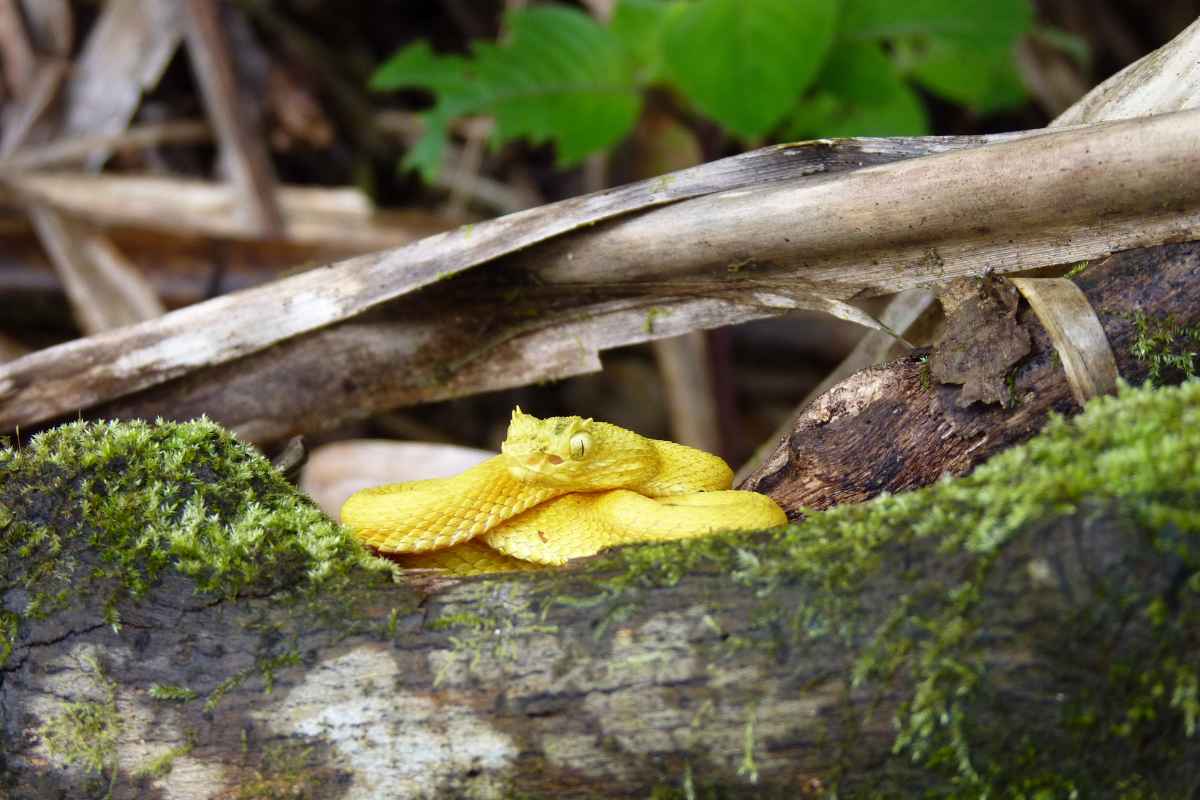
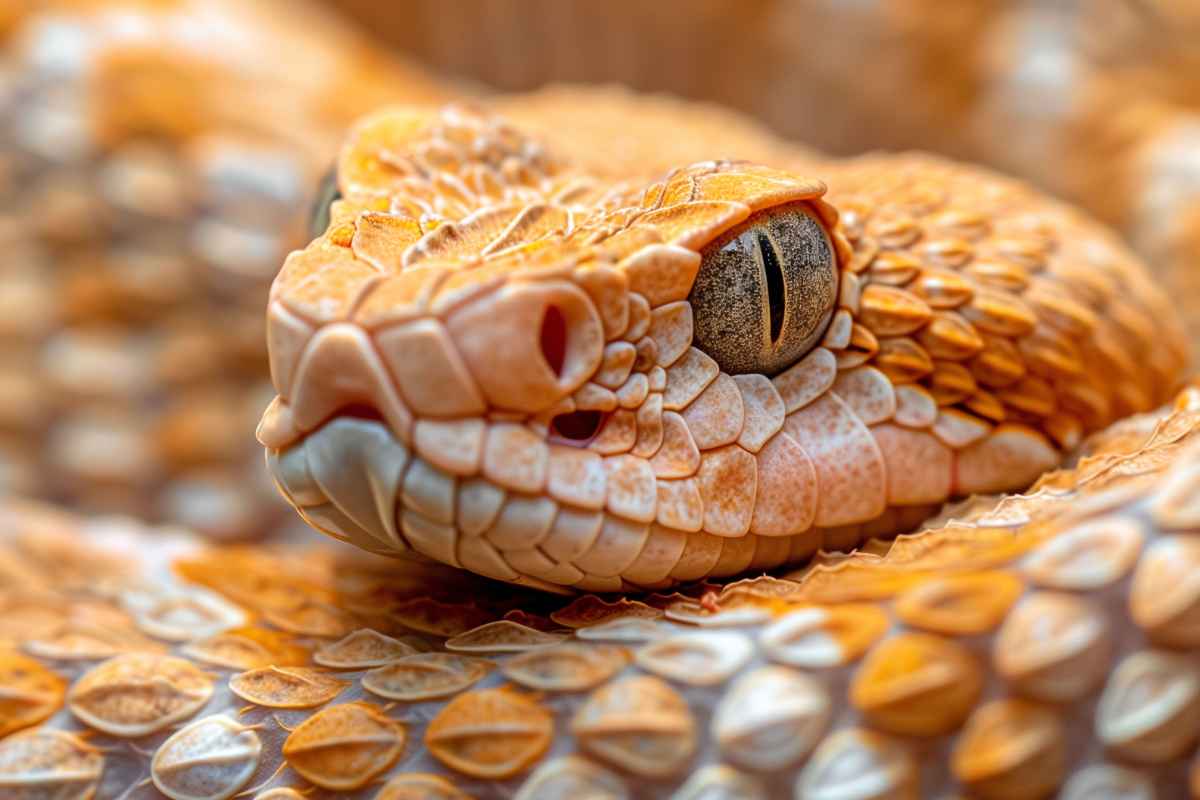
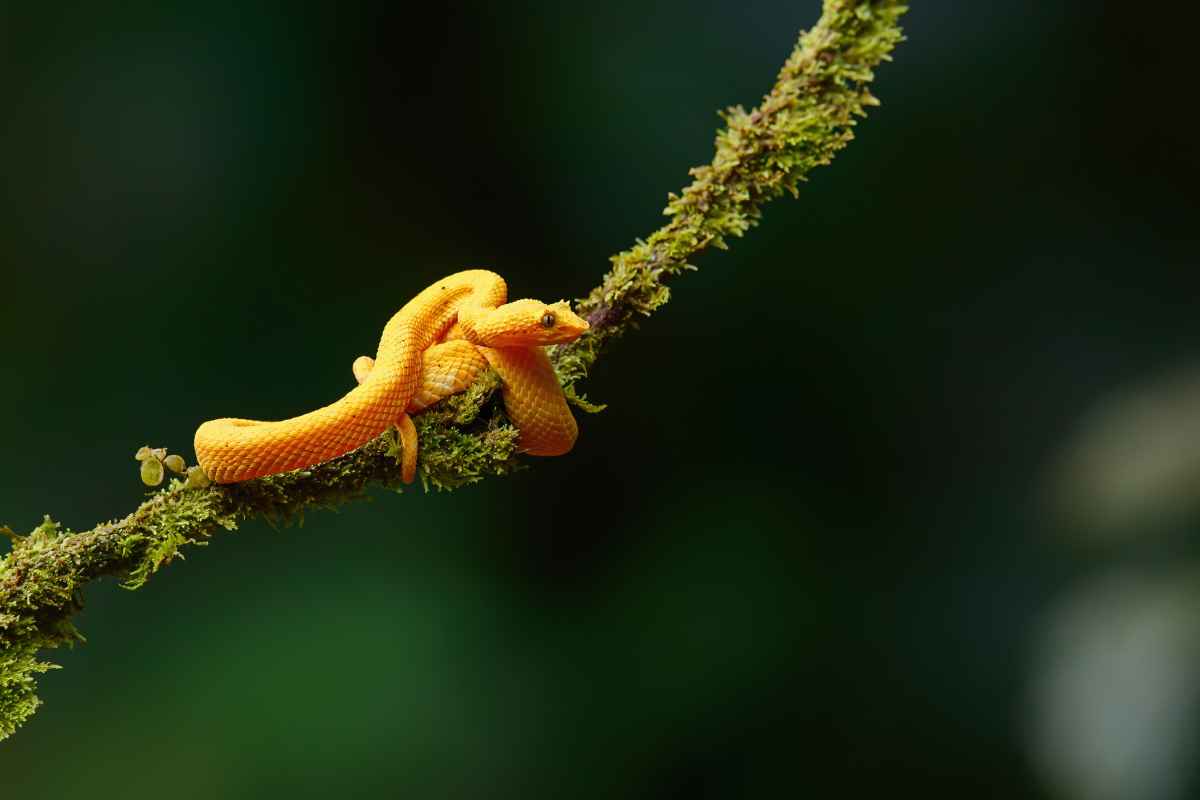
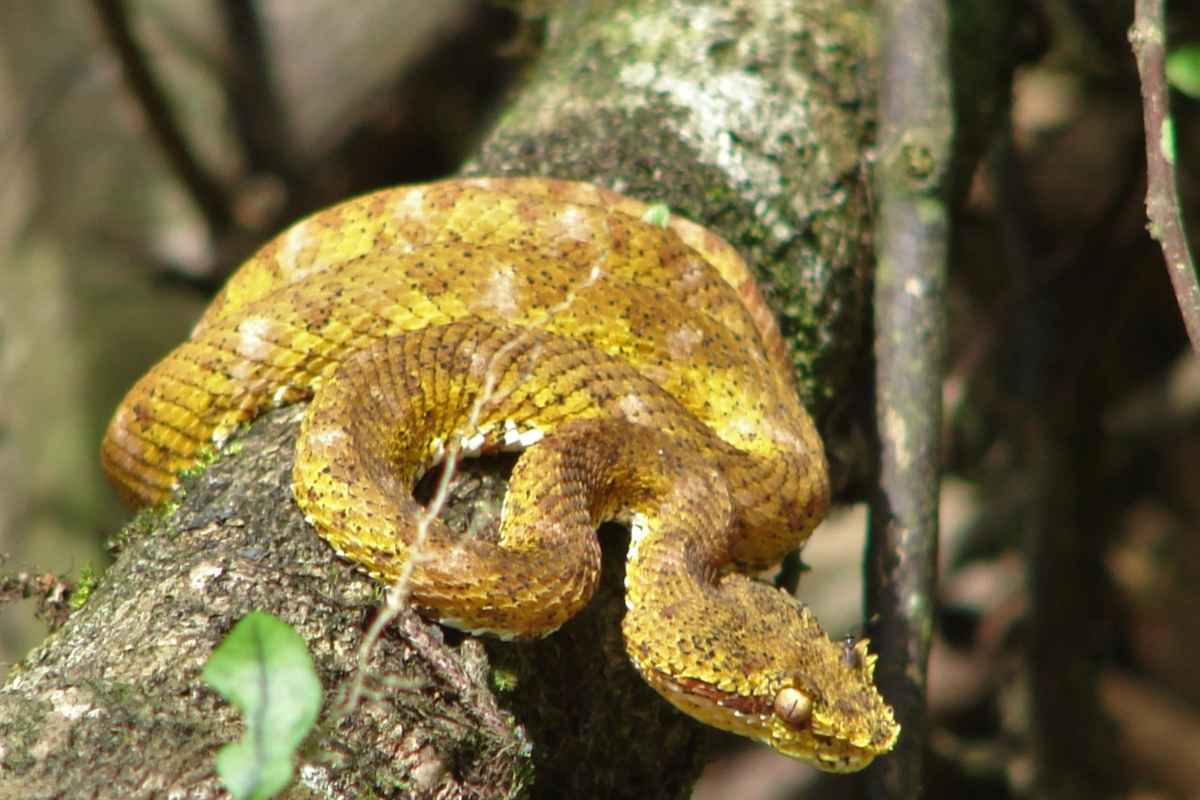
The Eyelash Pit Viper is easily recognizable by its triangular head, vertical-slit pupils, and the characteristic scales above its eyes that resemble eyelashes.
These adaptations help it blend seamlessly into its environment, making it a master of camouflage in the wild.
Typically, it measures between 45-90 cm in length, although some individuals can grow slightly larger.
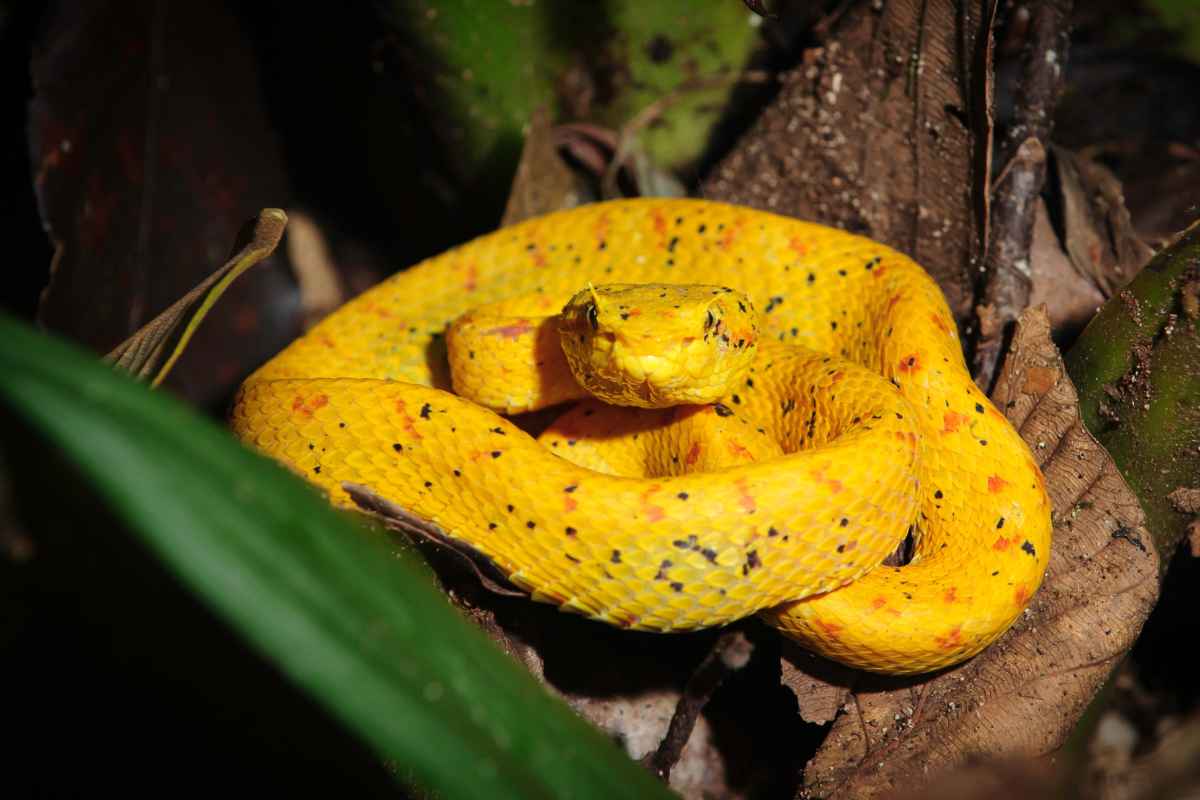
In terms of coloration, these snakes exhibit a wide variety of hues. While some have bright green, yellow, or orange hues, others feature brown or gray tones.
This coloration provides excellent camouflage in the dense foliage and branches of the rainforest.
Natural Habitat and Range
The Eyelash Pit Viper is native to the tropical rainforests of Central and South America. It is typically found at altitudes ranging from sea level to 2,500 meters.
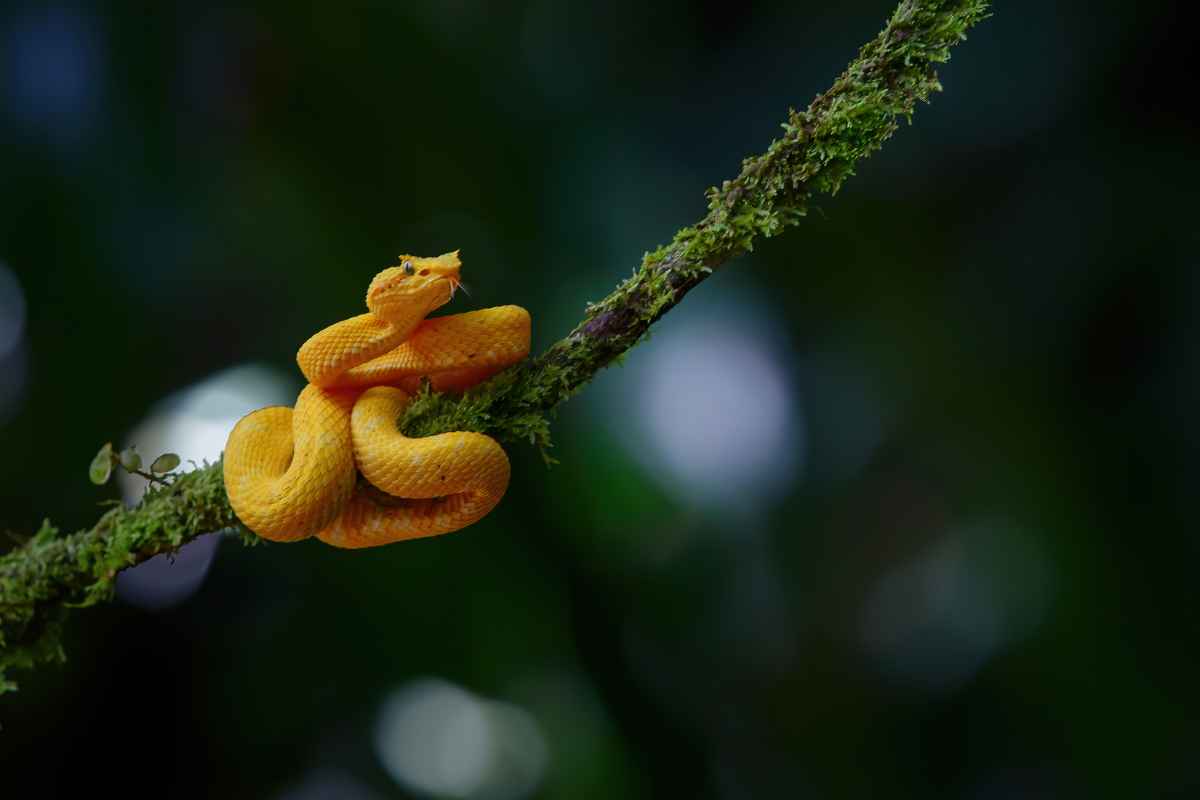
These snakes are arboreal, spending much of their time in the trees, where they use their prehensile tails to navigate branches with ease.
Their environment is crucial to their well-being in captivity, as they require high humidity and moderate temperatures to thrive.
The tropical climate of their native habitats plays a significant role in shaping their dietary habits and behavior.
Behavior and Temperament: A Cautious Yet Fascinating Pet
A Solitary and Venomous Snake
The Eyelash Pit Viper is primarily nocturnal, emerging from its hiding places during the evening to hunt for food.
It is also a solitary animal, preferring to stay in its own territory rather than share space with other snakes. In the wild, they ambush their prey, which often includes small mammals, birds, and amphibians.
Though they can be calm in their enclosures, they are highly defensive when threatened, using their venom as a primary means of defense.
Unlike many non-venomous snakes, the Eyelash Pit Viper will not hesitate to strike if it feels cornered or disturbed.
For this reason, it is best suited for experienced snake owners who understand the behavior of venomous reptiles.
Handling Precautions
Due to the venomous nature of the Eyelash Pit Viper, handling should be done with extreme care.
Experts recommend using a hook or other long-handled tool to move the snake, avoiding direct contact with its head or body.
This snake should never be handled unless absolutely necessary and only by those with sufficient experience in caring for venomous reptiles.
In captivity, the Eyelash Pit Viper can be calm if left undisturbed, but it is not a snake that thrives on human interaction. It is primarily a pet for observing rather than interacting with.
Diet and Feeding: What Does the Eyelash Pit Viper Eat?
A Carnivorous Hunter
In the wild, the Eyelash Pit Viper is an opportunistic predator, using its venom to subdue prey.
Its diet consists mainly of small mammals, amphibians, and birds, though it can also consume reptiles and large insects.
Their hunting technique involves ambushing prey from a stationary position, relying on their camouflage to remain unseen.
Feeding in Captivity
In captivity, their diet should consist primarily of appropriately sized rodents. Depending on the snake's size and age, it may need to be fed once every 7 to 10 days.
For younger snakes, more frequent feedings are necessary to support their growth, while adults can go longer between meals.
It is essential to feed your Eyelash Pit Viper prey that is proportionate to its body size.
Live prey should be avoided if possible, as it poses a risk of injury to the snake. Instead, opt for pre-killed or frozen rodents. Ensure that food items are appropriately thawed and warmed before feeding.
Creating the Ideal Habitat for Your Eyelash Pit Viper
Terrarium Setup
For the Eyelash Pit Viper, a spacious terrarium is essential. A minimum size of 60x45x45 cm is recommended for an adult snake.
This should provide enough space for the snake to climb and hide, both of which are essential for its well-being.
Substrate: Use a moist substrate such as coconut husk or sphagnum moss to maintain the required humidity levels.
Climbing Structures: Include branches, vines, and other climbing elements to allow the snake to navigate the space as it would in the wild.
Hiding Spots: The snake should have several hiding spots to choose from, mimicking its natural behavior of seeking cover.
Temperature and Humidity
Maintaining proper temperature and humidity levels is crucial for the Eyelash Pit Viper. The daytime temperature should range from 24 to 28°C, with a nighttime drop to 20°C.
The humidity should be kept between 70-80% to replicate the conditions of the snake's natural habitat. Use a humidifier or misting system to maintain these levels.
Lighting and UVB
As nocturnal creatures, the Eyelash Pit Viper does not require UVB lighting. Instead, ambient lighting is sufficient.
However, it is essential to provide a natural day-night cycle to regulate the snake's behavior and prevent stress.
Handling and Safety: Dealing with a Venomous Snake
Safety Measures
The Eyelash Pit Viper is a venomous snake, and safety precautions are essential.
Always use a hook or long-handled tongs when interacting with the snake, and never attempt to handle it directly without proper training.
Keep the terrarium secure to prevent accidental escapes, and ensure that all feeding and maintenance activities are done with the snake safely enclosed.
Venom and Risks
The venom of the Eyelash Pit Viper is hemotoxic, meaning it attacks the blood cells and tissues of the prey. While rare in captivity, bites from this snake can be life-threatening.
If bitten, immediate medical attention is required. For this reason, owning an Eyelash Pit Viper requires a high level of responsibility and awareness.
Conclusion: A Rewarding but Challenging Pet
The Eyelash Pit Viper is a breathtaking species that can make an impressive addition to a reptile collection.
However, its venomous nature and specialized care requirements make it a challenging pet. For experienced snake owners, the Eyelash Pit Viper offers a rewarding experience with the proper care, providing an opportunity to observe a truly unique creature.
However, before considering this snake as a pet, make sure you have the knowledge, experience, and commitment to care for it properly and safely.
We hope you enjoy this video about Reptiles

Source: Clint's Reptiles
Did you find this post useful or inspiring? Save THIS PIN to your Pets Board on Pinterest!

You may also like