
How to Keep Discus Fish: A Comprehensive Guide


Want a display tank that actually lives up to the hype? Discus can be stunning and surprisingly manageable when you focus on stable water, smart stocking, and simple routines.
Below you’ll find a practical, beginner-friendly roadmap that prioritizes what truly matters—so your fish thrive without turning your life into a chemistry exam.
Quick Reference: Ideal Parameters at a Glance
| Parameter | Everyday Keeping (Captive-Bred) |
|---|---|
| Tank size | 75 gal minimum for a group (48" length helps more than height) |
| Group size | 6+ discus to spread aggression |
| Temperature | 82–86 °F (28–30 °C) |
| pH | 6.5–7.2 (stable beats “perfect”) |
| KH | 1–3 dKH (enough to resist pH swings) |
| TDS | ~100–200 ppm (consistency is key) |
| Nitrate (NO₃) | Keep <20 ppm in non-planted, <40 ppm in planted tanks |
| Water changes | Start at 30–50% weekly; adjust to hold nitrates in range |
Pro tip: Stability beats precision. A steady pH of 7.0 with low nitrates is far better than chasing 6.0–6.5 with swings.
What Makes Discus Different (and Totally Doable)
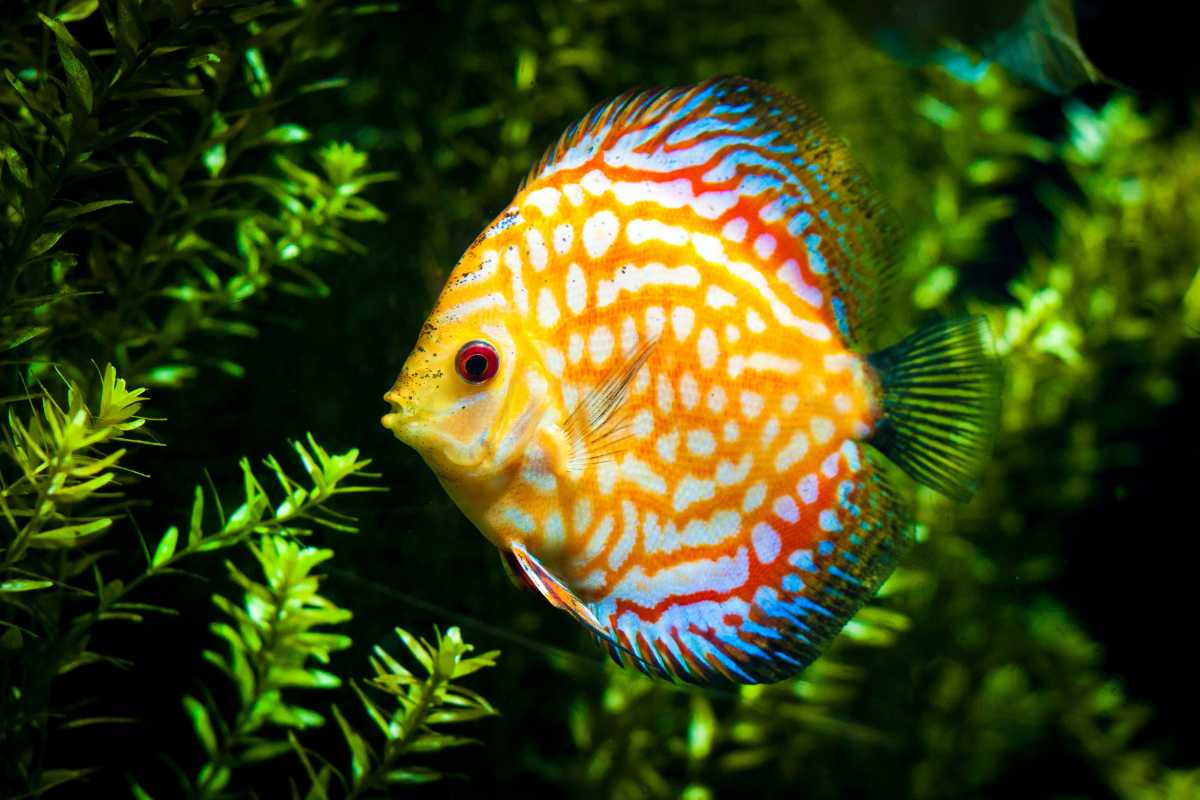
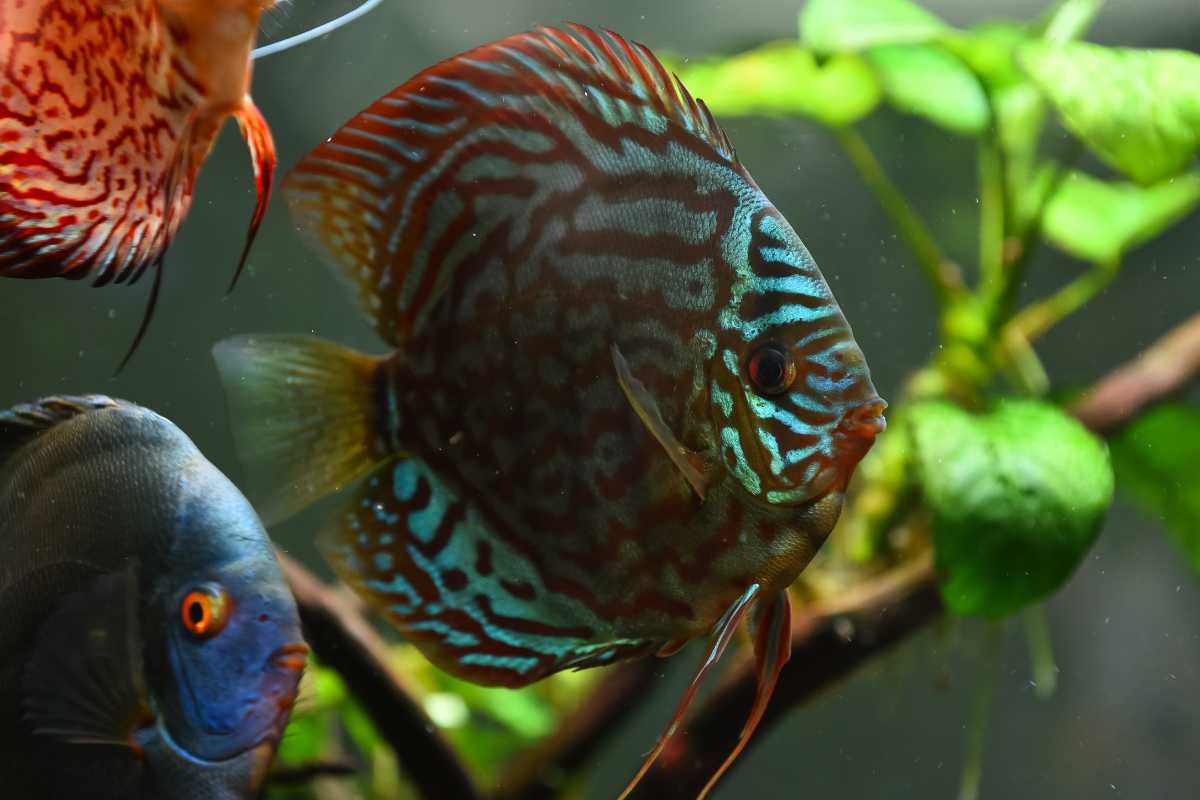
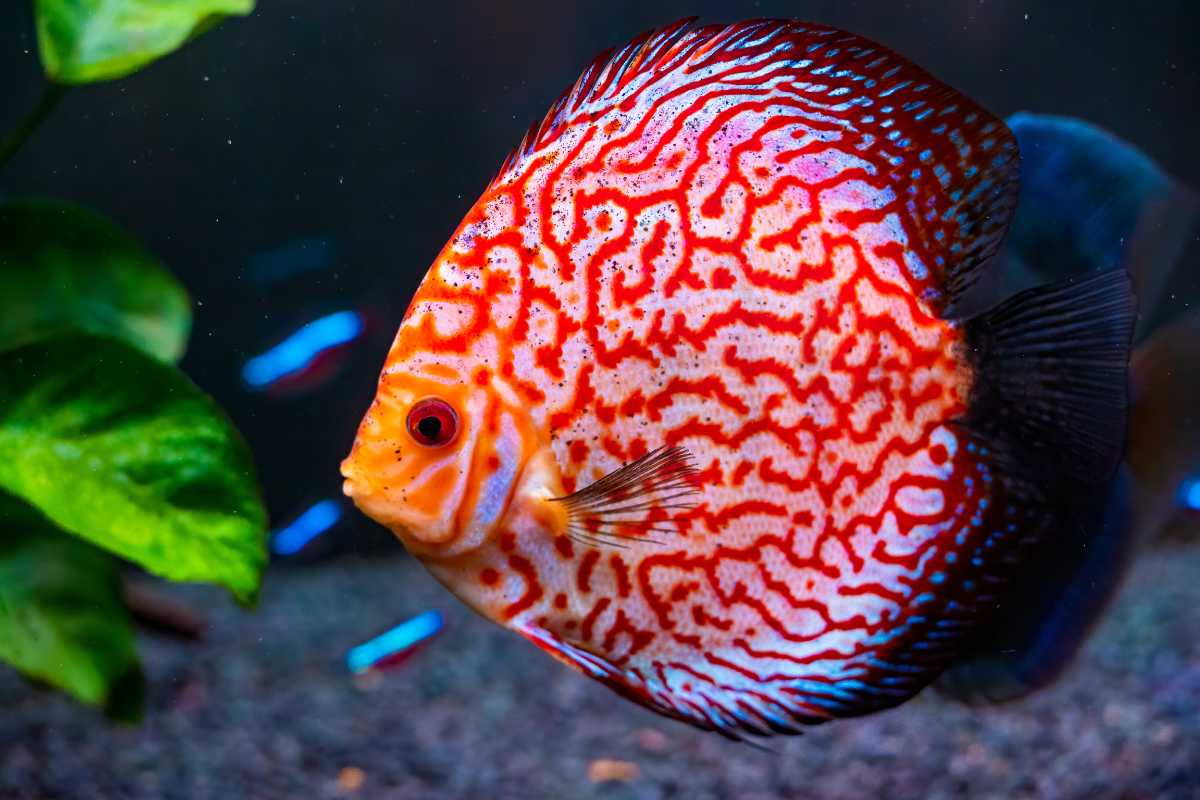
Discus are cichlids with a gentle demeanor and a social hierarchy. They look delicate, but captive-bred strains are very adaptable if you give them clean, warm water and room to move.
The two keys: keep them in a proper group and do maintenance based on test results, not guesswork.
Tank Size and Layout That Actually Works

Footprint Beats Height
You’ll often hear “tall tanks for tall fish.” In practice, discus benefit more from length and volume than extra height. A 75-gallon (48" long) tank gives them cruising space, buffers waste, and reduces territorial pressure.
A 55-gallon can work for experienced keepers, but it usually demands stricter feeding and larger water changes.
Aquascape for Confidence
Discus love open swimming lanes with visible refuge. Use driftwood, tall swords (Echinodorus), and broad-leaf plants (Anubias) to break line-of-sight without crowding the foreground.
Aim for calm zones and soft shade where shy fish can decompress without disappearing.
Plants That Tolerate Heat
At 84–86 °F, not all plants are happy. Go with Anubias, Java fern, Echinodorus, Bacopa, and micro sword. Many floaters wilt at discus temps, so let your hardscape and shade do the heavy lifting.
Filtration and Oxygenation: Clean and Calm
Canister + Prefilter = Less Fuss
A large canister filter with a sponge prefilter on the intake is a discus keeper’s best friend. The prefilter grabs gunk before it clogs your media, and you can rinse it weekly in tank water in two minutes.
Inside the canister, keep it simple: mechanical (coarse → fine), then ample bio media.
Flow You Can Live With
Discus prefer gentle, even flow. Point returns along the back wall or up toward the surface for gas exchange without a washing-machine current.
Because warm water holds less oxygen, running a quiet air stone is a cheap way to safeguard O₂, especially during heat waves or meds.
Water Chemistry: Aim for Stable, Not Extreme
pH, KH, GH, and TDS—Simplified
pH: 6.5–7.2 is ideal for maintenance. If your tap is near 7.0 and stable, that’s gold.
KH: Keep 1–3 dKH so pH doesn’t nosedive. Ultra-soft water sounds fancy but can be unstable.
TDS: ~100–200 ppm gives minerals for fish and bacteria while staying discus-friendly.
GH: Moderate GH supports osmoregulation; no need to chase ultra-low unless you’re breeding.
Breeding vs. Keeping: Wild and breeding setups often push softer, more acidic water. For everyday keeping, moderation and consistency win.
Temperature: Warm and Redundant
Run 82–86 °F and use dual smaller heaters instead of one big unit for redundancy. A simple digital thermometer you glance at daily catches issues before they snowball.
Stocking and Social Dynamics
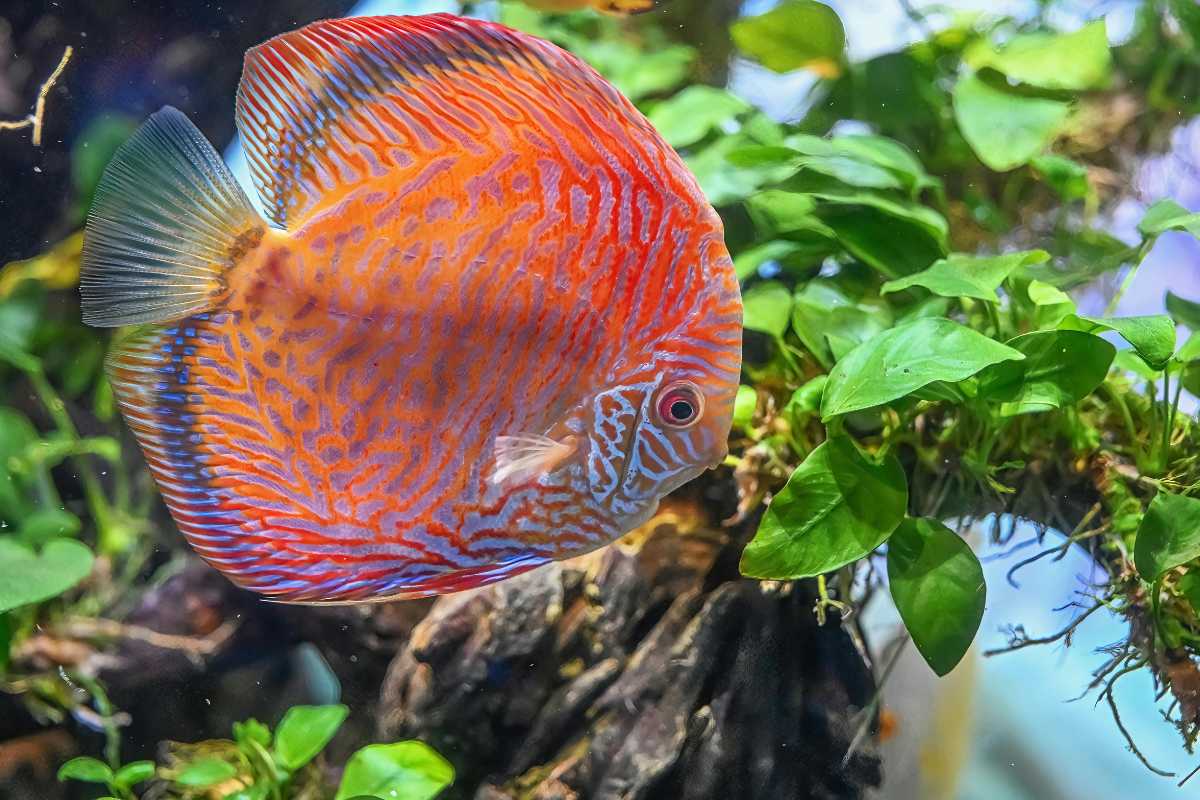
Discus are hierarchical. Keeping six or more spreads out the bossiness. Buying 10–12 juveniles and growing them on—then rehoming the pushiest individuals to settle at ~6 balanced adults—is a proven path to a calm community.
Always add new fish as a group after quarantine so no single newcomer is singled out.
Feeding Strategy: Variety Without the Mess
Your Everyday Staples
Base the diet on quality, species-specific pellets formulated for discus. Supplement with frozen foods like bloodworms, brine shrimp, and blackworms. Rotate options to cover nutrition and keep fish eager.
The Beef Heart Debate (Handled)
Beef heart can turbocharge growth for juveniles, but it’s messy and not essential. If you use it, keep portions small, pair with serious filtration, and don’t make it every meal.
Many keepers get fantastic results with pellets + clean frozen foods and never touch beef heart.
How Much and How Often
Juveniles (growing): 3–4 small meals/day.
Adults (maintenance): 1–2 modest feedings/day.
Rule of thumb: Food should be gone in a couple of minutes. Leftovers = extra work and algae.
Maintenance by Nitrates (Not by Calendar)
Rather than “X% every Saturday,” let nitrates guide you. Test weekly at first:
In a non-planted discus tank, aim for NO₃ < 20 ppm.
In a heavily planted setup, staying < 40 ppm is reasonable.
Adjust water-change volume and frequency to hold that line. For many tanks, that means 30–50% per week.
With heavy feeding or lots of juveniles, larger or more frequent changes make a dramatic difference in color, appetite, and growth.
Quarantine, Acclimation, and Health Watch
Four Weeks That Save You Headaches
Quarantine every new fish for 4 weeks in a simple, heated bare-bottom tank with a cycled sponge filter. Observe appetite, breathing, and feces. Treat only when indicated—blanket medicating can stress fish and biofilter.
Easy, Safe Acclimation
Use drip acclimation when introducing discus to your display. Dim the lights, keep it calm, and give them time to find cover. Feed lightly the first day; the goal is zero stress spikes.
Early Warning Signs to Act On
Watch for darkening/“peppering”, clamped fins, stringy white feces, one-sided rapid breathing, and loss of appetite.
Your first response: test water, increase aeration, partial water change, and isolate if needed. Keep a logbook; patterns tell the story faster than memory.
Tankmates That Love the Heat
Pick companions that thrive at 82–86 °F and won’t outcompete your discus at mealtime:
Cardinal tetras: classic warm-water schooling fish with gentle manners.
Corydoras sterbai: one of the few cory species that enjoys higher temps.
Bristlenose pleco (Ancistrus): steady algae helper that usually won’t rasp discus slime coats.
Feed tankmates after discus or in a separate zone so your stars get their share.
A Simple Weekly Rhythm (That Builds Success)

Daily (2–3 minutes)
Glance at temp, watch a feeding response, and scan for odd behavior.
Remove any uneaten food within a few minutes.
Mid-week (10 minutes)
Rinse the prefilter sponge in a bucket of tank water.
Check the air stone and surface agitation.
Weekly (30–45 minutes)
Test NO₃ and KH.
Change 30–50% water (more if nitrates demand it).
Vacuum lightly, especially in feeding zones.
Wipe the front glass; enjoy that view you’re working for.
Monthly
Rotate a gentle canister service (never sterilize all media at once).
Audit heater performance and your TDS trend.
This cadence keeps the tank sparkling and your discus confident—without turning the hobby into a second job.
FAQ: Fast Answers to Big Questions
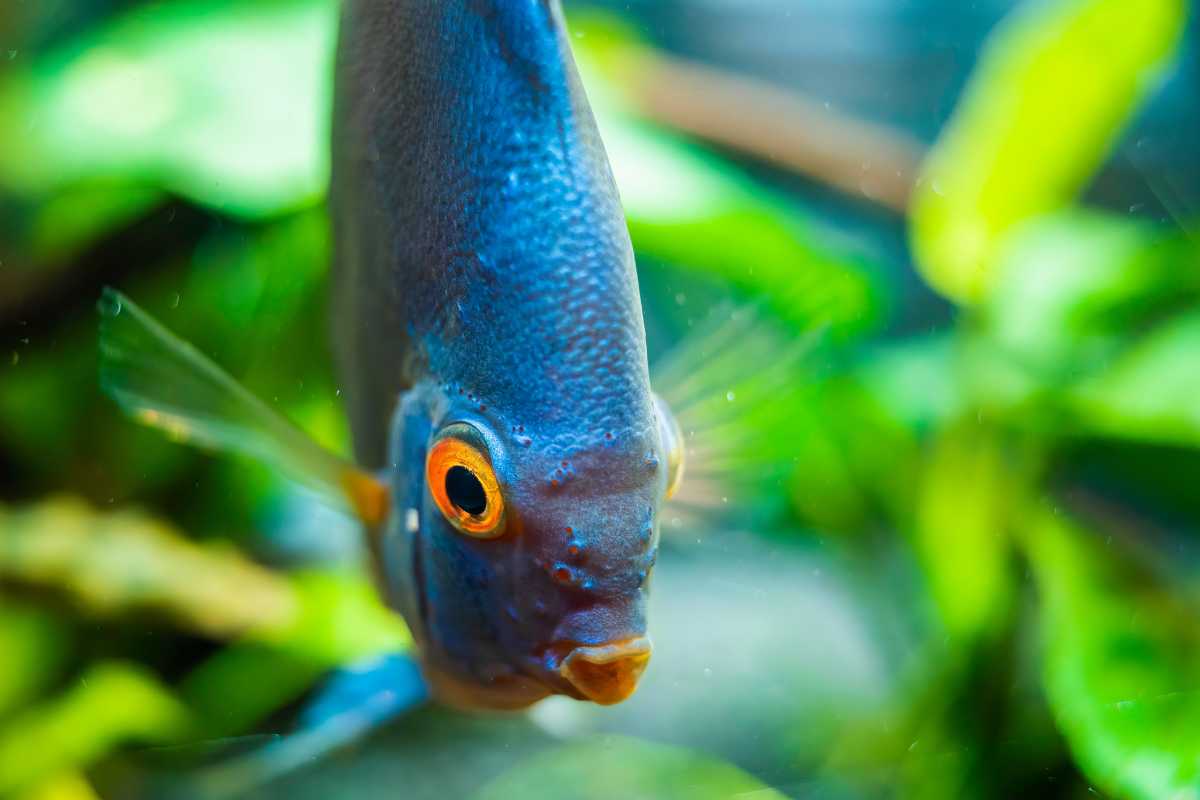
Can I keep just one discus?
You can, but you’ll often see shyness, stress, and poor color. A group of 6+ spreads aggression and creates that relaxed, regal behavior everyone loves.
Bare-bottom or planted?
Bare-bottom is unbeatable for growing juveniles fast and keeping waste under control. Planted looks gorgeous and can buffer nitrates but requires disciplined feeding and consistent trimming.
Do I need RO water?
Not for everyday keeping of captive-bred fish. If your tap is reasonable (neutral pH, not extremely hard), you’re fine. Consider RO only to blend if your tap is unusual and only if you can keep it consistent.
Why do my discus darken or hide after a water change?
Usually temperature or pH mismatch, too much current, or overly bright lights right after the change. Match temp closely, dechlorinate properly, and dim lights for an hour post-maintenance.
Ready to Try Discus—The Smart Way
If you remember nothing else, remember this: length and volume over height, stable midline parameters, group dynamics, and maintenance guided by nitrates.
Add gentle flow, good oxygenation, and simple, varied feeding, and you’ll discover why so many aquarists fall in love with these fish.
Keep it steady, keep it clean, and enjoy the payoff: confident discus that eat well, school calmly, and glow in a tank you’re proud to show off.
Enjoy The Video About Fishes

Source: The king of DIY

You may also like