
Turning Your Fish Tank Into a Work of Art


Creating a truly eye-catching aquarium isn’t about buying every gadget on the shelf—it’s about intentional design, healthy biology, and easy routines you’ll actually keep.
This guide turns inspiration into action with proven layout ideas, beginner-friendly plant and fish lists, and a maintenance plan that keeps your tank glowing week after week.
Think of it as your blueprint for a beautiful, stable, and low-stress aquascape.
The Vision: Beauty That’s Built on Balance

A display that feels “artistic” always rests on three pillars: composition, healthy plants and livestock, and consistent care.
When these work together, you get rich color, clean glass, sparkling water, and fish that behave naturally. The result isn’t just decorative—it’s alive.
Quick Reference: Parameters & Gear (Bookmark This)
Use this cheat sheet to make quick decisions and avoid guesswork.
| Component | Good Starting Point |
|---|---|
| Temperature | 24–26 °C (75–79 °F) for most tropical community setups |
| pH | 6.6–7.4 (stable beats “perfect”) |
| Hardness | KH 3–6, GH 5–10 (moderate, steady) |
| Filtration Flow | 5–7× tank volume per hour (gentle for bettas/shrimp) |
| Lighting Duration | 8–10 hours daily (start at 8h to limit algae) |
| Light Intensity (plants) | Low–medium for easy species; high light only if you’re adding CO₂ and upping maintenance |
| Substrate | Inert sand/gravel for low-tech; nutrient-rich substrate for plant-heavy scapes |
| CO₂ | Optional; not required for easy plants, but boosts growth and color in advanced layouts |
Pro tip: Consistency beats perfection. Stable water parameters and a predictable photoperiod are more valuable than chasing an ideal number.
Composition That Guides the Eye

A stunning tank looks intentional before it looks expensive. Use these simple layout frameworks to create flow and focus.
The “Isle” Layout (Beginner-Friendly)
Place your main rock or driftwood mass slightly off-center, leaving open sand as a negative space. Plant densely behind and around the structure. This creates a clean focal point and easy maintenance pathways.
Rule of Thirds & Golden Triangle
Imagine a grid dividing the tank into thirds. Place the primary focal stone or driftwood at a grid intersection.
If using multiple stones, angle them to converge toward that point. For triangular scapes, slope substrate highest behind the focal point and taper forward for depth.
Height, Texture, and Color
Layer tall background plants, mid-height stems, and low foreground species.
Mix textures (broad Anubias leaves + fine Vallisneria blades) and keep bright colors near the focal area so the eye naturally lands where you want.
Four Classic Aquascaping Styles (Pick One and Personalize)

Choosing a style gives you guardrails, speeds up shopping, and clarifies plant choices.
Iwagumi (Stone-Led Minimalism)
Look: Open sand, low carpet, 3–5 stones with one “master” rock.
Plants: Easy: dwarf hairgrass (low–med light), Monte Carlo (med), S. repens (med).
Tips: Keep the rock family consistent in texture and color. Slightly bury stones to look natural.
Dutch (Plant Color and Texture)
Look: Rows (“streets”) of contrasting plants, little hardscape.
Plants: Rotala rotundifolia, Ludwigia repens, Hygrophila species, Cryptocoryne varieties.
Tips: Vary leaf size and color every row; trim weekly to keep clear tiers.
Nature Aquarium (Wild-Inspired Balance)

Look: Driftwood and rock mimic riverbanks or forests, with mixed plants.
Plants: Anubias, Java fern, Bolbitis on wood; Crypts and stem plants for mass.
Tips: Use moss to soften edges; let roots grip wood/rock for realism.
Jungle (Lush, Low-Stress)
Look: Tall, leafy, slightly untamed—great for shy fish.
Plants: Amazon sword, Vallisneria, floating frogbit/salvinia, Crypts.
Tips: Embrace height and shadows; floating plants reduce glare and stress.
Plants & Fish That Just Work (By Tank Size and Skill)

Skip the guesswork with combinations that are forgiving and beautiful.
Nano Tanks (20–40 L)
Plants (Easy): Anubias nana, Java fern (tie to wood/rock), Cryptocoryne wendtii, dwarf Sagittaria, mosses.
Show Fish: Single betta (no fin-nippers); or a school of ember tetra or chili rasbora (8–12).
Clean-Up Crew: Nerite snails, Amano shrimp (if fish are shrimp-safe).
Notes: Keep the bioload low. Bettas prefer gentle flow and broad-leaf plants for perching.
Small–Medium Tanks (60–120 L)
Plants (Easy–Medium): Hygrophila corymbosa, Ludwigia repens, Vallisneria nana, S. repens, Cryptocoryne balansae.
Schooling Fish: Neon/black neon/ember tetras, harlequin rasboras, glowlight tetras (10–20).
Feature Fish: Honey gourami (peaceful), pearl gourami in larger volumes.
Bottom Crew: Corydoras (sand substrate preferred), Otocinclus for algae control.
Notes: Mix one feature species with a single tight school for a clean, curated look.
Lighting That Flatters Color Without Fueling Algae

Start at 8 hours; add 15–30 minutes weekly if algae is under control.
Aim for even coverage front to back; elevate lights a few centimeters to soften hotspots.
High-light plants look brilliant, but they demand CO₂ and dosing. If you want low maintenance, keep light moderate and choose easy species.
Filtration, Flow, and Crystal-Clear Water
Target 5–7× tank volume per hour. Use spray bars or lily pipes to spread flow without blasting fish.
Pre-filter sponges trap gunk and protect shrimp/fry; rinse them weekly in tank water.
Add fine filter floss for occasional water-polish before photo moments.
Safe, Compatible, and Stress-Free (Read Before You Stock)

Compatibility: Avoid mixing bettas with fin-nippers or flashy long-fin tank mates. Keep only one territorial centerpiece per tank size.
Bioload: Stock slowly over weeks. More fish = more maintenance; a sparse, elegant school often looks better.
Quarantine: New plants and fish can carry pests or disease—quarantine when possible.
Sunlight: Direct sun drives algae; position tanks away from bright windows or add a shade blind.
Aquarium-Safe Materials: Use only aquarium-safe wood, rock, silicone, and epoxies.
Substrate and Hardscape That Tell a Story
Choose a nutrient-rich substrate if you want strong root feeders (Swords, Crypts). Inert sand/gravel works for epiphytes (Anubias, ferns, mosses).
Keep a natural color palette so fish colors stand out.
Echo nature: group similar rocks, repeat angles, and partially bury hardscape so it looks anchored to the “ground.”
A Simple Dosing Strategy (Keep It Consistent)

If you’re not running CO₂, use a comprehensive all-in-one fertilizer 1–2× per week and observe plant response.
With CO₂, consider separate N-P-K and micros or a trusted macro/micro blend. Dose lightly, test monthly, and adjust based on growth and algae.
Your Maintenance Rhythm (So Nothing Slips)
Weekly (30–45 min)
Water change: 30–40% with temperature-matched, dechlorinated water.
Glass & hardscape: Spot-clean algae, gently brush wood/rocks.
Plant care: Trim stems, replant tops for fullness, thin floaters to let light through.
Filter pre-sponge: Rinse in removed tank water.
Bi-Weekly
Gravel/sand: Lightly siphon in sections; rotate areas to preserve beneficial bacteria.
Check parameters: Temperature, pH, and a quick nitrate check keep surprises away.
Monthly
Filter media: Swish biological media in tank water if flow drops (never replace all at once).
Photoperiod tweak: If algae appears, reduce light by 30 minutes and increase live plant mass.
Maintenance mindset: Small, regular actions beat major rescues. Your plants will thank you with steady growth and fewer algae battles.
Before-and-After: A Realistic 60 L Plan

Week 0 (Setup): Inert sand, driftwood “isle,” Anubias + Java fern on wood, S. repens mid-ground, dwarf Sag front. Gentle filter at 5× turnover, 8-hour light.
Week 2: Add a tight school of ember tetras (10). First trim of S. repens to encourage spreading.
Week 4: Introduce 4–5 Otocinclus and a couple of Nerite snails. Light stays at 8 hours; start a light all-in-one fertilizer.
Week 8: Canopy fills in; thin floaters. Subtle slope and wood grain guide the eye to the focal root. Water stays clear with weekly 30% changes.
Result: Calm schooling behavior, deep greens, and a layout that reads as “designed,” not crowded.
Smart Upgrades That Matter (and Ones to Skip)
Worth it: A quiet, reliable filter; a light with a built-in timer; quality hardscape that matches; root tabs under heavy root feeders.
Optional: CO₂ for color pop and faster growth—only if you’re comfortable trimming weekly.
Skip for now: Overpowered lighting or complex dosing before you’ve mastered stable routines.
Common Pitfalls—and Easy Fixes

Algae bloom? Shorten light to 7.5–8 hours, increase plant mass (especially floaters), and improve flow.
Pale new leaves? Consider gentle micro dosing or root tabs; confirm your photoperiod isn’t too short.
Fish hiding constantly? Add hardscape cover and background plants; avoid abrupt lighting on/off—use a 15-minute ramp if your light supports it.
A Few Words on Story and Emotion
Great tanks aren’t only tidy—they tell a story. A root arching over pale sand suggests a creek after rain. A rocky ridge with windswept stems hints at a mountain stream.
Choose one narrative, keep the palette tight, and let negative space breathe. The restraint makes your colors and movement feel intentional.
Checklist to Start (Save This)

Choose one style (Iwagumi, Dutch, Nature, Jungle).
Pick 2–3 compatible hardscape pieces that share texture and tone.
Select easy plants you like—epiphytes are almost foolproof.
Set lighting to 8 hours; aim for 5–7× filter turnover.
Stock slowly, quarantine when possible, and watch behavior.
Commit to the weekly routine—short, predictable, and effective.
Closing Note: Sustainable Beauty You Can Live With
When you prioritize composition, compatible species, and maintenance you’ll actually do, your aquarium becomes more than decor—it becomes a living artwork that stays beautiful.
Start simple, build density over time, and let growth tell the story. The most captivating tanks aren’t the most complicated; they’re the most consistent.
Enjoy The Video About Fishes
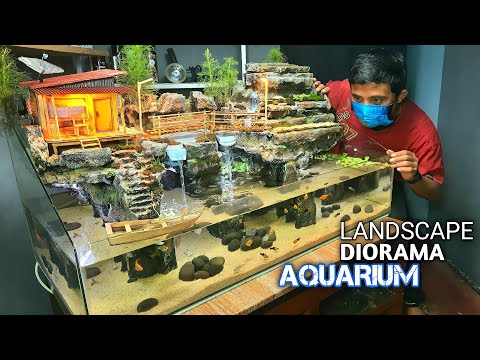
Source: gurune kreatif poel

You may also like