
Your First Aquarium! Top 10 Aquarium Fish For Beginners


Starting your first tank should feel exciting—not overwhelming.
Below you’ll find a beginner-friendly guide to choosing fish that thrive in home aquariums, plus simple stocking plans, a month-one care schedule, and the most common pitfalls to avoid.
We’ll keep it practical, specific, and easy to scan so you can build a peaceful, healthy community from day one.
Before You Buy: Size, Water & Cycling

A successful aquarium starts before any fish come home.
Cycle the tank first. Give your filter time to grow beneficial bacteria so ammonia and nitrite stay at 0 ppm and nitrate remains under ~20–40 ppm.
Match fish to the water you actually have. If your tap water is naturally soft and slightly acidic, lean toward tetras and corydoras. If it’s hard and alkaline, livebearers like guppies and platies will be happier.
Right size, right stocking. A 10–15 gallon tank is great for a single species or a betta setup. 20 gallons opens the door to small communities. 29 gallons gives you stability and compatibility options.
Think in levels. Choose fish for the surface, midwater, and bottom so your aquarium looks alive at every layer without crowding.
Pro tip: Keep a liquid test kit, water conditioner, a reliable heater (when needed), and fine sand or smooth gravel for bottom dwellers. Consistency beats perfection.
The 10 Best Beginner Fish (Grouped by Tank & Water Type)
Each profile includes the basics you actually need: minimum tank, group size, temperature, water preference, temperament, and what they’re compatible with.
1) White Cloud Mountain Minnow (Tanichthys albonubes)

Best for: cool to temperate community, no heater required
Min tank: 10–15 gal | Group: 8+ (shoaling)
Temp: 18–25 °C (64–77 °F) | Water: adaptable, prefers neutral
Temperament: peaceful, active mid-top swimmers
Great with: peaceful cool-tolerant fish and shrimp
Why beginners love them: Hardy, lively, and forgiving. Ideal if your room stays mild and you’d rather run a tank without a heater.
2) Betta (Betta splendens)

Best for: centerpiece fish in a calm setup
Min tank: 5–10 gal (bigger = more stable) | Group: keep one male per tank
Temp: 24–27 °C (75–81 °F) | Water: soft to neutral
Temperament: territorial; avoid flashy or nippy tankmates
Great with: gentle snails or small, non-nippy scavengers in larger setups
Why beginners love them: Stunning colors and big personalities—just remember one male per tank and gentle filtration.
3) Neon Tetra (Paracheirodon innesi)

Best for: soft-water, planted community
Min tank: 20 gal | Group: 10+
Temp: 23–26 °C (73–79 °F) | Water: soft, slightly acidic
Temperament: peaceful mid-column shoalers
Great with: small tetras, peaceful rasboras, corydoras
Why beginners love them: Iconic glow and calm schooling behavior—they look best in a mature, stable tank.
4) Ember Tetra (Hyphessobrycon amandae)

Best for: nano planted tanks
Min tank: 10–15 gal | Group: 10+
Temp: 24–28 °C (75–82 °F) | Water: soft to neutral
Temperament: very peaceful; small mouths
Great with: dwarf corydoras, peaceful shrimp
Why beginners love them: Tiny but vibrant, perfect for smaller aquascapes where you want color without crowding.
5) Zebra Danio (Danio rerio)

Best for: active, beginner-proof community
Min tank: 20 gal | Group: 8–10
Temp: 20–26 °C (68–79 °F) | Water: versatile
Temperament: lively; can be fin-nippy if under-stocked
Great with: other fast, peaceful community fish
Why beginners love them: Extremely hardy and always on the move—just give them room to zoom and a proper group.
6) Cherry Barb (Puntius titteya)

Best for: colorful, peaceful mid-level action
Min tank: 20 gal | Group: 8–10 (more females than males)
Temp: 23–27 °C (73–81 °F) | Water: soft to neutral
Temperament: shy to peaceful; colors deepen in planted tanks
Great with: tetras, corydoras, small rasboras
Why beginners love them: Rich red coloration without the attitude of some other barbs.
7) Corydoras Catfish (Corydoras spp.)

Best for: bottom-level cleanup crew (but still need real food!)
Min tank: 20 gal | Group: 6+ of the same species
Temp: 22–26 °C (72–79 °F) | Water: soft to neutral
Temperament: peaceful bottom shoalers
Great with: small tetras, rasboras, livebearers (if not too hard on parameters)
Why beginners love them: Adorable whiskered foragers that keep the substrate active—use fine sand to protect their barbels.
8) Guppy (Poecilia reticulata)

Best for: hard, alkaline water—lively and colorful
Min tank: 15–20 gal | Group: mixed group; expect babies
Temp: 23–26 °C (73–79 °F) | Water: hard/alkaline
Temperament: peaceful, very active
Great with: platies, mollies, peaceful bottom dwellers
Why beginners love them: Rainbow colors and endless variety. Keep an eye on stocking—they breed readily.
9) Platy (Xiphophorus maculatus)

Best for: bulletproof beginner livebearer
Min tank: 20 gal | Group: mixed group; expect babies
Temp: 22–26 °C (72–79 °F) | Water: hard/alkaline
Temperament: peaceful, sturdy
Great with: guppies, corydoras, calm tetras if parameters overlap
Why beginners love them: Hardy, friendly, always hungry, and full of color morphs.
10) Molly (Poecilia spp.)

Best for: larger beginner tanks with hard water
Min tank: 29 gal+ (larger varieties appreciate space) | Group: mixed
Temp: 24–27 °C (75–81 °F) | Water: hard/alkaline
Temperament: peaceful to mildly boisterous
Great with: platies, guppies, robust community fish that like hard water
Why beginners love them: Graceful and flashy, but they do best with space, clean water, and minerals.
Ready-Made Stocking Plans You Can Copy

Use these as starting blueprints—always test your water, add fish slowly, and observe behavior.
10–15 Gallons (Soft/Neutral, Heated)
Centerpiece betta (male) solo
Add a few snails or amano shrimp (in a well-covered tank)
Heavily planted with gentle flow
Why it works: The betta shines as the star, and cleanup crew stays out of the spotlight. Keep tank mates calm and non-nippy.
Alternative (nano community):
10–12 ember tetras + 6 dwarf corydoras (e.g., C. pygmaeus)
Light stocking, lots of plants, weekly water changes
20 Gallons (Soft/Neutral, Heated)

10–12 neon tetras (mid)
6+ corydoras (bottom)
Optional: cherry shrimp colony if the tank is mature
Why it works: Balanced activity across levels with peaceful, compatible parameters.
29 Gallons (Hard/Alkaline, Heated)
8–10 guppies or 8–10 platies (choose one livebearer species)
6+ corydoras (if your water isn’t too hard, or swap for a hard-water tolerant bottom fish)
Optional: 5–6 cherry barbs for added color (if parameters overlap)
Why it works: Livebearers thrive in hard water and create a lively, colorful display—watch population growth.
Your First Month: Simple Care Schedule

Week 0 (Setup):
Rinse substrate (no soap), plant, fill, start filter and heater. Dose water conditioner. Begin cycling with a source of ammonia (fish food or bottled ammonia). Run the tank at least 1–2 weeks, testing every few days.
Week 1–2:
Test ammonia, nitrite, nitrate. When ammonia and nitrite read 0 ppm after you dose a small amount of ammonia, you’re ready for livestock. Do a 50% water change before adding fish.
Week 3 (First Fish):
Add one group (e.g., 8–10 tetras) or one centerpiece betta. Feed small portions once or twice daily. Do a 25–30% water change at week’s end.
Week 4 (Build Slowly):
If parameters remain stable (ammonia/nitrite 0; nitrate manageable), add the bottom group (e.g., 6 corydoras). Maintain weekly 25–30% changes, vacuum debris lightly, and clean the filter sponge in tank water (never under the tap).
Ongoing:
Feed varied diets (quality flakes/pellets, frozen or live treats once or twice weekly). Observe fish daily—normal behavior is your best health indicator.
Common Mistakes to Avoid

Skipping the cycle. The fastest way to stress fish is uncycled water.
Mixing incompatible fish. Don’t combine cool-water species (white clouds) with warm-water tropicals, or soft-water tetras with hard-water livebearers.
Under-stocking shoalers. Groups of 6–10+ look better and stress less.
Sharp gravel for corydoras. Use fine sand to protect barbels.
Adding too many fish at once. Stock in stages, testing between additions.
Overfeeding. Offer what they can finish in ~30–60 seconds; remove leftovers.
Reading Your Fish: Signs of Health vs. Stress
Healthy: bright colors, fins extended, steady schooling, active foraging, eager feeding, relaxed rest periods.
Stressed: gasping at the surface, clamped fins, hiding all day, scratching on decor, listless hovering, sudden aggression in normally peaceful fish.
When in doubt, test the water first. Poor parameters cause most beginner issues.
Quick Buying Guide (Checklist)

Filter with biological media (sponge/ceramic).
Heater with thermostat (if species require warmth).
Thermometer you can glance at daily.
Liquid test kit (ammonia, nitrite, nitrate, pH).
Conditioner to detoxify chlorine/chloramine.
Siphon and dedicated bucket for water changes.
Quality foods: staple pellets/flakes + frozen/live variety.
Plants or hardscape for shelter and natural behavior.
Make It Beautiful (and Easier to Maintain)

A beginner tank doesn’t have to be plain. Add undemanding plants like anubias, java fern, and floating salvinia to reduce algae and give fish cover.
Use dark substrates to make colors pop, moderate lighting, and keep decor smooth for fin safety. A simple timer (8–9 hours/day) stabilizes your lighting schedule and algae control.
Putting It All Together
Choosing beginner fish is about matching species to your water, tank size, and maintenance style—not about cramming the most fish into the smallest space.
Start with one great group, let the tank stabilize, and build slowly. If you remember just three things, make them these: cycle first, stock in compatible groups, and keep up with weekly water changes.
Do that, and your first aquarium won’t just survive—it’ll thrive, becoming a calming, colorful centerpiece you’ll love to watch every day.
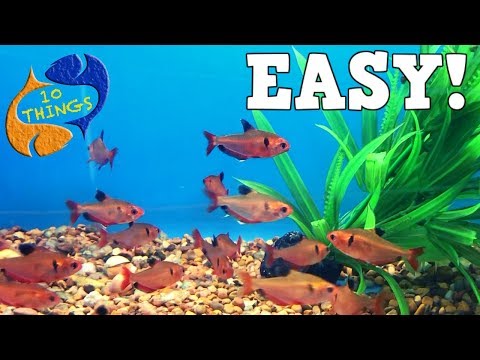
Source: KGTropicals
Did you find this post useful or inspiring? Save THIS PIN to your Pets Board on Pinterest!

You may also like