
Sex-Changing Fish: 7 Surprising Species and How the Switch Happens


Yes, some fish really do change sex during their lives. Biologists call it sequential hermaphroditism: a fish is born as one sex, functions as that sex for a while, and then switches to the other, usually when its social group or its own body size makes the change worth it. Clownfish, many wrasses, parrotfish, groupers and some gobies all do it, and it is far more common on coral reefs than most people imagine.
Here is how the switch works, which species can pull it off, and what it means if you keep fish at home.
How Does Sex Change Happen in Fish?
For us, biological sex is set early and stays put. In many fish, it is more flexible. Their reproductive tissue can reorganize later in life, triggered mostly by changes in hormones, which in turn respond to what is happening around the fish.
The main triggers
- Social cues: the most common trigger. When the dominant fish in a group dies or disappears, the next in line often changes sex to take its place.
- Body size: in many species, being large pays off more as one sex than the other, so fish switch when they reach a certain size.
- Environment: conditions such as population density and the number of available mates can also influence when and whether the change happens.
The process is not instant. Behavior can shift within hours or days, as the fish starts acting like its new role, while the full internal transformation of the reproductive organs takes longer.
The Types of Sex Change in Fish
Scientists sort sex-changing fish into a few groups:
- Protandry (male first): the fish starts life as a male and later becomes female. This makes sense when bigger females can produce many more eggs.
- Protogyny (female first): the fish starts as a female and later becomes male. This is common where one large male guards a group of females, so it pays to be male only once you are big enough to win that spot.
- Bidirectional change: a few species can switch one way and then back again, depending on who else is around.
- Simultaneous hermaphrodites: a different strategy, where one fish has functioning male and female tissue at the same time.
Surprising Species That Change Sex
1. Clownfish (Amphiprioninae)
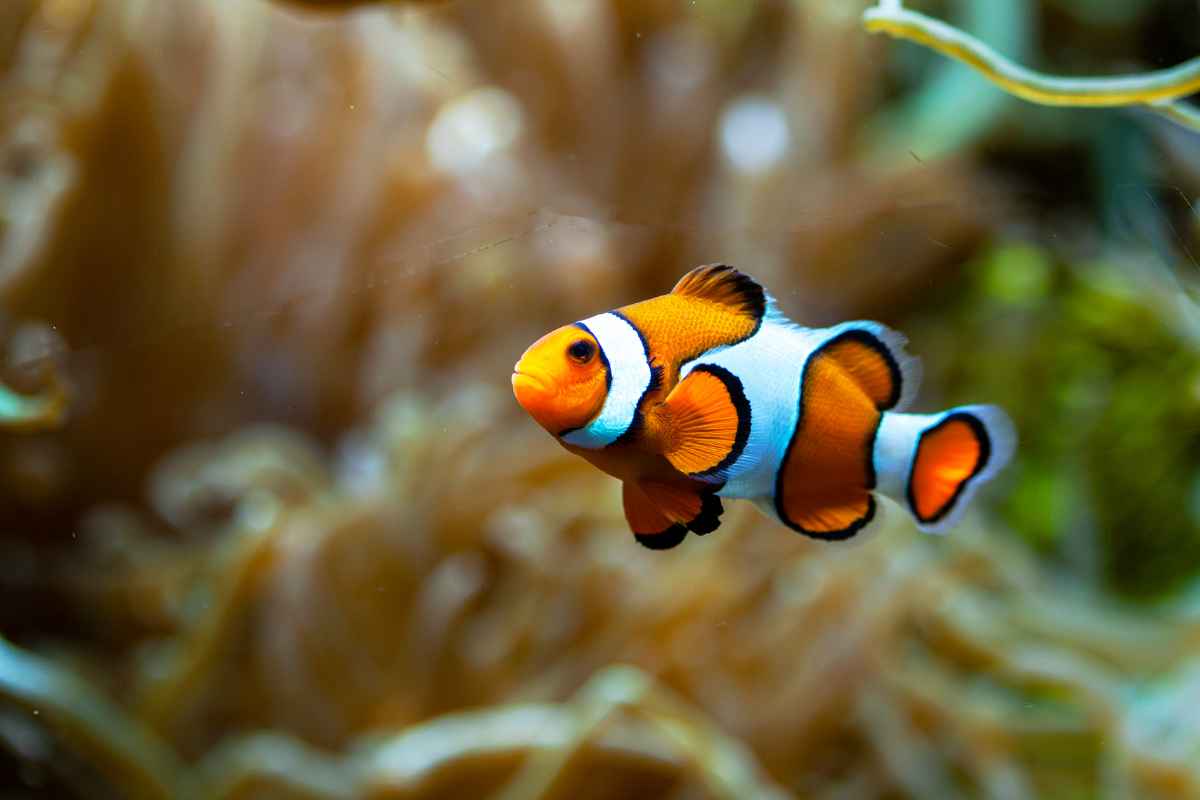
The most famous example. Clownfish live in small groups in a sea anemone, ruled by a strict size hierarchy. The largest fish is the breeding female, the second largest is the breeding male, and the rest are smaller males waiting their turn. If the female dies, the breeding male changes into a female and the next fish down moves up to become the new breeding male. It's a good reminder that the real-life version of a famous animated fish family would have looked a bit different.
2. Wrasses (Labridae)
Many wrasses are protogynous. In species like the bluehead wrasse and the cleaner wrasse, a group of females is often led by one dominant male. When he disappears, the largest female can start acting like a male very quickly and later develops the colors and body of one.
3. Asian sheepshead wrasse (Kobudai)
This large wrasse from the western Pacific is a striking example of protogyny. Females that become males develop a dramatic bulging forehead and a heavy chin, looking so different that you could mistake them for another species.
4. Parrotfish (Scaridae)
Most parrotfish start out as females and can later become large, brightly colored "terminal phase" males. In many species, the dull early colors and the flashy final colors are so different that they were once thought to be separate fish.
5. Groupers (Epinephelidae)
Many groupers begin life as females and become males when they are older and larger. Because the biggest fish are usually the males, heavy fishing of large groupers can leave a population short of males, which is one reason these fish are carefully managed in some areas.

6. Gobies (Gobiidae)
Gobies are the flexible ones. Some small reef gobies can change sex in either direction, switching from female to male and back again depending on the makeup of their group. That makes them one of the most adaptable examples in the fish world.
7. Ribbon eel (Rhinomuraena quaesita)
Not every sex-changer is a typical fish shape. The ribbon eel, a slender moray relative, starts life as a male and later becomes female, and its body color shifts as it goes, from dark juvenile tones to blue to yellow.
Bonus: Anthias and hamlets
Anthias, the small orange and pink fish that hover above reefs in shimmering groups, live in harems where a female can become the group's male. Hamlets, small Caribbean sea basses, take another route: each fish is male and female at the same time, and partners take turns releasing eggs during spawning.
Why Do Fish Change Sex?
Changing sex is an evolutionary strategy for making the most of each stage of life. The main advantages are:
- Keeping the group breeding: if the only male or female disappears, another member can fill the role instead of the group losing its chance to reproduce.
- The size advantage: a fish can spend its small years as the sex that does fine when small, then switch to the sex that benefits most from being big.
- No need to travel: on a reef, finding a new mate can be risky. Becoming the partner your group needs is often safer than leaving home.
What This Means for Aquarium Keepers
If you keep marine fish, sex change is not just trivia. It affects how you buy and group some popular species.
- Pairing clownfish is easy: you don't need to find a male and a female. Put two young clownfish of the same species together, and in time the larger one usually becomes the female. Read clownfish as pets before you buy.
- Adding clownfish later is tricky: an established pair has its hierarchy sorted, so newcomers are often bullied.
- Anthias and some wrasses are group fish: keep them in groups in a large enough tank, and a male may develop over time.
- Freshwater fish rarely do this: most common freshwater species, like bettas, guppies and tetras, keep the same sex for life. If you are starting out, our list of best freshwater fish for beginners is a better place to begin than reef fish.
Fish that change sex are just one example of how unusual life underwater can be. Seahorses, for instance, flip the usual roles in a different way, with males carrying the young, as we explain in do seahorses really make good pets. And if you love fish with big characters, check out our aquarium fish with the best personality.
FAQ About Sex-Changing Fish
Can my aquarium fish change sex?
Only if it belongs to a species that does it naturally, such as clownfish, anthias or certain wrasses and gobies. Most popular freshwater fish, including bettas, do not. (If you have heard otherwise, it is worth reading our post on betta fish myths.)
Did Nemo's dad really have to become female?
In real clownfish biology, when the breeding female of a group dies, the breeding male changes into a female. So the true story would have gone a little differently from the movie.
How long does it take for a fish to change sex?
It varies by species. Behavior can change quickly, sometimes within days, while the full physical change of the reproductive organs takes longer.
Is sex change common in fish?
It is rare among animals in general but much more common in fish, especially reef fish. Hundreds of species are known to do it.
Nature's Incredible Adaptation
From the clownfish in its anemone to the giant grouper on the reef, sex-changing fish show how flexible life can be when survival depends on it. Next time you watch a school of reef fish, remember that some of them may not stay the same for life.
This Related Video May Interest You

Source: Fact Cemetery
Did you find this post useful or inspiring? Save THIS PIN to your Pets Board on Pinterest!
You may also like