
Cat Room Ideas: How to Set Up the Perfect Space for Your Cat


This post contains affiliate links. As an Amazon Associate, Urbaki Pets earns from qualifying purchases, at no extra cost to you.
A great cat room gives your cat four things: places to climb, cozy spots to rest, ways to play, and safe hiding places, plus easy access to food, water, and a litter box kept apart from the eating area. You don't need a big budget or a spare bedroom. A corner of a room, a sunroom, or even a large closet can become a space your cat loves.
Below are practical cat room ideas, a step-by-step setup plan, common mistakes to avoid, and answers to the questions cat owners ask most.
Why Give Your Cat Its Own Room or Space?
Cats are both predators and prey animals. They feel safest when they can watch the world from above and retreat somewhere quiet when they need a break. A dedicated space helps with:
- Indoor enrichment: indoor cats need outlets for climbing, scratching, and hunting play.
- Multi-cat homes: extra perches and resources reduce competition and tension.
- New or shy cats: a quiet "base camp" helps a new cat settle in before exploring the rest of the house.
- Busy households: a calm retreat away from kids, visitors, or noisy dogs.
If you're not sure your cat needs more stimulation, these signs will help: how to tell if your cat is bored.
Step 1: Choose the Right Spot
Look for a space that is quiet, has at least one window, and stays at a comfortable temperature. Avoid laundry rooms with loud machines and places where people constantly walk through. If you only have a corner, choose one near a window and away from the front door.
Step 2: Go Vertical with Climbing Space
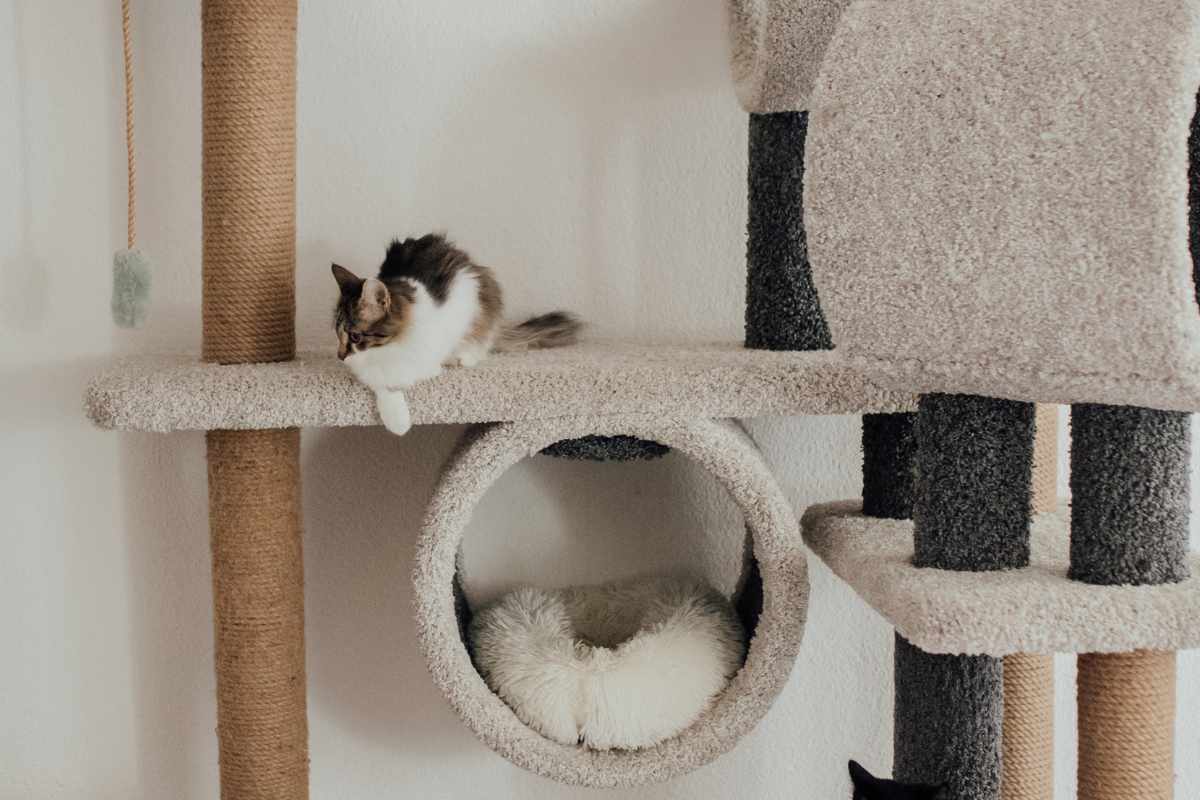
Vertical space is the single most useful upgrade you can make. It increases usable territory without taking up floor space.
- Cat trees: choose a sturdy, heavy base that doesn't wobble when your cat jumps on it.
- Wall shelves and steps: create a "cat highway" around the room, with shelves spaced so your cat can step or hop easily between them.
- Exit routes: make sure every high spot has more than one way down, especially in multi-cat homes, so no cat gets trapped.
- Senior cats: add ramps or lower steps for older or arthritic cats.
Always anchor wall shelves into studs and test them with your hand before your cat uses them.
Step 3: Create Comfortable Resting Areas

Cats sleep a large part of the day, so give them choices:
- A window perch: sunbathing and bird watching are top entertainment for indoor cats.
- Enclosed beds: cave-style beds suit cats that like to feel hidden.
- Open beds and blankets: for cats that like to stretch out.
- High and low options: some cats prefer resting up high, others on the floor.
Wash bedding regularly, but leave one familiar-smelling blanket in place so the room still smells like "home."
Step 4: Add Toys and Play Areas
Play satisfies your cat's hunting instinct and burns energy that might otherwise go into nighttime zoomies.
- Wand toys: the best interactive play. Use them for 10 to 15 minutes, once or twice a day, and let your cat "catch" the toy at the end.
- Tunnels: great for stalking and ambush games.
- Puzzle feeders: slow down fast eaters and make mealtime more interesting.
- Toy rotation: keep only a few toys out and swap them every week so they feel new.
Not sure what your cat will like? Read how to choose the right toy for your cat, or build one yourself with our DIY cat activity center.
Step 5: Include Scratching Spots
Scratching keeps claws healthy and lets cats mark territory. Offer at least one tall, sturdy vertical post and one horizontal scratcher. Place them near sleeping spots and near the room's entrance, since cats often scratch right after waking or when they want to "claim" a space. If your cat targets furniture, see why cats scratch furniture and how to prevent it.
Step 6: Add Hiding Spots and Safe Spaces
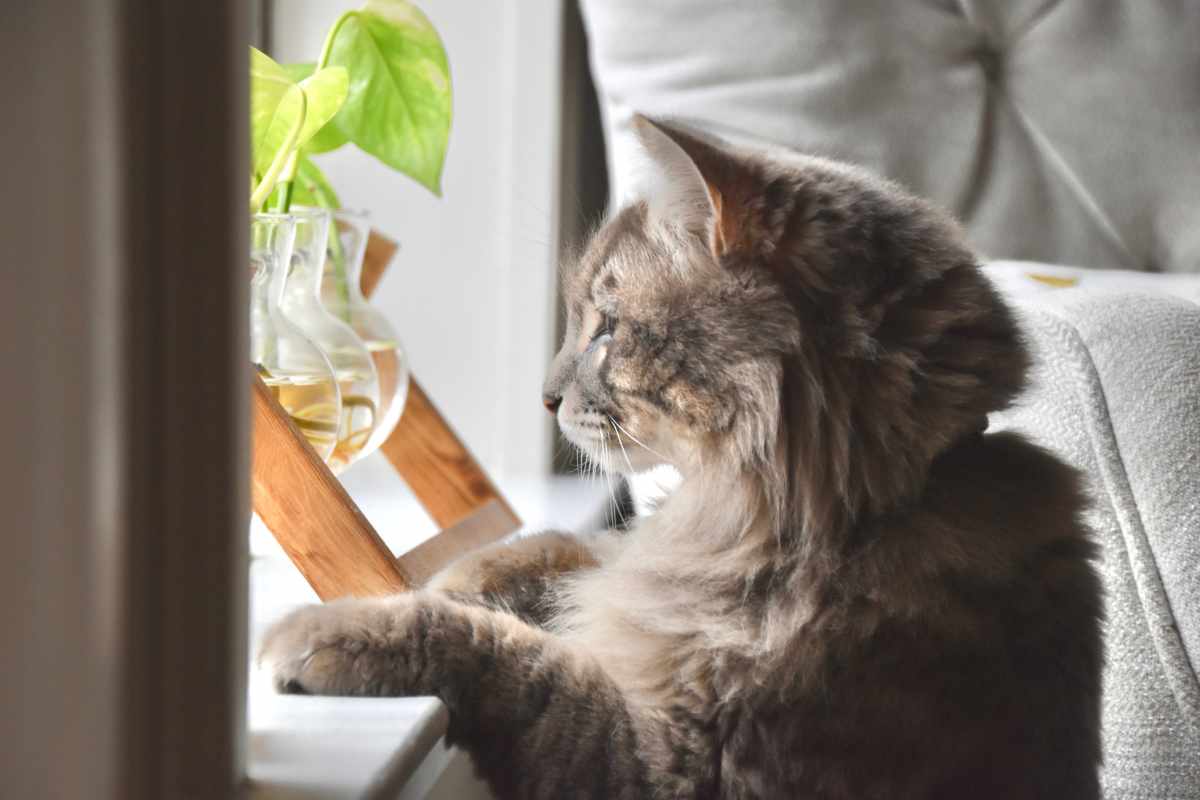
Every cat needs a place to disappear. Hiding helps cats cope with stress, visitors, and loud noises.
- Cardboard boxes with a cut-out entrance
- Covered beds or cat caves
- A cubby inside a cat tree
- A blanket draped over a chair or side table
Never pull a cat out of its hiding spot. If it feels safe, it will come out on its own.
Step 7: Place Food, Water, and the Litter Box Correctly
Cats don't like eating near their bathroom. Keep food and water on one side of the room and the litter box as far away as possible. A few more tips:
- Use a wide, shallow water bowl or a fountain; many cats drink more from moving water.
- The usual guideline is one litter box per cat, plus one extra.
- Scoop daily and keep the box in a quiet, easy-to-reach spot.
Avoid the most common errors with our guide to litter box mistakes cat owners make.
Step 8: Bring in Safe Greenery
Plants make the room feel natural and give your cat something to sniff and nibble. Cat grass (usually wheat or oat grass) and catnip are easy choices. Before adding any houseplant, check that it's non-toxic to cats. Lilies are extremely dangerous to cats, and even small amounts of pollen can cause serious kidney damage, so keep them out of the house entirely.
Step 9: Use Smart Storage
Keep the room tidy and safe with closed bins or cabinets for food, litter, and cleaning supplies. Store string toys, ribbons, hair ties, and rubber bands out of reach, because cats can swallow them. A small basket for the current toy rotation keeps everything easy to swap.
Cat Room Ideas on a Budget
- Turn sturdy wooden crates or bookcases into climbing steps.
- Use cardboard boxes as hideouts and scratchers.
- Make a window perch from a firmly attached shelf and a folded blanket.
- Rotate toys you already own instead of buying new ones.
Our Favorite Picks for a Cat Room
- Amazon Basics Cat Tree Tower: A multi-level tree with perches, a hideaway, and scratching posts in one piece. A simple starting point for a new cat room.
- FUKUMARU Cat Wall Shelves: A set of wall-mounted pieces for building a climbing route up the wall. Good for small rooms where floor space is limited.
- Zakkart Cat Window Perch: A sturdy windowsill bed with bolsters, perfect for sunbathing and bird watching.
- Tempcore Cat Tunnel: A collapsible play tunnel for stalking and ambush games. Easy to fold away when you need the space.
- Natural Wool Cat Cave: A cozy, enclosed bed for cats that like to hide while they nap. Shy cats and kittens often love it.
Common Cat Room Mistakes to Avoid
- Putting the litter box right next to food and water
- Wobbly cat trees or shelves that aren't anchored
- High perches with only one way down
- Toxic plants or loose strings and cords
- Locking your cat in the room for long periods. The room should be a retreat, not a prison
Frequently Asked Questions
What should be in a cat room?
At minimum: a climbing area, a comfortable bed, a hiding spot, a scratching post, toys, fresh water, and a litter box placed away from the food. A window view is a big bonus.
Can I make a cat room in a small apartment?
Yes. A single corner with wall shelves, a window perch, a scratcher, and a covered bed works well. Going vertical is the key in small spaces.
Is it okay to keep my cat in its room at night?
Many cats are fine with it if the room has everything they need and they're used to it. Watch for signs of stress, such as crying at the door or accidents outside the litter box, and adjust if needed.
How do I get my cat to use its new room?
Move a familiar blanket or bed into the room, add treats and a few favorite toys, and spend play time there together. Let your cat explore at its own pace.
Want more ideas for a happy indoor cat? Read the essentials for the happiness of indoor cats.
You may also like